Loading…
A weight-loss plan built around a livable calorie deficit
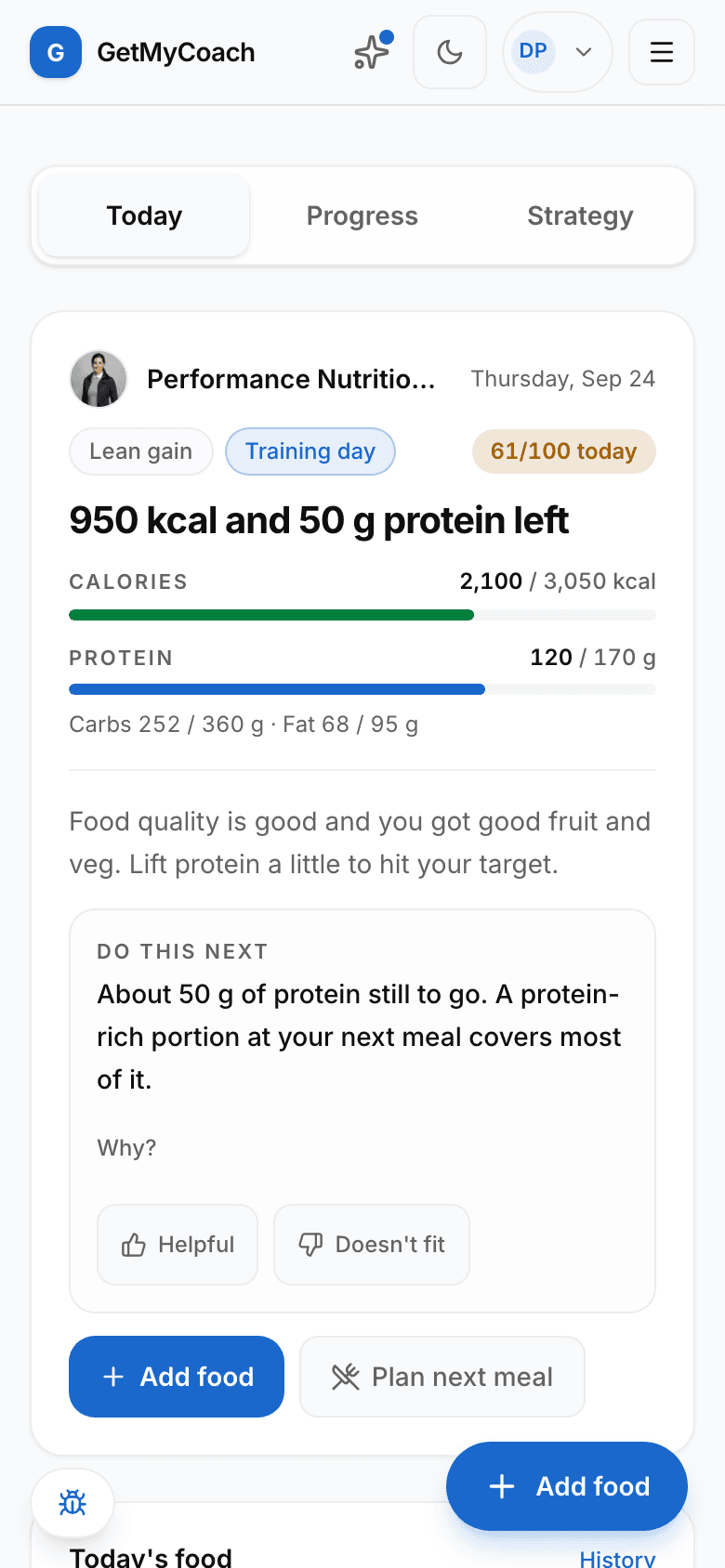
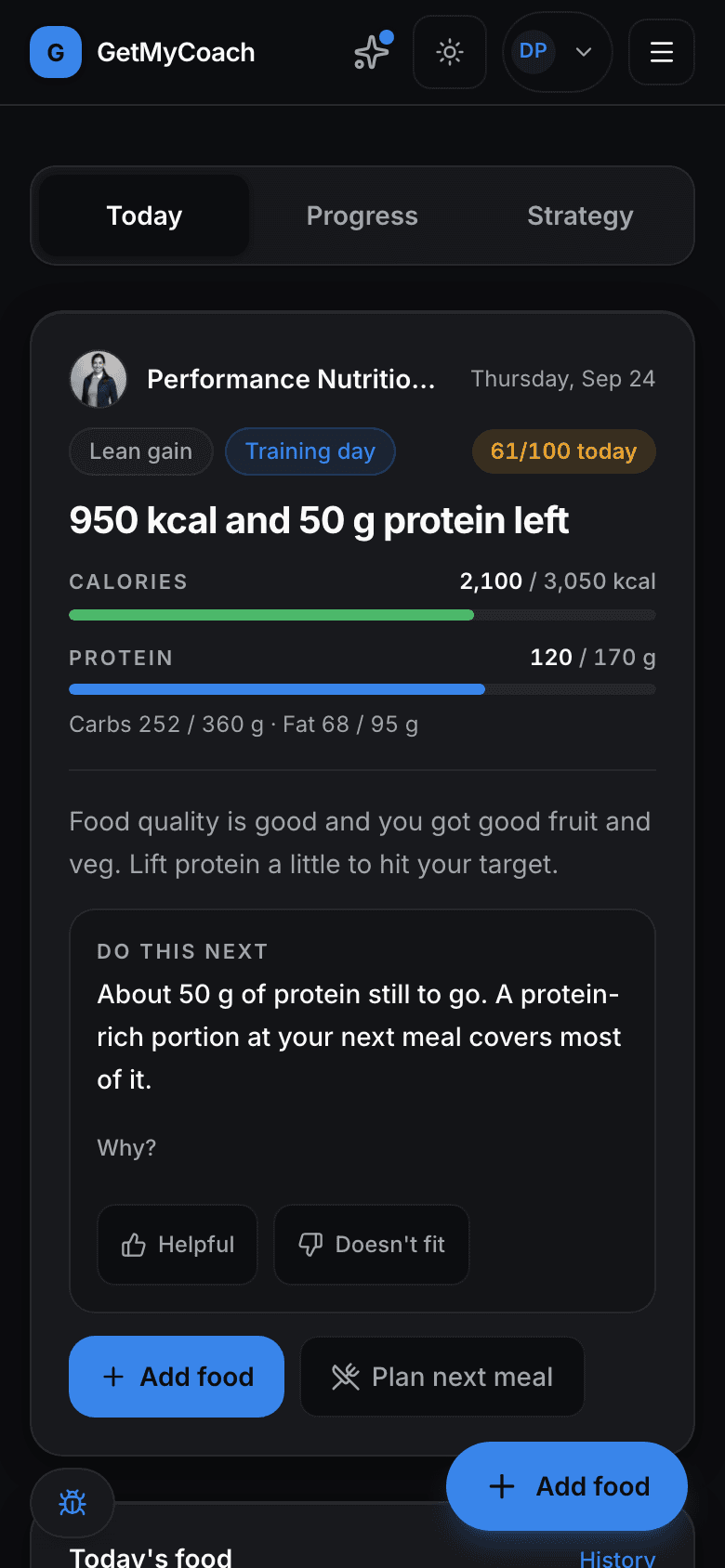
Losing weight isn't a mystery — it's a calorie deficit you can actually stick to, enough protein, and training that keeps the weight you lose from being muscle. GetMyCoach gives you a daily calorie and protein target, tells you what to eat next to hit it, and pairs it with a training plan — all in one app.
app.getmycoach.ch
The parts that make weight loss stick
app.getmycoach.ch
app.getmycoach.ch
app.getmycoach.ch
A calorie deficit — without counting every gram
Weight loss comes down to eating a bit less than you burn, consistently. GetMyCoach sets that up for you: your body and lifestyle set your baseline, your goal sets a sensible deficit, and you get one clear daily calorie and protein target instead of a spreadsheet.
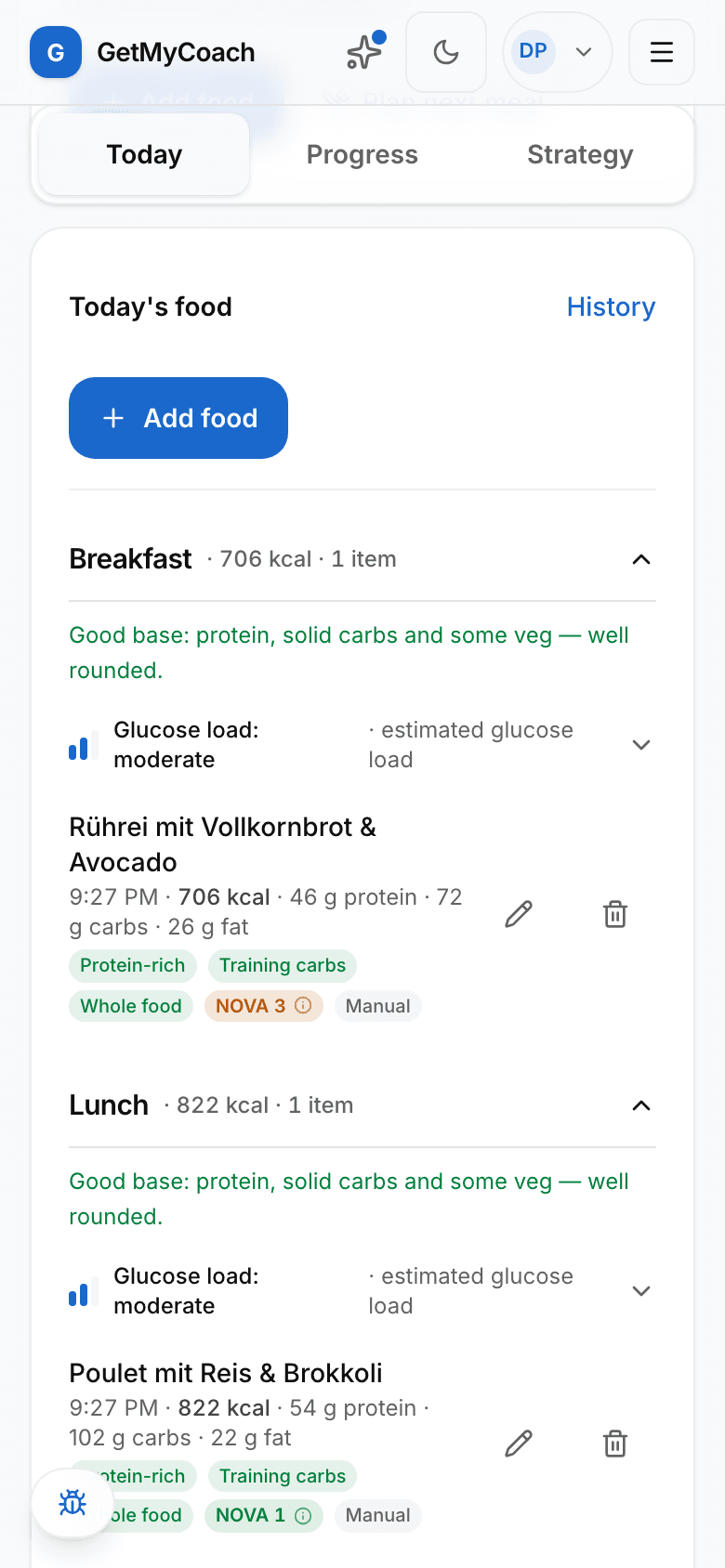
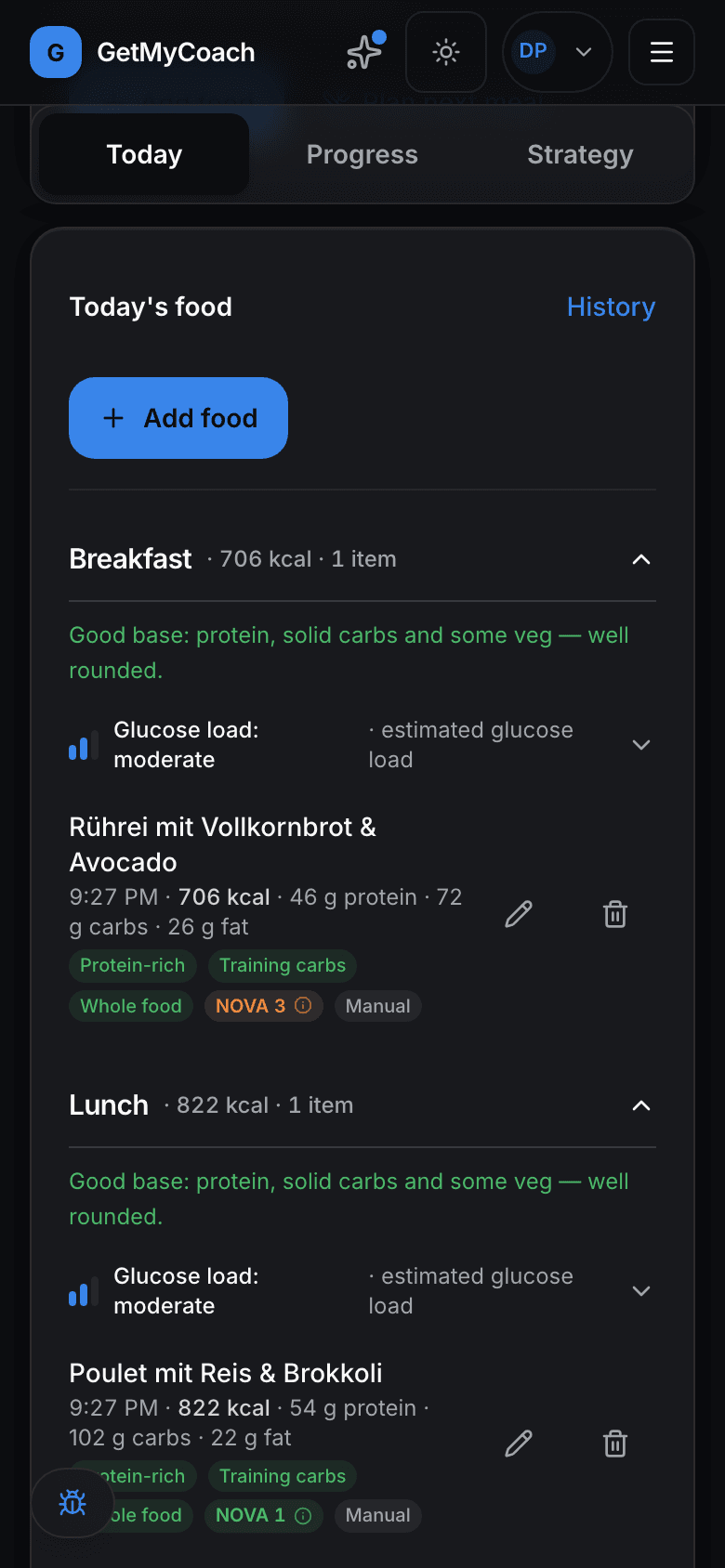
You log what you eat by name — the app recognises everyday foods in English and German — so you can hit the deficit without weighing every gram or logging every crumb.
Protein and training keep it fat, not muscle
Lose weight on a big deficit with no training and a chunk of what you lose is muscle — exactly what you don't want gone. That's why the protein target sits right next to the calories, and why a training plan is part of the answer, not an extra.
Pair your nutrition with a strength or general-fitness plan built around your week, and the weight you lose comes off as fat while you hold onto the muscle that keeps you strong and your metabolism up.
Strength first, cardio as the lever you can add
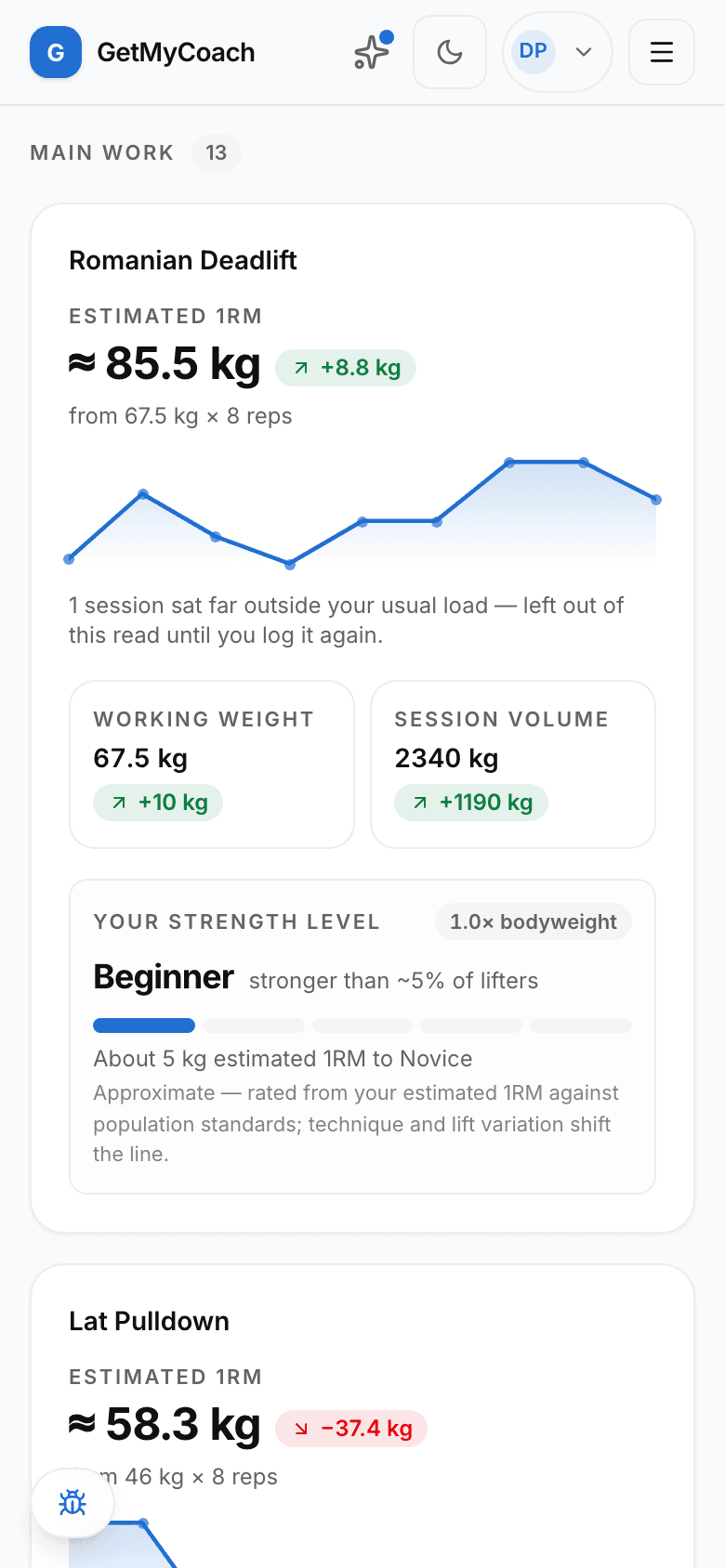
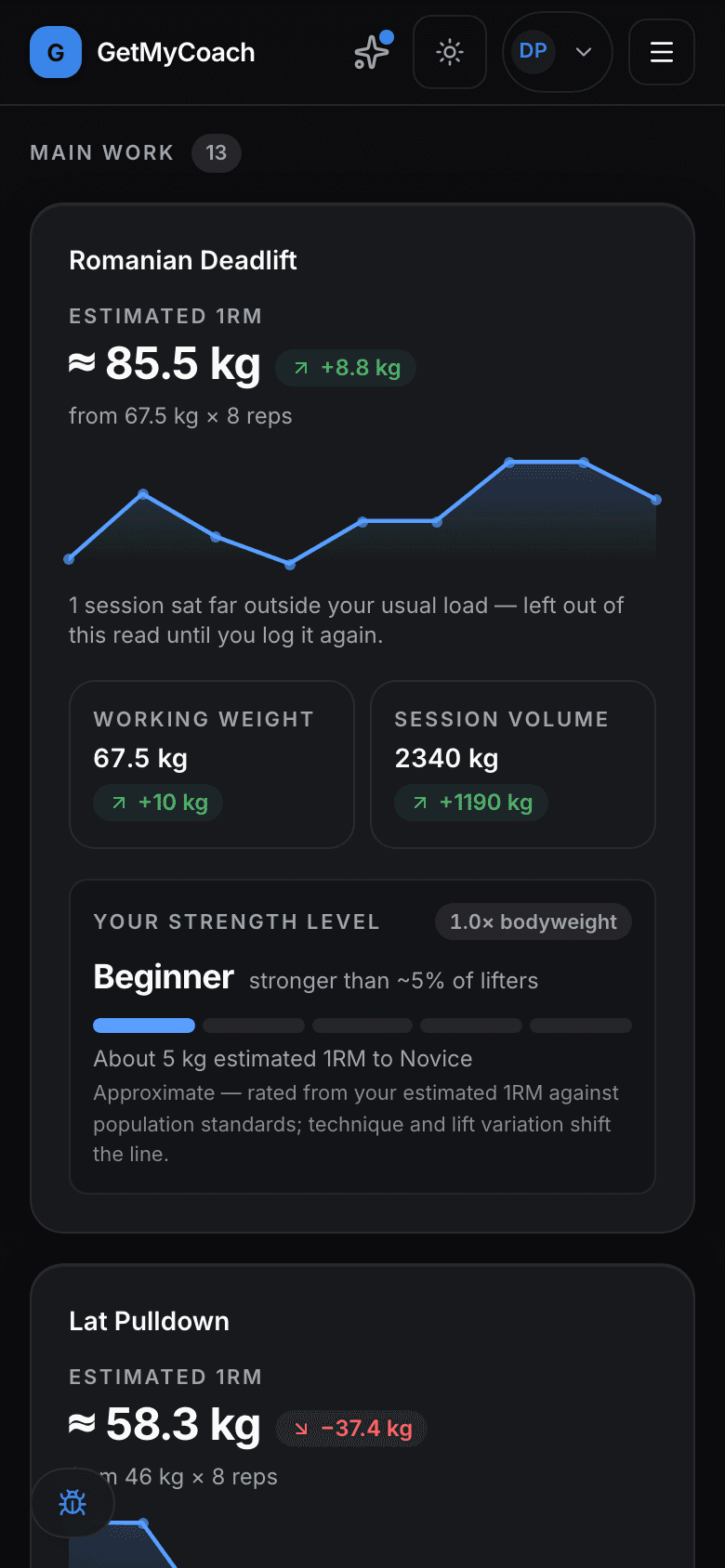
Strength work is what tells your body to keep the muscle it has while you are eating less — and it keeps your lifts, so training does not turn into damage control. Cardio is the lever on top: it adds to the deficit without taking another bite out of your food, which is why more training beats less eating when you want to go faster.
The order that works is strength as the backbone of the week, with easy aerobic work filling the space left over and hard intervals used sparingly — a deficit already costs you recovery, and three hard sessions a week on top is how a plan collapses in its third week.
Two, three or four days a week — each one is a complete plan
On two days you train full body twice, so every major pattern gets trained twice a week and the deficit does not cost you a muscle group. On three days you get a full body day plus an upper/lower split, which is where most people losing weight land. On four, upper and lower each get two days and there is room for a dedicated conditioning session.
Your plan is built for the number of days you actually have — not a four-day plan with a day deleted, which is how a week quietly loses its pulling volume or its leg work. Tell your coach two days and you get a two-day plan that still covers everything.
What a week could look like
An example, not your plan — your coach builds the real one from your goal, your experience, your equipment and the days you pick. On a three-day week: Monday full body strength, Wednesday upper body with a short conditioning finisher, Friday lower body, and easy walking or a Zone 2 session on one of the days in between.
What stays the same whatever your week looks like: every strength session has a progression rule, the easy work stays easy, and the plan adjusts when your logged sessions say the deficit is biting into your recovery.
It tells you what to eat next
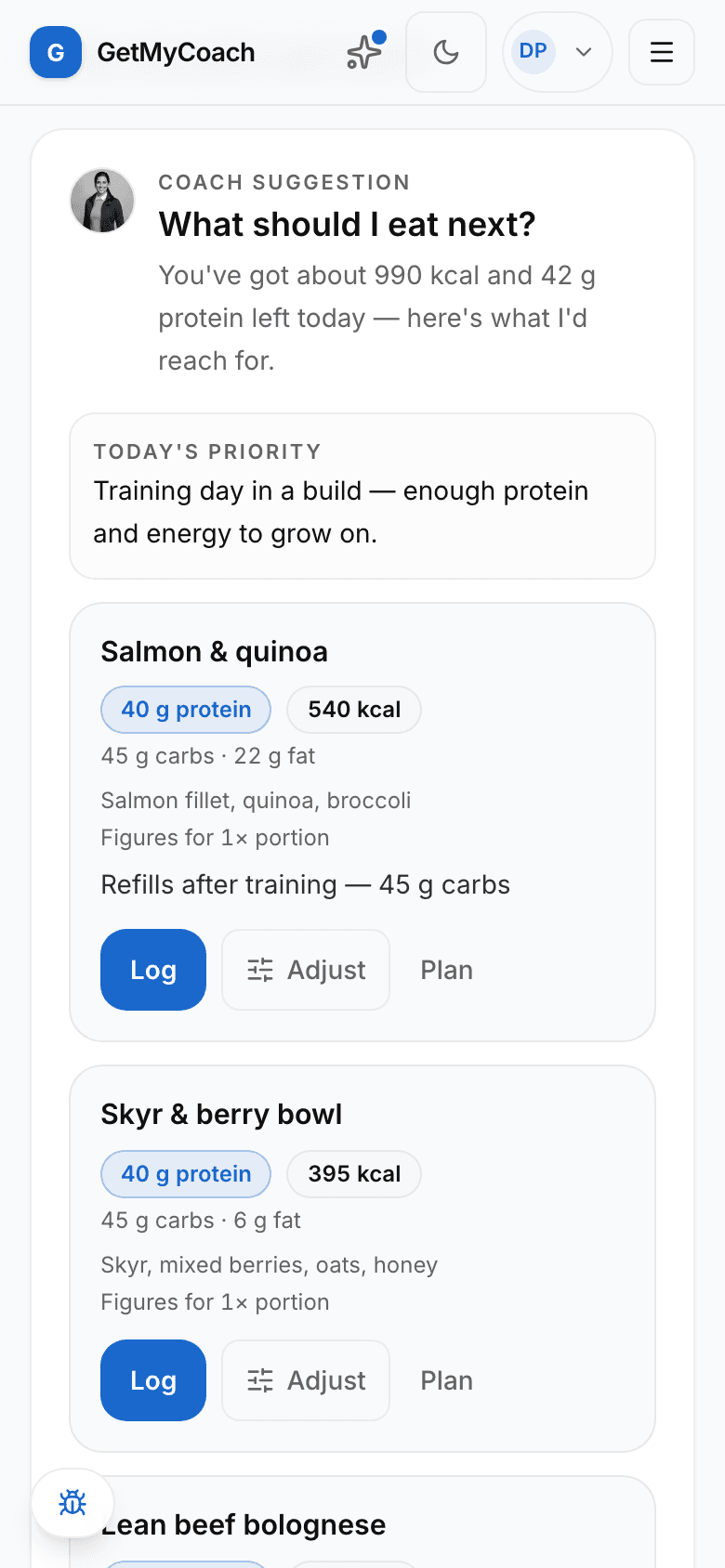
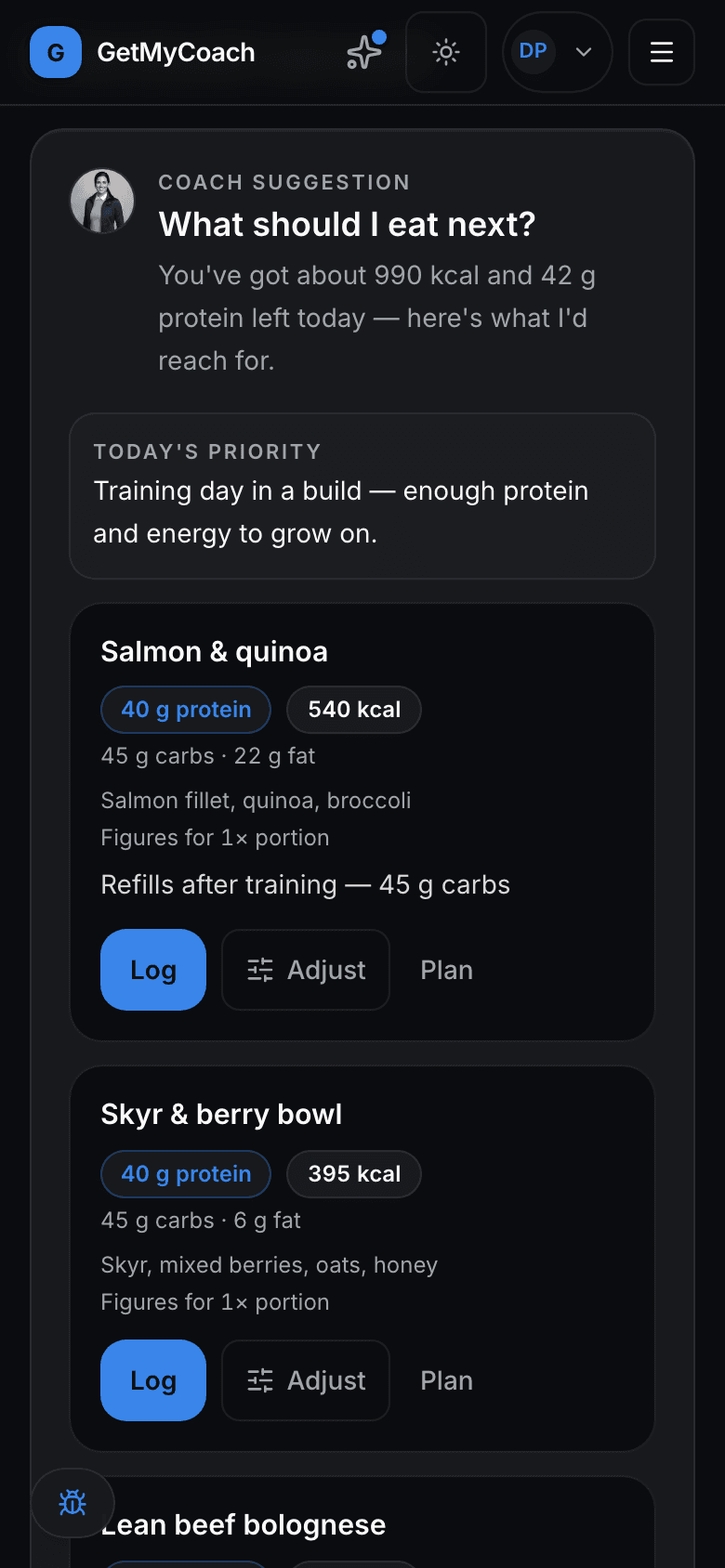
The hard part of a deficit isn't knowing the number — it's deciding what to eat when you're hungry at 6pm with 700 calories left. So GetMyCoach turns the calories and protein you have left into two or three concrete meals, each with a one-line reason it fits, from real everyday foods.
Log one in a tap, adjust the portion, or hit “plan the rest of the day” and your coach lays out the meals that land you on target. Suggestions, never a rigid diet — you always choose.
Judge the trend, not the scale on a bad morning
Body weight jumps around day to day from water, salt and sleep — enough to wreck your motivation if you read every reading as progress. GetMyCoach tracks a smoothed weekly trend instead, so you see the real direction you're heading.
A line that fell and then flattened still looks like a line going down, so you also get the answer the chart alone can't give: how fast your weight is moving right now, in kilos per week, and whether that is faster, slower or the same as the period before. When it stops moving, that's named as a plateau, with how long it has lasted. Without enough weigh-ins to be sure, no rate is claimed — and the web and the app quote the same number.
When the trend stalls or drifts off your goal, your coach suggests adjusting your calories — up or down — instead of leaving you to guess why the scale won't move.
How long it has been running — and a pause that keeps your goal
A deficit with no end condition is the thing most plans never mention. No target weight is asked of you here, so the app counts how long your current phase has actually run instead — and if you never confirmed a phase, it estimates that from your own weigh-ins and labels it as an estimate. A phase only becomes real when you confirm it; it is never guessed on your behalf.
When it has run a long time and something says it is no longer working — the weight has stopped, it is falling markedly slower, or you yourself recorded cutting sessions short for low energy — your coach brings up a maintenance pause. You set it and you end it, your goal stays exactly where it was, and afterwards you carry on without re-stating anything. It is raised, not decided for you: nothing here promises what a pause will do for you, and nothing tells you that a long diet is harmful.
A daily Coach Verdict, not just a running total
Each day you get a single score out of 100 that weighs calories, protein, food quality, fuel timing and fibre — with quick feedback on each item and a line per meal. You see at a glance what helped and what to tighten up tomorrow, no nutrition degree required.
Training and nutrition in one app
This isn't a calorie app bolted onto a workout app. Your plan and your nutrition live side by side, read the same goal, and speak in one coach's voice — so the training and the eating that drive your weight loss finally pull in the same direction.
Frequently asked questions
- Do I have to count calories and weigh my food?
- No. You log what you eat by name and the app handles the numbers, then gives you one daily verdict instead of a column of macros. You get the benefit of a deficit without the tedium that makes people quit.
- How fast will I lose weight?
- At a sustainable rate — roughly half a kilo to one percent of your body weight a week for most people. Your coach targets a deficit you can hold, because crash diets come back off. If your weekly trend stalls, it suggests adjusting.
- Do I need a training plan, or just the nutrition side?
- You can start with nutrition alone — set a weight-loss goal, get daily calorie and protein targets, and a verdict on every day. Adding a training plan is strongly recommended, though: it's what keeps the weight you lose from being muscle.
- Will I lose muscle while losing weight?
- Not if you train and hit your protein. That's the whole point of pairing a training plan with the deficit — enough protein plus strength work signals your body to keep the muscle and burn the fat.
- Does it work in German?
- Yes. The whole experience — food recognition, meal suggestions and the coach verdict — works in both English and German.
- Is it free?
- Yes — GetMyCoach is free during early access. Set your goal and start, no invite needed.
Start losing weight the sustainable way
Set your weight-loss goal, get a daily calorie and protein target, meal suggestions and a training plan that keeps your muscle — free during early access.
See your whole plan first — your free account comes when you start it. No credit card.