Body Composition Scales: What They Actually Measure, and How to Use One Well
What a body composition (BIA) scale really measures, how accurate the body-fat and muscle numbers are, how to weigh yourself so the trend means something, and which to buy — with the current Galaxus best-sellers as examples.

A body composition scale — often sold as a "smart scale" or "body-fat scale" — promises a lot for the money. Step on, and within seconds it hands you your weight, body-fat percentage, muscle mass, water, bone mass and sometimes a "metabolic age". It feels like a body scan on your bathroom floor.
Most of that is an estimate, not a measurement. That doesn't make these scales useless — used the right way, one is a genuinely helpful tool. But only if you know which numbers to trust, which to ignore, and how to weigh yourself so the readings actually mean something.
This is the honest guide to what a body composition scale measures, how accurate it really is, how to use one well, and which to buy — with the current best-sellers on Galaxus as concrete examples.
The short version: A body composition scale sends a tiny, harmless electrical current through your body and estimates body fat from how much that current is slowed down. The absolute numbers (e.g. "18.4 % body fat") are rough — treat them as ballpark figures, not gospel. What's genuinely useful is the trend: weigh yourself under the same conditions (morning, empty bladder, before food and drink, barefoot) a few times a week, and watch the direction over weeks, not the daily wobble. Any decent scale with a good app does this. Buy one that syncs to an app you'll actually open, and let it track the trend while your training and nutrition do the real work.
How a body composition scale actually works
Almost every consumer body-fat scale uses bioelectrical impedance analysis (BIA). When you stand on the metal pads, the scale passes a tiny, painless current up one leg and down the other. Fat, muscle and water conduct electricity differently: muscle and water (which hold a lot of water) conduct well, fat resists more. By measuring how much the current is slowed — the impedance — the scale estimates how much of you is fat versus lean tissue.
Here's the key part most people miss: the scale can't see inside you. It measures one electrical value, then plugs it into a formula along with the height, age, sex and weight you entered. Everything else — muscle mass, water percentage, "bone mass", metabolic age — is calculated from that same single reading. Change the profile you typed in, and the "measured" body fat changes too.
That's not a scam; it's just what the technology is. BIA gives a reasonable estimate for the price. It is nowhere near a DEXA scan, a Bod Pod or a hydrostatic weigh-in, which are the actual reference methods.
How accurate are the numbers, really?
Two different questions hide inside "is it accurate?", and they have different answers.
Absolute accuracy
Off by several points
Compared to DEXA, consumer BIA routinely misses by percentage points in either direction — more at the lean and heavy ends. A reported 15 % could be 12 % or 19 %.
Consistency
Much better
Weigh in under the same conditions and the error stays consistent, so the DIRECTION of change is meaningful even when the absolute figure is not.
What the number is good for
Absolute accuracy — how close is "18 %" to your true body fat? Not very. Studies comparing consumer BIA scales to DEXA routinely find errors of several percentage points in either direction, and more for very lean or very heavy people. A cheap foot-to-foot scale only sends the current through your lower body and estimates the rest, so it can miss badly. If a scale tells you you're 15 %, your real figure could easily be 12 % or 19 %.
Consistency — does it read you the same way from day to day? Much better. If you always weigh in under the same conditions, the error tends to be consistent, so the direction of change is meaningful even when the absolute number isn't. A reading that drifts from 22 % to 20 % to 18 % over two months is telling you something real, even if none of those three numbers is exactly right.
So the honest rule is: trust the trend, distrust the decimal. These scales are trackers, not lab instruments.
What throws the reading off
BIA is essentially measuring your body water, so anything that shifts your hydration shifts the number:
- Food and drink in your stomach and gut.
- Time of day — you're more dehydrated in the morning, more hydrated by evening.
- A recent workout — sweat, and blood shunted to your muscles, both move the reading.
- Alcohol, caffeine, a salty meal, or your menstrual cycle.
- Cold feet or dry/calloused skin, which change the contact with the electrodes.
None of this means the scale is broken — it means you have to control the conditions if you want the trend to be clean.
Which numbers to trust — and which to ignore
Not every readout on the display deserves your attention.
- 1WeightAccurate to about 100 g on a good scale
The one true measurement on the display. Trust it.
- 2Body-fat trendA direction over weeks
Useful — as a direction, never as a daily truth.
- 3Muscle / lean mass trendMostly tracks water and weight
A steady rise over months while you train and eat enough protein is a good sign.
- 4“Bone mass”Barely moves
Ignore it. A BIA scale cannot meaningfully measure bone.
- 5“Metabolic age”Derived from the other estimates
Ignore it. A marketing gimmick, not a physiological measure.
- Weight — trust it. This is the one true measurement, and a good scale is accurate to ~100 g.
- Body-fat % trend — useful, as a direction over weeks, not a daily truth.
- Muscle / lean mass trend — useful as a direction. Mostly it tracks your water and weight, but a steady rise over months while you train and eat enough protein is a good sign.
- Body-water % — mildly interesting for spotting big hydration swings; don't over-read it.
- "Bone mass" — ignore it. A BIA scale cannot meaningfully measure bone; the number barely moves and tells you nothing actionable.
- "Metabolic age" / "body age" — ignore it. It's a marketing gimmick derived from the other estimates, not a real physiological measure.
If a scale's app lets you hide the noise and just chart weight and body-fat trend, use that view.
How to weigh yourself so the numbers mean something
Consistency beats everything. A repeatable routine turns a rough estimate into a useful trend line:
- Same time of day, every time — first thing in the morning is best. After you use the toilet, before you eat or drink anything.
- Barefoot, on bare skin. Socks or tights block the current entirely; the scale can't read body fat through them.
- On a hard, flat floor — not carpet, which throws off the weight cells.
- Standing still, weight even on both feet, until the reading settles.
- Weigh often, but judge slowly. Daily or every-other-day readings are fine — even useful, because they average out — but only ever act on the weekly trend, never a single day. Your weight can swing 1–2 kg day to day from water and food alone.
For body fat specifically, don't weigh straight after training or a big salty meal — wait a few hours.
Do you even need one?
Be honest about what you'll use. For most people chasing fat loss or muscle gain, a plain digital scale plus a tape measure plus the mirror already covers the essentials — bodyweight trend tells you if your calories are right, and the tape and mirror tell you where it's coming from.
A body composition scale earns its place when:
- The extra body-fat and muscle trend lines keep you motivated and honest during a cut or a lean bulk.
- You want everything logged automatically into an app instead of writing it down.
- You want the scale to sync with the rest of your training and nutrition tracking so you see weight, food and workouts in one place.
If a scale's numbers would make you anxious or send you chasing a noisy daily figure, a simpler scale — or just weekly photos — may serve you better. The best scale is the one whose data you'll actually use to make a decision.
What to look for when buying
The criteria matter far more than the brand:
- Foot and hand electrodes, if you can. A scale you only stand on (foot-to-foot) measures your lower body and estimates the rest. Models with a handle or grips that also read your upper body give a more complete — though still estimated — figure. Most bathroom scales are foot-to-foot; that's fine for trend tracking, just know its limits.
- A good app with automatic sync and trend charts. This is what you're really buying. Wi-Fi or Bluetooth sync, a clear weight-and-body-fat trend graph, and averaging that smooths out the daily noise. If the app is clunky, you'll stop using it.
- It syncs with the health platform you use — Apple Health, Google Health Connect, Garmin Connect, Fitbit — so your weight flows into the same place as your training.
- Accurate, stable weight and a sensible platform. High-resolution weight cells (~50–100 g steps), a surface big enough for your feet, and a max capacity above your bodyweight.
- Multi-user support if the household shares it, and long battery life (or rechargeable / solar).
Skip the gimmicks — "metabolic age", heart-health scores on a €30 scale, and long lists of decimal-place metrics are marketing, not accuracy.
Three best-selling scales, one for each job
The best-sellers on Galaxus span the whole range, from a sub-CHF-20 tracker to a full health station. Here's one for each of three common situations — treat them as examples of the type, not the only right answer. Match any scale to the criteria above.
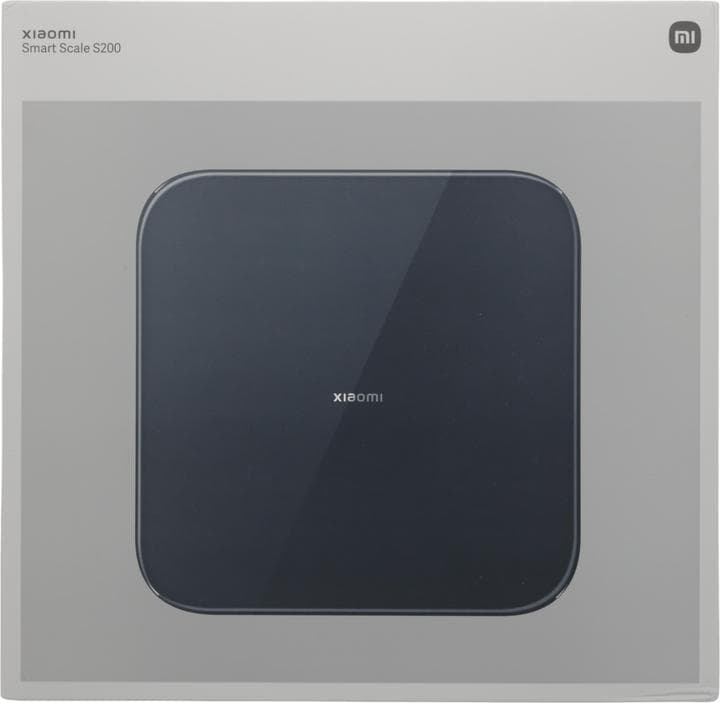
Xiaomi Smart Scale S200
Best value, just getting started
A cheap, hugely popular Bluetooth scale that logs weight and a body-fat estimate to the Mi Fitness app. All you need to start tracking a trend without overthinking it.
≈ CHF 19
View at GalaxusGarmin Index S2 Smart Scale
For athletes who track everything
Wi-Fi scale that syncs straight into Garmin Connect alongside your runs and workouts, with trend graphs and multi-user profiles. The natural pick if you already live in the Garmin ecosystem.
≈ CHF 100
View at GalaxusWithings Body Comp
The most complete health picture
A premium scale with a polished Health Mate app, Wi-Fi sync, and the widest set of metrics. Best if you want detailed trend tracking and health data in one well-designed place.
≈ CHF 150
View at GalaxusThe rule of thumb: a cheap Bluetooth scale is plenty to start; step up only for a better app, a wider metric set, or to sync with the training ecosystem you already use. Browse the full best-seller list on Galaxus for more price points — but whichever you pick, judge it on the app, the sync and consistent weight, not the length of its metric list.
Using it well: let the scale track, let training do the work
A body composition scale is a dashboard, not a coach. The number tells you what is happening; it can't tell you what to change. That part is training and nutrition:
- Losing fat? A slow, steady downward weight trend (roughly 0.25–0.75 % of bodyweight per week) with a gradually falling body-fat line means your calorie deficit is about right. If both stall for two–three weeks, adjust — don't chase the daily number.
- Building muscle? Weight trending gently up with protein high and hard training suggests you're in the right place; the muscle-mass line rising slowly over months is the confirmation.
- Recomposing? Expect the scale to move slowly. Body-fat trend down while weight holds is the win, and it's exactly why the trend, not the daily figure, is what you watch.
At GetMyCoach, your coach builds the plan and the progression; a scale like these is simply how you feed back what your body is doing so the plan can adapt. Track the trend, train hard, eat with intent — the scale just keeps score.
Frequently asked questions
Are body composition scales accurate?
For absolute body-fat percentage, only roughly — consumer BIA scales are commonly off by several percentage points versus a DEXA scan. For tracking change in the same person under the same conditions, they're much more reliable. Trust the trend over weeks, not the exact number on any given day.
How do body composition (BIA) scales measure body fat?
They pass a tiny, harmless electrical current through your body. Fat resists the current more than muscle and water, so the scale measures that resistance and estimates your body fat using a formula that also includes the height, age, sex and weight in your profile. It's an estimate calculated from one reading, not a direct scan.
When is the best time to weigh yourself on a body-fat scale?
First thing in the morning, after using the toilet and before eating or drinking, barefoot on a hard floor. Do it the same way every time — consistency is what makes the trend meaningful. Avoid weighing right after a workout, alcohol, or a big salty meal, since those shift your body water and throw off the reading.
Should I trust the muscle mass and metabolic age readings?
Treat muscle/lean mass as a rough trend line — a slow rise over months while you train and eat enough protein is a good sign, but don't read the daily figure too closely. Ignore "bone mass" and "metabolic age" entirely; a BIA scale can't measure them meaningfully, and they're closer to marketing than data.
Do I really need a body composition scale?
Not necessarily. For most people, a plain scale, a tape measure and the mirror already cover the essentials. A body composition scale is worth it if the extra body-fat and muscle trends keep you motivated, or if you want everything logged automatically and synced with your training and nutrition tracking. The best scale is the one whose data you'll actually act on.
This article is general information about body-composition tracking, not medical or diagnostic advice. Bioimpedance readings are estimates that drift with hydration and time of day; for a clinical assessment, see a doctor.
Sources
- Kyle et al. (2004), Clinical Nutrition: bioelectrical impedance analysis, part I — principles and methods, and why the reading is a formula and not a measurement
- Achamrah et al. (2018), PLOS ONE: comparison of body composition by DXA and BIA — how far a BIA estimate drifts from the reference method
- Gallagher et al. (2000), American Journal of Clinical Nutrition: healthy percentage body fat ranges — the bands a scale's number has to be read against
- WHO (2008): waist circumference and waist-hip ratio, report of a WHO expert consultation — the tape measure a scale does not replace