The Supplements That Actually Work — Matched to Your Sport
Five supplements cover almost everything for people who train: creatine, caffeine, protein, beta-alanine and beetroot nitrate. What each one does, how to dose it, and which sport it helps — strength, running, HYROX, squash, boxing and rowing — including why creatine earns its place on the squash court.
Walk into any supplement shop and you'll see hundreds of products promising more muscle, more energy and faster recovery. Here's the uncomfortable truth the industry doesn't print on the tub: only a handful of supplements have solid evidence behind them. The good news — that handful is cheap, safe and genuinely useful, and which ones matter depends on the sport you train for.
This is the short list that survives the science, and a simple map of which supplement helps which sport — strength training, running, HYROX, squash, boxing and rowing.
The short version: Five supplements cover almost everything for most people who train: creatine, caffeine, protein powder, beta-alanine and beetroot juice (nitrate). A few specialists exist beyond them — sodium bicarbonate above all — and most of the rest of the shelf is optional at best. Match them to your sport: creatine and protein for strength, caffeine and beetroot for endurance, beta-alanine for sports with brutal 1–4-minute efforts — and yes, creatine earns its place in squash and even running.
The short list that covers almost everything
These five are the most practical, best-supported picks for most people who train — each backed by serious reviews of performance supplements, including the International Olympic Committee's consensus statement and the Australian Institute of Sport's classification. They're not the only substances with evidence (sodium bicarbonate gets its own section below), and protein is strictly speaking sports food rather than an acute performance supplement — but these are the five worth knowing first.
- 1Creatine monohydrate3–5 g daily, every day, no loading needed
The best-studied sports supplement there is. Repeated explosive efforts, in any sport that has them.
- 2Caffeine2–4 mg/kg, 30–60 min before
The most reliable legal performance enhancer. Keep it out of the last 6–10 h before bed.
- 3Protein powderWhenever a meal is impractical
Food in a scoop. Convenience, not a separate mechanism.
- 4Beta-alanine3–6 g daily, split, for at least four weeks
Works by accumulation, and only in the 1–4-minute pain zone.
- 5Beetroot juice (nitrate)~400–800 mg nitrate, 2–3 h before
The smallest and least consistent of the five. Race day, not a daily staple.
This article starts from the supplements. If you would rather start from yourself — your training, your diet, and whether anything is missing at all — the sports supplement guide works in that direction instead, and adds the micronutrients that depend on how you eat.
Creatine monohydrate
The best-studied sports supplement in existence. Creatine tops up the phosphocreatine your muscles use for short, explosive efforts, so you get a little more out of every hard set, sprint or direction change — and over months, that compounds into more strength and muscle.
- What it does: more repeated high-power output, faster recovery between explosive efforts, slightly better muscle and strength gains from the same training.
- How to take it: 3–5 g of plain creatine monohydrate daily, any time of day, every day. No loading phase needed, no cycling.
- The honest caveat: your weight can rise a little at first from extra water stored in the muscle, especially with a loading phase. How much is individual — irrelevant for most people, worth knowing if you race long distances or fight in a weight class.
Caffeine
The most reliable performance enhancer that's legal, and you probably already drink it. Caffeine lowers perceived effort and improves endurance, sprint and strength performance alike.
- What it does: most hard efforts feel a bit easier, so you push a bit harder — in a long run, a hard interval session or a heavy leg day. How much it helps varies from person to person.
- How to take it: roughly 2–4 mg per kg bodyweight, 30–60 minutes before training — at 80 kg that's about 160–320 mg. Coffee works, but its caffeine content varies a lot, so it's hard to dose precisely. More isn't better — high doses add jitters, not performance.
- The honest caveat: keep caffeine out of the last six to ten hours before bed — the higher the dose and the more sensitive you are, the earlier you should stop. For evening sessions, use a small dose or skip it; sleep beats any supplement.
Protein powder
Not magic — food in a scoop. A protein shake builds muscle exactly as well as the same protein from chicken or quark; its value is convenience on days when hitting your protein target through meals is hard.
- What it does: helps you reach your daily protein target — roughly 1.2–2.0 g per kg bodyweight for most athletes, toward 1.6–2.2 g/kg when building muscle or dieting — see our guide to daily protein.
- How to take it: whey (or a blended plant protein) whenever a meal is impractical — after training, at the desk, on the go.
- The honest caveat: if your meals already cover your protein, a shake adds nothing but cost.
Beta-alanine
The specialist. Beta-alanine raises muscle carnosine, which helps buffer the hydrogen ions that build up during all-out efforts of roughly one to four minutes — delaying the deep burn and the drop-off that comes with it. That's exactly the zone where hard rowing intervals, boxing rounds and HYROX stations live.
- What it does: slightly more output before the burn shuts you down in 1–4-minute maximal efforts.
- How to take it: 3–6 g per day, split into smaller doses, every day for at least four weeks — it works by accumulation, not acutely.
- The honest caveat: the tingling skin (paraesthesia) after a dose is harmless but real; smaller split doses avoid it. For classic short strength sets the benefit is small — it gets interesting with long hard intervals, high-rep sets and 1–4-minute efforts; for easy endurance it does little.
Beetroot juice (nitrate)
Dietary nitrate boosts nitric oxide, which makes muscle work slightly more oxygen-efficient. The effect is modest and shows up mainly in endurance efforts of about five to thirty minutes — and it's smaller in highly trained athletes.
- What it does: slightly better running economy and time-trial performance at threshold intensities.
- How to take it: a concentrated beetroot shot (~400–800 mg nitrate) two to three hours before a hard endurance session or race — and skip strong antibacterial mouthwash around it, since your mouth bacteria do part of the nitrate conversion.
- The honest caveat: of the five, this has the smallest and least consistent effect. Nice-to-have for race day, not a daily staple.
The special case: sodium bicarbonate
One more genuinely earns a mention: sodium bicarbonate — plain baking soda — is a well-evidenced buffer for short, very intense efforts and sits alongside the five above in evidence reviews. For rowing races, boxing rounds and HYROX-style intervals it can add real output. The reason it isn't a headline pick: it frequently causes gut trouble (bloating, cramps, or worse), so it needs careful testing in training long before you'd ever use it on race day. If the 1–4-minute pain zone is your sport, it's worth a cautious experiment; for everyone else it's skippable.
The health base: vitamin D and omega-3
Not performance supplements, but worth naming: many people in Switzerland run low on vitamin D through the winter, and a deficiency hurts training, bone health and mood. If a blood test says you're low, supplementing is sensible. Omega-3 (fish oil) has decent support for general health; its direct performance evidence is thin. Neither replaces the five above — they just keep the foundation solid.
Which supplement for which sport?
The same short list, sorted by what your sport actually demands:
| Sport | First picks | Why |
|---|---|---|
| Strength & muscle | Creatine, protein | Creatine adds reps and load over time; protein supplies the building material. Caffeine before heavy sessions. |
| Running | Caffeine, beetroot | Lower perceived effort over distance; beetroot for economy on race day. Creatine optional — see below. |
| HYROX & hybrid | Creatine, beta-alanine, caffeine | Sled pushes and wall balls are repeated power (creatine); stations live in the 1–4-minute burn zone (beta-alanine). |
| Squash | Creatine, caffeine | A match is hundreds of sprints, lunges and direction changes — exactly the repeated explosive work creatine fuels. |
| Boxing | Beta-alanine, caffeine | Three-minute rounds are the textbook beta-alanine scenario. Creatine works too — mind the water weight near a weigh-in. |
| Rowing | Beta-alanine, creatine, beetroot | A 2,000 m piece is the classic 6–7-minute buffering test; creatine powers the start and sprint. |
Creatine for squash — really?
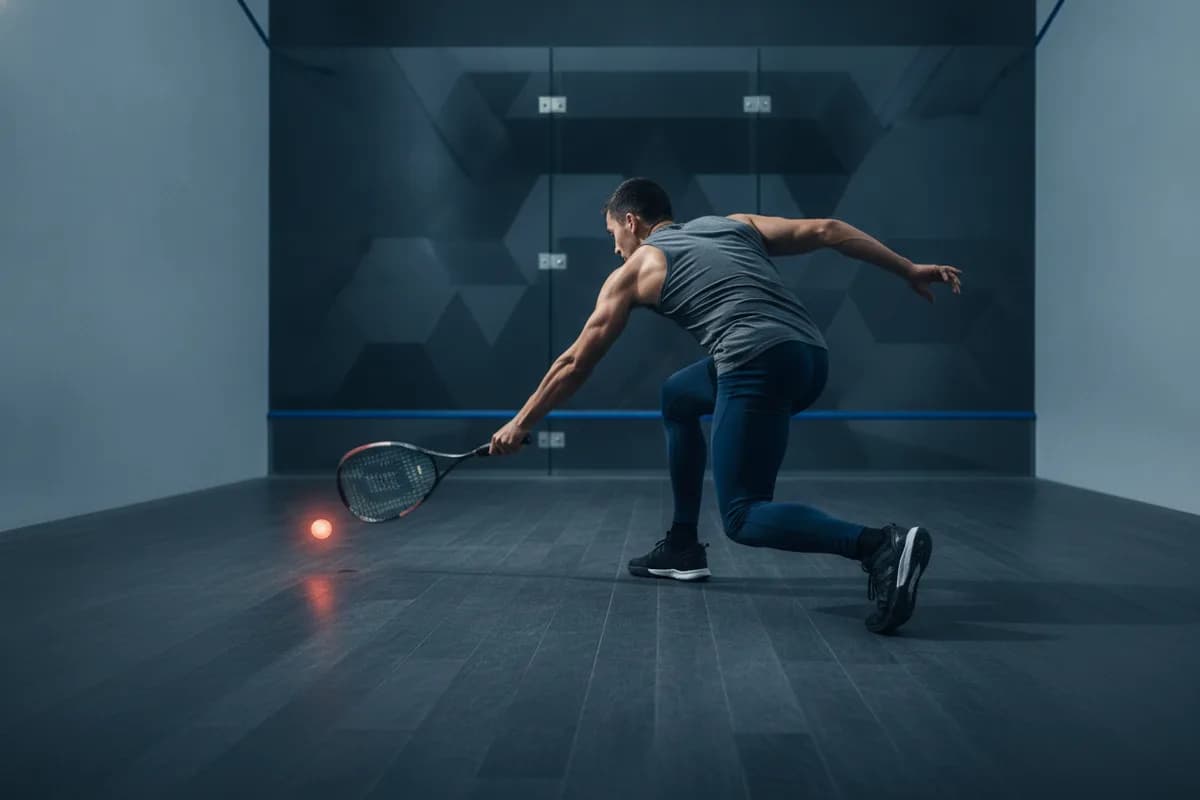
Really. Creatine's reputation is stuck in the weight room, but its mechanism — recharging the system that powers efforts under ~10 seconds — is a near-perfect match for racket sports. A squash rally is a burst of sprints and lunges; a match is that burst repeated for 40+ minutes. And it's not just theory: in a study with competitive squash players, creatine supplementation improved performance in high-intensity exercise — though the direct squash evidence base is far smaller than the strength-training one. The likely edge shows up where repeated intense actions meet incomplete recovery. If you're building your fitness for the court anyway, start with our squash fitness guide — then let creatine sharpen the top end.
And creatine for running?
Depends on your distance. For a marathon runner, the possible extra water weight is a real cost for little endurance benefit — most skip it. For runners who also lift (as they should), sprint, race short distances or want to protect muscle through high mileage, low-dose creatine is reasonable. It also shows promise for recovery from hard sessions. Verdict: optional for endurance runners, sensible for hybrid athletes.
What to skip
The rest of the shelf, honestly: BCAAs (pointless if you eat enough protein), fat burners (caffeine in an expensive costume), testosterone boosters (don't raise testosterone), glutamine (fine for gut research, does nothing for muscle), and most proprietary pre-workout blends (underdosed mystery mixes — a coffee plus creatine beats them at a tenth of the price).
- 1BCAAsPointless if you eat enough protein
You already got them, in the chicken.
- 2GlutamineFine in gut research
Does nothing for muscle.
- 3Testosterone boostersDo not raise testosterone
The name is the whole product.
- 4Fat burnersCaffeine in an expensive costume
Buy the caffeine.
- 5Proprietary pre-workout blendsUnderdosed mystery mixes
A coffee plus creatine beats them at a tenth of the price.
One honest boundary: everything here is dosed for adults. Teenagers shouldn't simply copy adult supplement protocols — for young athletes, food, sleep and training come first, and anything beyond that belongs in a conversation with a doctor or qualified coach.
And one boundary that no shelf will tell you about: if you have felt flat for a fortnight, nothing on this page is the answer. Accumulated fatigue is cleared by a lighter week, not by a product — the guide to deloads and training reduction explains what to cut and by how much.
Buying smart in Switzerland
Three rules cover almost everything:
- Buy single ingredients, not blends. "Creatine monohydrate" and "whey protein" as the whole label — you can dose what you can read.
- If you compete, buy tested. Look for batch-tested products (e.g. Kölner Liste® or Informed Sport) — contamination is the way clean athletes fail doping tests.
- Cheap is fine. Creatine monohydrate is a commodity; the expensive "advanced" forms have no better evidence.
Sources
- Maughan et al. (2018): IOC consensus statement — dietary supplements and the high-performance athlete
- Australian Institute of Sport: Sports Supplement Framework — the group A/B/C/D classification used throughout this article
- Kreider et al. (2017): ISSN position stand on creatine — 3–5 g/day, no loading phase required, no kidney harm in healthy adults
- Guest et al. (2021): ISSN position stand on caffeine and exercise performance — 3–6 mg/kg, 30–60 minutes before
- Trexler et al. (2015): ISSN position stand on beta-alanine — 4–6 g/day for at least 2–4 weeks, benefit concentrated in 1–4-minute efforts
- Grgic et al. (2021): ISSN position stand on sodium bicarbonate — the buffering benefit and the gastrointestinal cost
- Romer et al. (2001), International Journal of Sports Medicine: creatine supplementation and high-intensity intermittent performance in competitive squash players
- Jäger et al. (2017): ISSN position stand — protein and exercise (a shake is convenience, not a separate mechanism)
Supplements are the last 5% — training is the rest
GetMyCoach builds your plan around your sport and your goal — strength, running, HYROX, squash or boxing — so the base is right before you optimise the top. The right training plan beats any supplement stack.
Frequently asked questions
What is the single most effective supplement?
For most people who train: creatine monohydrate, with caffeine a close second. Creatine has the deepest evidence base of any sports supplement, costs a few francs a month, and helps in any sport with repeated explosive efforts — from the gym to the squash court.
Does creatine make sense for squash or running?
For squash, yes — a match is repeated sprints, lunges and direction changes, exactly the work creatine fuels. A study in competitive squash players found improved high-intensity performance, and the likely edge shows up where repeated intense actions meet incomplete recovery. For running it depends: endurance-focused runners rarely benefit and may carry extra water weight, while runners who also lift or race short distances can reasonably use a low dose.
Do I need protein powder to build muscle?
No. Protein powder is convenient food, not a requirement. What matters is your daily total — roughly 1.2–2.0 g per kg bodyweight for most athletes, toward 1.6–2.2 g/kg when building muscle or dieting. If meals cover that, a shake adds nothing; if you struggle to hit it, a shake is the easiest fix.
Is creatine safe?
For healthy adults, yes — creatine monohydrate at the recommended 3–5 g per day is one of the most studied supplements there is, and reviews find no harm to kidney function in healthy people at those doses. Blood creatinine can rise without meaning your kidney function got worse — that's where the myth comes from. If you have kidney disease, clear supplementation with your doctor first.
When should I take caffeine before training?
30–60 minutes before, at roughly 2–4 mg per kg bodyweight — about 160–320 mg at 80 kg. Keep it out of the last six to ten hours before bed; the higher the dose and the more sensitive you are, the earlier you should stop. Trading sleep for a slightly better workout is a bad deal — sleep is the strongest recovery tool you have.
Do supplements replace a good diet?
Never — the name says it: they supplement. Your training plan, sleep, and overall diet decide 95% of your results. Supplements polish the last few percent once the base is in place, which is why the honest advice is always: plan first, powder second.
The bottom line
Ignore the wall of tubs. Five supplements cover almost everything — creatine, caffeine, protein, beta-alanine and beetroot — with sodium bicarbonate as the niche extra for the shortest, hardest efforts. Your sport decides which of them earn a place: creatine and protein for strength, caffeine and beetroot for endurance, beta-alanine for the 1–4-minute pain zone, and creatine surprisingly far beyond the weight room, squash included. Buy them plain, buy them tested if you compete, and remember they're the last 5% on top of training, food and sleep — never a substitute for them.
Last updated: July 2026. This article is general nutrition and training information, not medical advice, and all doses are for healthy adults — teenagers shouldn't copy adult supplement dosing. Supplement research evolves and individual needs differ — if you're pregnant, take medication, have a medical condition (especially kidney disease before creatine), or compete in tested sport, seek advice tailored to you and use batch-tested products.