Eating Before or After Sport — and What to Eat for Each Session
Should you eat before or after training? What to eat before, what to eat after, and what fits each type of session — strength, endurance, HIIT and easy days — plus timing, fasted training and hydration.

The short version: For everyday training, what and how much you eat across the whole day matters far more than the exact minute you eat it. Have some carbs before a hard session, refuel with protein and carbs afterwards, and don't stress the timing for short, easy sessions. And the most common worry, answered up front: you don't have to eat again before strength training.
Should you eat before or after sport? The honest answer is usually both — but the details depend on the session. A heavy leg day, a two-hour long run and a 20-minute mobility flow don't have the same fuelling needs. This guide keeps it practical: the timing that actually matters, sensible meals and snacks, and a clear rundown of what fits each type of training.
Before or after — which matters more?
For most people, the honest answer is neither in isolation. Your total intake across the day — enough energy, enough protein, enough carbohydrate for the training you do — decides the large majority of the result. Meal timing is fine-tuning on top of that, not the foundation. You can estimate how much energy you need in the guide to daily calorie needs.
That said, timing does two useful things:
- Before training it tops up your fuel. With enough energy on board you feel steadier on heavy sets, less empty, and can hold your performance longer.
- After training it kick-starts recovery — refilling energy stores and giving your muscles the protein to repair and adapt.
So the goal isn't to pick before or after. It's to eat sensibly around your training and let the whole day do the heavy lifting.
Before training: what and when
The single most useful idea: the closer you are to training, the smaller and lighter the food should be. Fat and lots of fibre slow digestion, so keep those lower right before a session and save them for meals further out.
- 3–4 hours before: a normal balanced meal — carbs, protein, some vegetables. Plenty of time to digest.
- 1–2 hours before: something lighter and carb-focused with a little protein — a smaller portion, easier on the stomach.
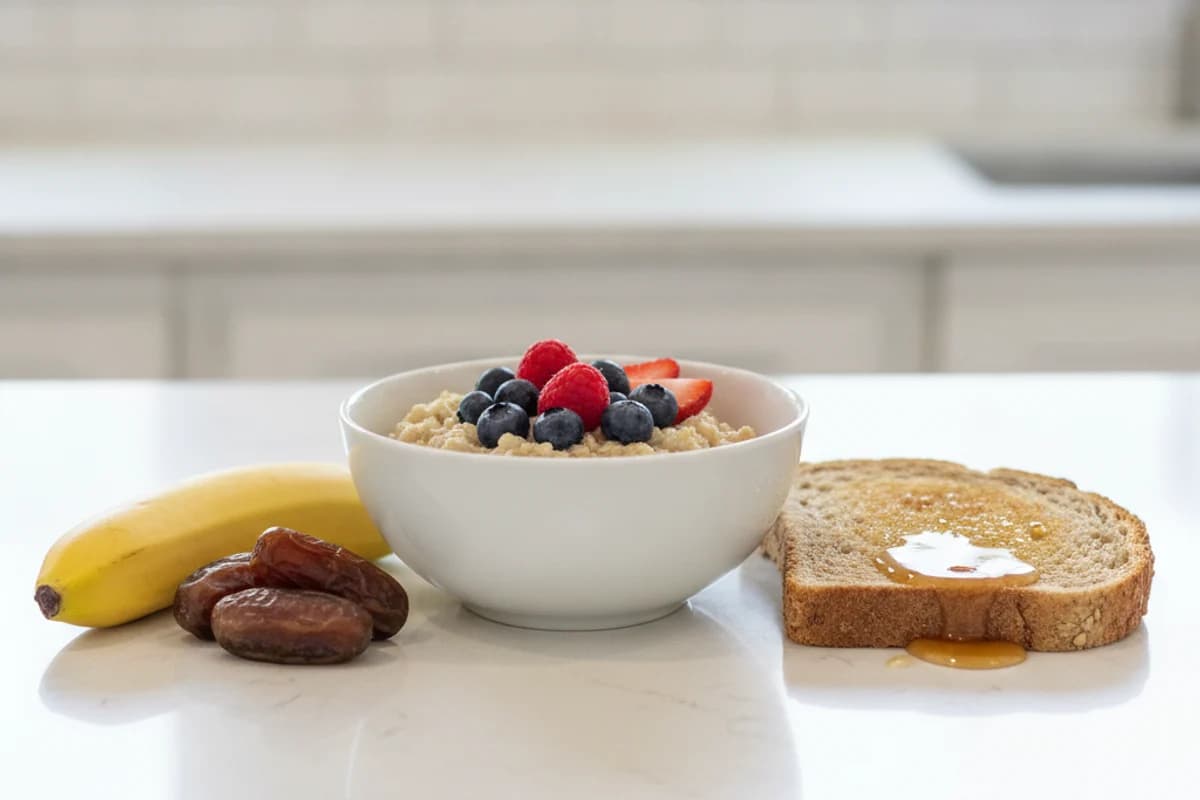
- Under 60 minutes before: a small, mostly-carb snack if you want a top-up — a banana, a couple of dates, a slice of toast with honey, a small bowl of oats.
After training: refuel and recover
After a demanding session your body is primed to rebuild. Two things help most:
- Protein to repair and build muscle — roughly 20–40 g of quality protein (about 0.3 g per kg of body weight) in a meal. More on this in the guide to how much protein per day.
- Carbohydrate to refill the energy (glycogen) you used — more if the session was long or intense, less if it was short and easy.
Add fluids and a little salt if you sweated a lot, and you've covered the essentials.
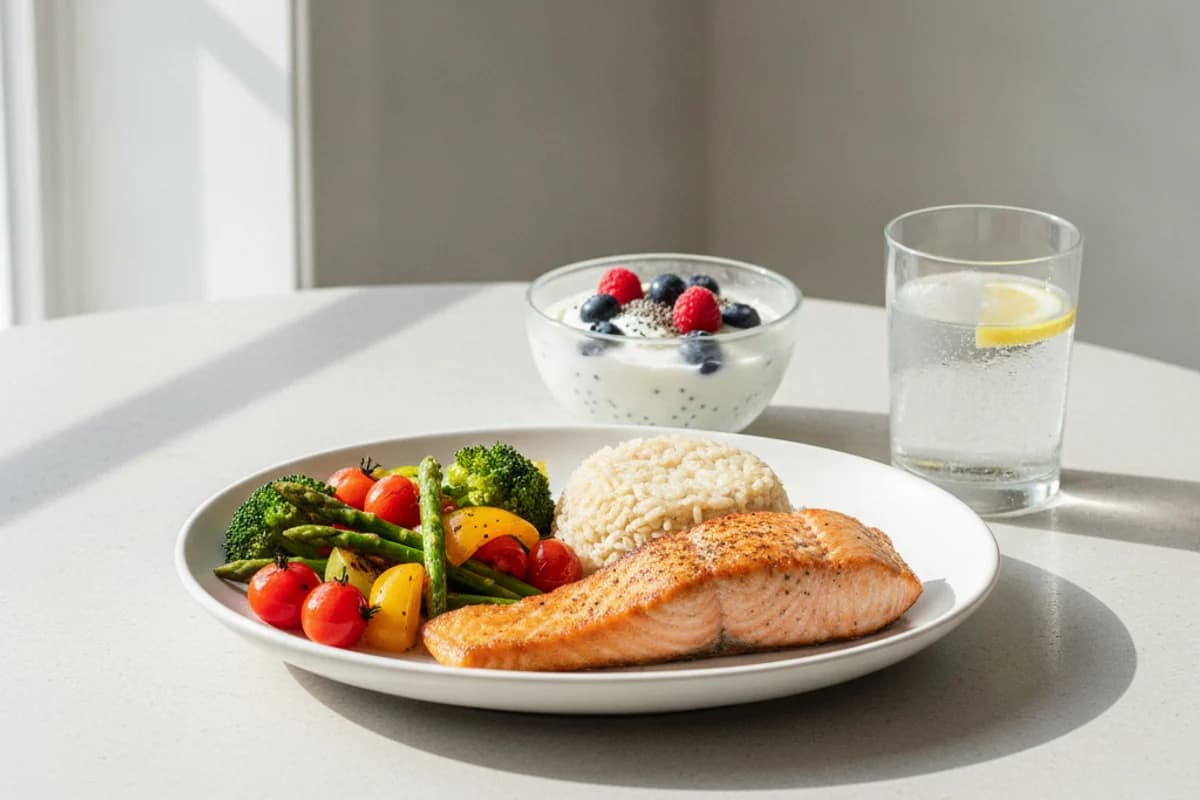
Simple recovery options:
- A normal meal: protein (chicken, fish, eggs, tofu, legumes) + carbs (rice, potatoes, pasta, bread) + vegetables.
- Quark or Greek yoghurt with fruit and oats.
- A protein shake plus a banana or a roll, if a full meal isn't practical yet.
What about the "anabolic window"?
You may have heard you must eat within 30 minutes of finishing or your workout is "wasted." For most people that's a myth. The window for refuelling and protein is much wider — several hours, and your total daily protein and energy matter far more than the exact minute.
Timing after training becomes genuinely more important in two cases:
- You trained fasted (nothing for many hours beforehand) — then eating reasonably soon afterwards helps.
- You have another hard session later the same day and need to recover fast in between.
Otherwise, eating your next normal meal within a couple of hours is perfectly fine.
Training fasted — is that OK?
Training before breakfast is fine for short, easy sessions — a gentle run, an easy ride, mobility work. Plenty of people prefer it and feel light.
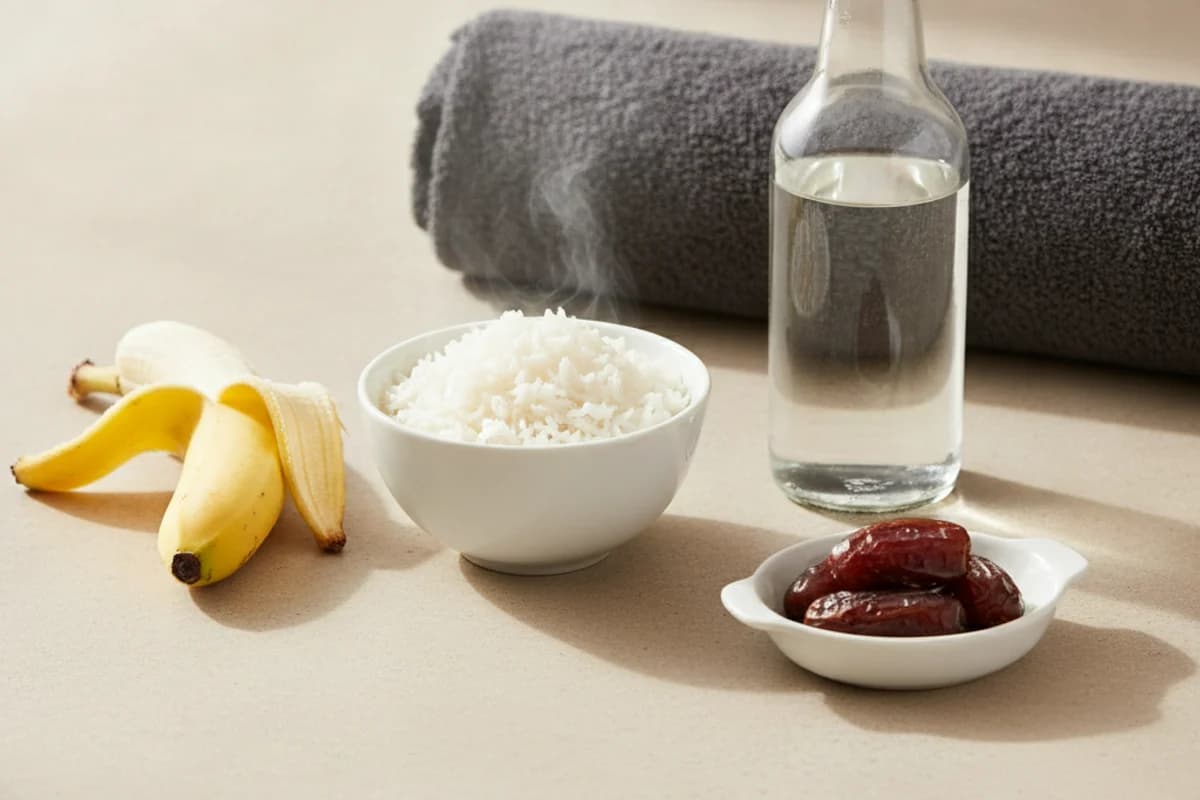
For hard, long or strength-focused sessions, having eaten usually means better performance and quality — you don't start on an empty tank, and the last sets feel less like a grind. So a small carb snack beforehand is worth it. And whether or not you ate before, make the meal after a fasted session count.
All of this sits on top of what the whole day contains, which decides far more than the timing does. If that part is still open — how much protein, how many calories, how much carbohydrate your training actually asks for — the guide to protein, calories and recovery works through it from the bottom up.
Don't forget fluids
Hydration quietly affects how a session feels. Drink to thirst through the day, have some water before you start, and for long or sweaty sessions drink during and replace fluids afterwards. When you've sweated heavily, a little sodium (salt in your recovery meal, or a salty snack) helps you rehydrate properly.
Common mistakes
These few points clear up most of the uncertainty — if you take away one list, take this one:
- A big, fatty or high-fibre meal right before training. It sits heavily and can make the session uncomfortable. Keep the last hour light and carb-led.
- Starting a hard session hungry and empty. Before a heavy workout a small snack is worth it if your last meal was a while ago.
- Skipping food after hard sessions. Recovery and adaptation need fuel and protein.
- Over-weighting the 30-minute "window." Total daily protein and energy matter far more.
- Over-fuelling easy sessions. A 30-minute walk or mobility flow doesn't need a special snack.
- Forgetting fluids and salt when you sweat a lot. Mild dehydration makes everything feel harder.
What to eat for each type of session
The right approach depends on how long and how hard you train. For each type we answer the same four questions: Eat beforehand? What suits it? What matters afterwards? And the short recommendation.
If you want to see how a whole day around one of these sessions fits together rather than the meal on either side of it, the guide to sports nutrition by training goal shows one plausible day per sport.
Strength training and muscle building
Should you eat before strength training? It comes down mostly to when you last ate.
- Last normal meal 2–3 hours ago: you usually don't need an extra snack.
- Last meal more than 3–4 hours ago: have a small snack with carbs and a little protein before you train.
- Training first thing or fasted: fine for a short or easy session. Before a heavy or long strength session, a small snack usually improves energy, quality and performance.
- A big meal less than an hour before: better avoided. It can sit heavily and make training uncomfortable.
Suitable snacks about 30–90 minutes before:
- Banana with yoghurt or quark
- Toast with honey and a little yoghurt
- A small bowl of oats with milk
- A protein shake with a banana
- Dates with a little quark
- Rice cakes with honey and yoghurt
What matters afterwards? Eat protein and carbs within the next few hours. For muscle building, what counts most is your daily protein target (roughly 1.6–2.2 g per kg), enough total energy and consistent training — more in the guide to nutrition for building muscle. A pre-workout snack isn't a mandatory part of every strength session.
Short recommendation: only add food beforehand if your last meal was a while ago, you're hungry, or a particularly heavy session is coming. Afterwards, protein and carbs — and hit your protein across the day.
Long endurance (runs, rides over ~90 minutes)
- Eat beforehand? Yes, clearly carb-focused — this is where carbs matter most. A proper carb meal a few hours out, or a carb snack closer in.
- During: for sessions beyond about 60–90 minutes, take carbs while you go (roughly 30–60 g per hour) — gels, a banana, a sports drink.
- Afterwards: carbs to refill glycogen, protein, and replace fluids and salt.
- Short recommendation: don't start without a fuelling plan — think carbs before, during and after.
HIIT, intervals, HYROX and CrossFit
- Eat beforehand? Don't go in on an empty tank — high intensity runs on carbs. A small, easy-to-digest carb snack 30–90 minutes before helps if your last meal was a while ago.
- What suits it: banana, dates, toast with honey, a small shake.
- Afterwards: protein + carbs to recover, especially if you train hard several days in a row.
- Short recommendation: favour carbs beforehand, refuel properly after. If you're building towards a race, the 12-week HYROX plan gives you the structure around it.
Short or easy sessions, technique and mobility
- Before/after: no special fuelling needed. Your normal meals cover it.
- Short recommendation: these sessions don't earn an extra snack just for existing.
Eating that fits your training
GetMyCoach knows whether today is strength work, intervals, a long run or an easy session — and turns that into fitting cues for energy, protein, carbs and recovery, instead of treating every training day the same.
Frequently asked questions
Do I have to eat before strength training?
Not necessarily. If you've eaten a normal meal with protein and carbs in the last two to three hours, you usually don't need an extra snack. If your last meal was more than three to four hours ago, you're hungry, or a heavy session is coming, a small snack with carbs and a little protein makes sense.
Should I eat before or after a workout?
Ideally a bit of both — some carbs and a little protein beforehand for a hard session, and protein plus carbs afterwards to recover. But your total intake across the whole day matters most; the timing is fine-tuning, not the foundation.
What should I eat before training?
Carb-focused food with a little protein, and the closer to training the smaller and lower in fat and fibre it should be. A few hours out, a normal meal; an hour or two out, something lighter; under an hour, a small snack like a banana, dates or toast with honey.
What should I eat after training?
Protein to repair muscle (roughly 20–40 g) plus carbohydrate to refill energy, along with fluids. A normal balanced meal, or quark and fruit, or a shake with a banana all work well.
Is the 30-minute anabolic window real?
For most people, no. The window for protein and refuelling is several hours wide, and your daily totals matter far more. It only becomes more time-sensitive if you trained fasted or have another hard session soon.
Can I train on an empty stomach?
Yes, for short and easy sessions. For hard, long or strength sessions, having eaten usually improves performance, so a small carb snack beforehand is worth it — and make the meal afterwards count.
What should I eat for endurance vs. strength training?
Endurance leans on carbohydrate — before, during (for long sessions) and after. Strength training leans on protein across the day, with carbs and protein around the session. Both benefit from a solid recovery meal.
Sources
- Kerksick CM et al. (2017): International Society of Sports Nutrition position stand — Nutrient timing
- Jäger R et al. (2017): ISSN position stand — Protein and exercise
- Thomas DT, Erdman KA, Burke LM (2016): Nutrition and Athletic Performance (ACSM/AND/DC joint position)
- Swiss Sports Nutrition Society (SSNS): Food pyramid for athletes
- Deutsche Gesellschaft für Ernährung (DGE): Reference values for energy and protein
Eat and train in sync
GetMyCoach plans your training and derives your protein and energy targets from it — so eating before and after your sessions actually fits what you're doing.
This article is general nutrition and training information, not medical advice. Individual needs vary — if you have a medical condition, are pregnant or breastfeeding, or have a history of disordered eating, get individual advice before changing how you eat around training.