Sugar Alternatives: What Actually Helps, and What Is Just Sugar?
Honey, agave, Birnel, erythritol, stevia and the cyclamate in Assugrin — the three families on the sweetener shelf, what each does to your calories and your gut, and how much you can use before it backfires.
Walk past the baking shelf and everything there is the better sugar: honey because it's natural, coconut blossom sugar because it's low-GI, Birnel because your grandmother used it, erythritol because it's zero-calorie, stevia because it's a plant — plus the little Assugrin dispenser that has been on café tables for decades.
There's a real reason to be looking: Swiss sugar consumption is estimated at around 100 g per person per day, roughly double the WHO's target. But three different things are sold under one word on that shelf, and only two of them take any energy out of your day.
The short version: Honey, agave, maple, Birnel and coconut blossom sugar are sugar — the WHO counts them as free sugars, and spoon for spoon honey has slightly more calories. The genuinely low-calorie options are the sugar alcohols (erythritol, xylitol) and the intense sweeteners (stevia, sucralose, cyclamate). Both work as a swap for sugar, not a licence to eat more sweet things — and sugar alcohols have a dose ceiling your gut enforces.
The three families on the shelf
Every product in this aisle belongs to one of three groups, and the group tells you almost everything.
| Family | On the packet | Energy | Sweetness | Blood sugar |
|---|---|---|---|---|
| Sugars and syrups | table sugar, honey, agave, maple, Birnel, date syrup, rice syrup, coconut blossom sugar | ~260–390 kcal / 100 g | 0.5–1.3× | raises it |
| Sugar alcohols (polyols) | erythritol (E968), xylitol (E967), maltitol (E965), sorbitol (E420) | 0–2.4 kcal / g on labels | 0.5–1× | little to moderate |
| Intense sweeteners | stevia (E960), sucralose (E955), aspartame (E951), acesulfame-K (E950), cyclamate (E952), saccharin (E954) | ~0 as used | 30–600× | none |
Those energy values are set by labelling law, not the manufacturer: polyols count as 2.4 kcal per gram, with erythritol the single exception at 0 kcal per gram.
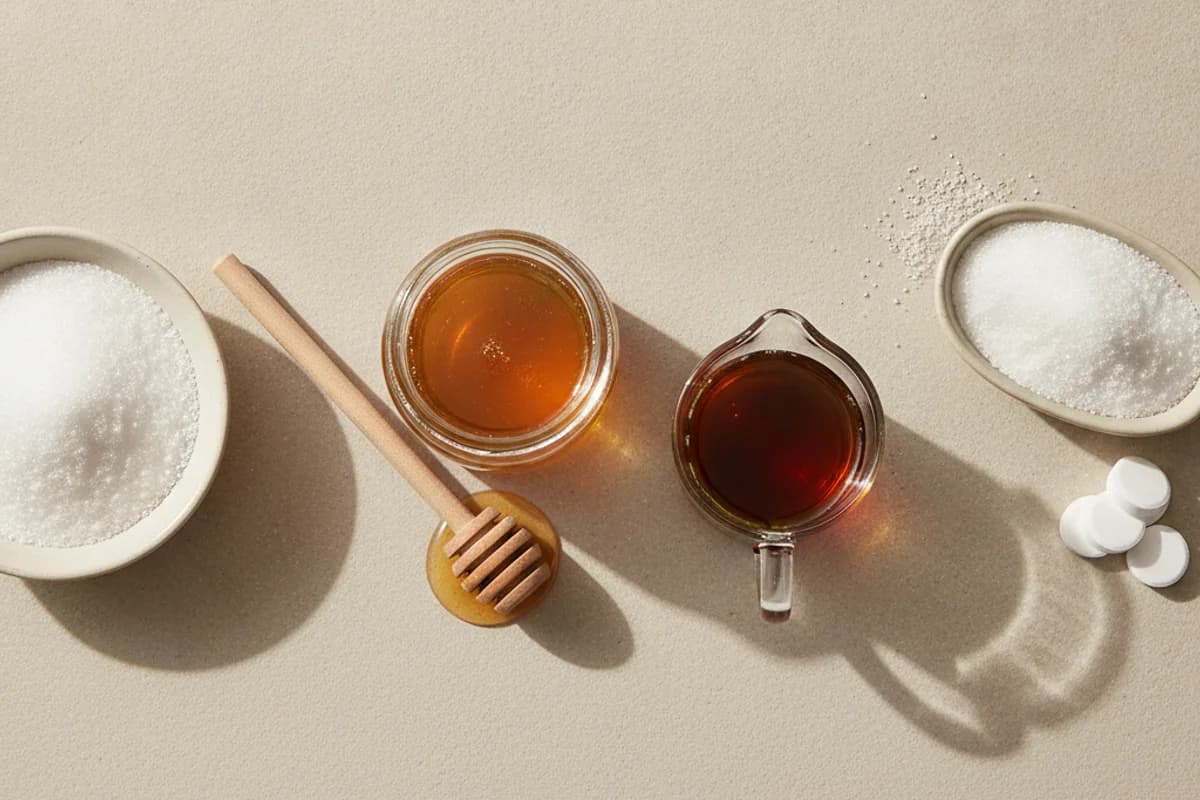
The "natural" ones are still sugar
The WHO's free-sugars target — under 10% of daily energy, roughly 50 g on a 2,000 kcal day — explicitly includes sugars naturally present in honey, syrups and fruit-juice concentrates. Switching from sugar to honey doesn't move you toward it.
The expected calorie saving isn't there either. Per 100 g honey looks lighter, but that's water weight, and nobody measures honey by the 100 g:
| One level teaspoon | Weight | Calories |
|---|---|---|
| Table sugar | ~4 g | ~16 kcal |
| Honey | ~7 g | ~21 kcal |
| Maple syrup | ~7 g | ~17 kcal |
| Erythritol | ~4 g | 0 kcal |
Where they do differ is sugar composition, taste and behaviour in a recipe — real reasons to choose between them, just not health reasons:
| On the Swiss shelf | Sugar make-up | What you're actually getting |
|---|---|---|
| Honey | roughly half fructose, glucose | flavour strong enough to use less; slightly more kcal per spoon than sugar |
| Agave syrup | ~70–90% fructose | low GI, but the reason is a heavy fructose load; poorly tolerated by some |
| Maple syrup | mostly sucrose | flavour; slightly less sweet, so recipe amounts creep up |
| Birnel / pear concentrate | ~60–70% fructose | cheap, vegan, very Swiss — but half the sweetening power, so you use twice as much |
| Date syrup | roughly half and half | good in fruit bakes and Birchermüesli; mild, so easy to over-pour |
| Rice syrup | essentially all glucose | fructose-free and fast fuel during long sessions; worst choice at a desk |
| Coconut blossom sugar | roughly half and half | a caramel note, swaps 1:1 — and nutritionally near-identical to sugar |
| Yacon syrup | mostly fructo-oligosaccharides | genuinely lower in energy; those same fibres are FODMAPs in quantity |
Two claims worth deflating. Coconut blossom sugar's famous glycaemic index of 35 traces back to one small analysis; independent measurements come out considerably higher. And honey's aroma compounds don't survive heating much above 40 °C — if you're using it for flavour, add it after cooking rather than baking it in.
Sugar alcohols: the ceiling your gut sets
Erythritol is 60–80% as sweet as sugar, absorbed in the small intestine and largely excreted unchanged in urine, which makes it the best tolerated of the group. Xylitol is about as sweet as sugar and behaves more like it in baking, but ferments in the colon sooner.
The ceiling is quantified. EFSA's 2023 re-evaluation set an acceptable daily intake for erythritol of 0.5 g per kg of bodyweight — around 37 g for a 75 kg adult — specifically to protect against its laxative effect, and noted that high consumers already exceed it. A single "sugar-free" protein or chocolate bar can carry 15–25 g of polyols.
Three specifics worth carrying: maltitol, the workhorse of sugar-free chocolate, brings the full 2.4 kcal per gram and a real blood-glucose effect, so sugar-free chocolate is a reduced-sugar food rather than a free one. A 2023 Nature Medicine study linked higher blood erythritol to cardiovascular events and raised platelet reactivity in the lab, with a 2024 European Heart Journal paper finding the same for xylitol — association plus mechanism, not proof, and the body makes erythritol itself, so use them to replace sugar rather than as a daily high-dose habit. And xylitol is seriously toxic to dogs in small amounts; sugar-free gum is the commonest poisoning source the FDA sees, and most packets carry no warning.
Stevia, cyclamate and the rest
These sweeten 30 to 600 times more strongly than sugar, so the amounts used are tiny and the energy contribution is effectively zero.
| Sweetener | E number | Sweetness | EU ADI (mg/kg bodyweight/day) | Worth knowing |
|---|---|---|---|---|
| Steviol glycosides | E960 | 200–300× | 4 | plant-derived; liquorice note at higher doses |
| Sucralose | E955 | ~600× | 15 | the cleanest taste of the group |
| Aspartame | E951 | ~200× | 40 | carries a phenylalanine warning for people with PKU |
| Acesulfame-K | E950 | ~200× | 15 | bitter alone, so almost always blended |
| Cyclamate | E952 | ~30–40× | 7 | the lowest ADI here; US-banned since 1970, EU/CH-authorised |
| Saccharin | E954 | 300–400× | 9 | cyclamate's partner — together they are Assugrin |
Cyclamate is the one Swiss readers use most without knowing its name. It's the weakest sweetener of the group, so it's blended roughly 10:1 with saccharin to mask each other's off-taste — that blend is the classic tabletop dispenser. Its ADI was lowered from 11 to 7 mg/kg in 2000 because gut bacteria convert some of it to cyclohexylamine, and it's the one number here a heavy user could actually reach: about 490 mg for a 70 kg adult, against an EU maximum of 250 mg per litre in energy-reduced soft drinks — roughly two litres. Most drinks use blends and aren't dosed to the maximum, so treat that as a worst case; still, if you drink light soft drinks by the litre, vary the brand. The US ban followed a 1969 rat study at very high doses that later WHO and EU reviews did not confirm for humans — a regulatory decision never reversed, not current consensus. We went through the aspartame debate and the drinks question in zero drinks and training.
What the label may claim
Only two health claims are authorised in the EU for sugar replacers, both from one EFSA assessment: replacing sugar with them maintains tooth mineralisation and produces a lower blood-glucose rise after the meal. Weight loss is not on the list — a fair summary of the evidence, and consistent with the WHO's 2023 advice against relying on sweeteners for weight control. The front-of-pack wording is regulated too: sugar-free means under 0.5 g of sugars per 100 g, no added sugar means the food's own sugars remain, and reduced sugar means at least 30% less than the comparable product — which can still be a lot. Our guide to reading food labels has the Swiss and EU rules.
What this means when you train
- Fat loss: real but small. Dropping two sugared coffees is roughly 60–70 kcal a day, in the region of two to three kilos of fat over a year if nothing else changes — planning arithmetic, not a promise. The lever is total calories and protein; losing weight without counting calories is the better starting point.
- Fuelling: sugar is the tool, not the enemy. Sweeteners deliver zero carbohydrate, so replacing the sugar in your bottle on a two-hour run removes the point of carrying it. The same 40 g is a poor idea in an afternoon coffee and a good one at kilometre 15.
- Gut comfort: polyols are the risk. Stevia and sucralose in normal amounts do nothing to your digestion. Sugar alcohols can — and they're in exactly what athletes reach for.
Baking: what actually swaps
Sugar does three jobs in a recipe — sweetness, bulk and browning — and most alternatives only do the first.
| Instead of 100 g sugar | Use | Watch out |
|---|---|---|
| Erythritol | ~130 g | no browning or caramelising; recrystallises as it cools; cooling aftertaste |
| Erythritol–stevia blend | as on the pack | bulk comes from the erythritol — usually the most usable baking option |
| Xylitol | ~100 g | holds moisture well, but won't feed yeast, so it fails in yeast doughs |
| Honey, maple, date syrup | ~75 g, and 20 ml less liquid | browns much faster — drop the oven 10–20 °C; still sugar |
The simplest move is the one nobody sells: cut the sugar by a third and change nothing else. Most cakes and doughs tolerate it, and yeast doughs need only a fraction of what recipes call for.
In the GetMyCoach nutrition coach
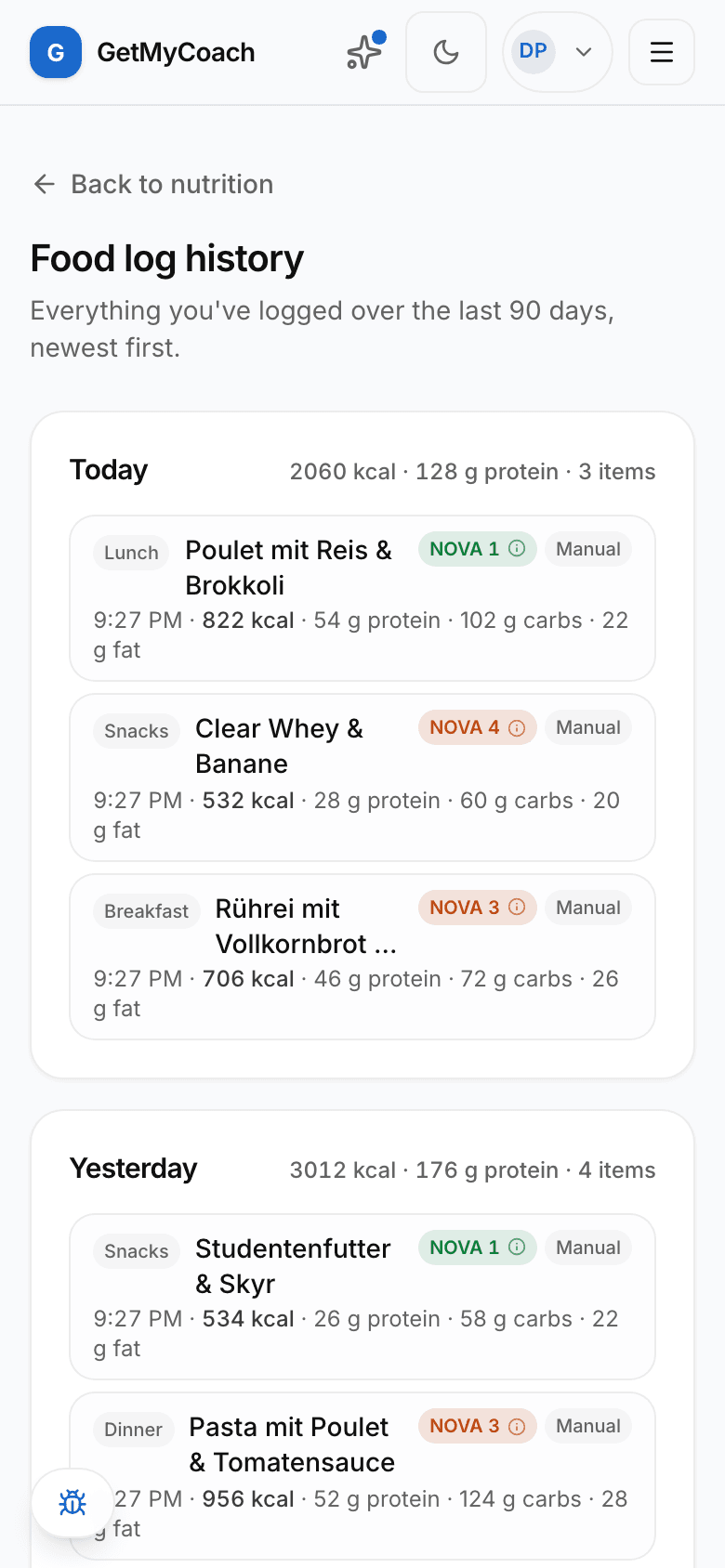
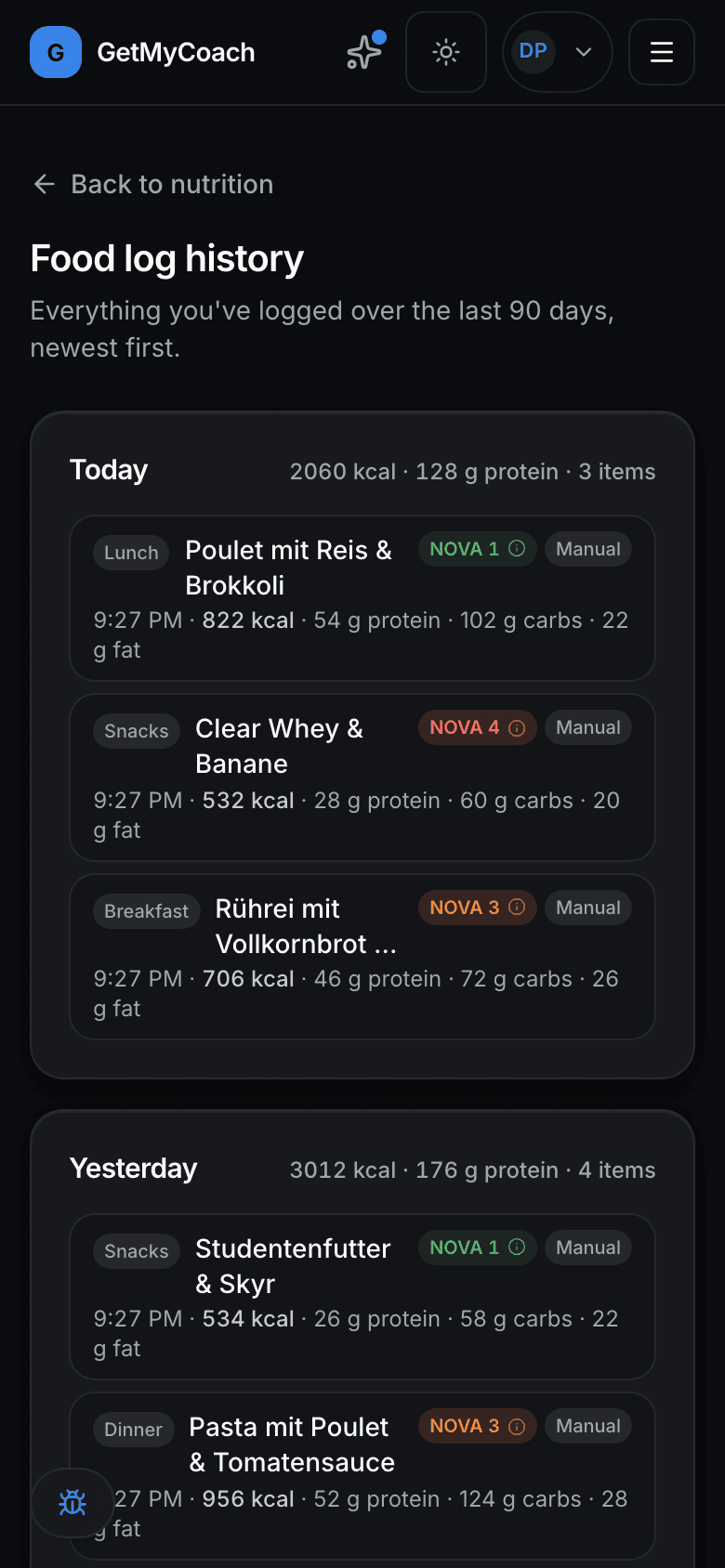
Sugar is hard to judge from a label because the number that matters isn't on it — how much energy your own training that day actually needs. That's what the nutrition coach works out: it reads the sessions your plan prescribes and turns them into calorie and carbohydrate targets that move with your week. Every item you log is also scored for food quality, which is where a "sugar-free" product stops hiding, because swapping sugar for maltitol changes the sugar line and very little else.
Frequently asked questions
Which sugar alternative is the healthiest?
For everyday use, erythritol and steviol glycosides have the best combination of near-zero energy, no blood-glucose effect and a large safety margin — with erythritol capped by what your gut tolerates. But "healthiest" is the wrong frame: the only authorised benefits of any sugar replacer are dental and post-meal blood glucose. None causes weight loss, and using less sweetener of any kind is the option nobody markets.
Is honey healthier than sugar?
Barely, and not in the way it's sold. The WHO counts honey's sugars as free sugars, and per teaspoon it carries slightly more calories than sugar because it's denser. Its minerals and antioxidants come in amounts too small to matter at realistic quantities, and its aroma compounds don't survive baking. Its honest advantage is flavour — real enough that you may use less.
Why do sugar-free sweets upset my stomach?
Sugar alcohols. Erythritol, xylitol, maltitol and sorbitol are only partly absorbed, so what's left ferments in the colon — gas, cramping and a laxative effect. Labels must warn that excessive consumption may produce laxative effects, and that warning is literal.
The bottom line
- Check which family you're buying. Honey, agave, maple, Birnel and coconut blossom sugar are sugar; only polyols and intense sweeteners take energy out of your day.
- A swap works, an addition doesn't. These earn their place by replacing sugar you already ate, not by adding sweet things you didn't.
- Sugar alcohols come with a number. Roughly 0.5 g per kg of bodyweight for erythritol, enforced by your gut — never trial it before a session.
The sugar question is really an energy question
GetMyCoach works out your calorie, protein and carbohydrate needs from the training you're actually doing, scores what you log for food quality, and moves the targets with your week.
Sources
- WHO Guideline: Sugars intake for adults and children (2015)The under-10% free-sugars recommendation, and the definition that counts honey, syrups and fruit-juice concentrates as free sugars.
- BLV: Zuckerreduktion — Swiss sugar consumptionThe Swiss federal estimate of roughly 100 g of sugar per person per day, about double the WHO target.
- Swiss Food Composition Database (naehrwertdaten.ch)Official Swiss reference values for the energy and sugar content of honey, syrups and sugars.
- EFSA: Re-evaluation of erythritol (E 968) as a food additive (2023)Sets the acceptable daily intake at 0.5 g/kg bodyweight per day against the laxative effect, and notes high consumers already exceed it.
- EFSA: Health claims for the sugar replacers xylitol, erythritol, maltitol, sucralose and others (2011)The basis for the only two authorised claims: maintenance of tooth mineralisation and a lower post-prandial blood-glucose rise.
- Regulation (EU) No 1169/2011, Annex XIV — energy conversion factorsPolyols are labelled at 2.4 kcal/g, with erythritol the sole exception at 0 kcal/g.
- European Parliament answer E-1020/2009 on cyclamateThe SCF lowering of the cyclamate ADI from 11 to 7 mg/kg bodyweight, and the cyclohexylamine conversion behind it.
- WHO advises not to use non-sugar sweeteners for weight control (2023)The conditional recommendation, its low-certainty evidence base, and its exclusion of sugar alcohols.
- Witkowski et al., Nature Medicine 2023 — erythritol and cardiovascular event riskAssociation across three cohorts plus a platelet-reactivity mechanism; the 2024 European Heart Journal paper reports the same pattern for xylitol.
- FDA: Paws Off Xylitol — It's Dangerous for DogsSugar-free chewing gum is the most commonly reported source of xylitol poisoning in dogs.
Last reviewed: August 2026. This article is general nutrition and training information, not medical advice. Acceptable daily intakes are reviewed periodically and some changed recently — acesulfame-K and saccharin were both revised upward in 2024–2025 — so treat the table as current EU values at the review date. Nutrition figures are typical approximate values and vary by brand, recipe and portion. If you have diabetes, PKU, fructose intolerance, an irritable bowel or another condition, get individual advice before changing how you sweeten your food.