10 Minutes of Walking After Meals: Does It Help You Lose Weight?
What a short walk after eating actually changes — a measurably smaller blood-sugar rise, backed by good trials — what it does not change, and where weight is really decided.

It is the most shared piece of health advice of the last few years: eat, then walk for ten minutes. It is also one of the few where the research is better than the claim being made for it.
The short answer: a ten-minute walk after eating measurably blunts the blood-sugar rise from that meal — and on its own it will not make you lose weight. Those are two different outcomes with two different evidence bases, and most posts you have read quietly merge them. What the habit is genuinely worth is that it adds up: three short walks a day is most of a week's recommended activity, taken in pieces small enough that they actually happen.
In short: In adults with type 2 diabetes, walking 10 minutes after each main meal lowered post-meal glucose by about 12% compared with one 30-minute walk a day, and by about 22% after the evening meal. Short light walks also beat both sitting and standing for post-meal glucose and insulin in healthy and overweight adults. But activity at guideline levels is generally not enough for meaningful weight loss without changing what you eat. Walk because it is easy to keep and good for your metabolic health — and handle weight where weight is actually decided.
This article is general health and training information, not medical advice. If you have diabetes, take glucose-lowering medication, or are managing another condition, talk to your doctor before changing your routine. Sources checked 11 September 2026 and listed at the end.
What a walk after eating actually does
Two pieces of evidence carry most of the weight here, and it is worth being precise about who they studied.
The first is a randomised crossover study in 41 adults with type 2 diabetes. For two weeks they were told to walk 30 minutes a day; for another two weeks, to walk 10 minutes after each main meal. Same total walking, same guideline compliance — only the timing changed. Post-meal glucose, measured by continuous glucose monitoring, was about 12% lower on the after-meals schedule. After the evening meal, the meal that carried the most carbohydrate and was followed by the most sitting, it was about 22% lower. The authors concluded that activity guidelines should specify post-meal timing.
The second is a meta-analysis of seven crossover trials in mostly overweight adults, comparing a day of prolonged sitting against the same day broken up with frequent short bouts of standing or of light walking. Light walking significantly lowered post-meal glucose and insulin against sitting. Standing helped with glucose but not insulin — and walking beat standing on both. Getting up matters; moving is better.
Note the shape of both findings. Neither measured weight. Both measured what happens in the hours after a meal, and both found that when you move changes that more than the total minutes suggest.
Blood sugar today is not weight loss this year
This is the join most articles skip over, so here it is plainly.
A smaller glucose spike after lunch is a metabolic outcome. It is a real one — postprandial glucose is worth managing, particularly if you have or are at risk of type 2 diabetes. But a flatter curve after a meal is not a smaller meal, and it does not create an energy deficit of any consequence. Ten minutes of easy walking costs most people somewhere in the region of 30 to 50 kcal. Repeated three times a day, every day, that is real but small — and it sits well inside the range that ordinary variation in how much you eat can erase without you noticing.
The broader literature agrees. A review of exercise and weight loss concluded that even hitting the aerobic activity guidelines — 150 minutes of moderate or 75 of vigorous activity a week — is generally not enough for clinically significant weight loss or weight maintenance without also restricting calories. Movement is not competing with food here. It is doing a different job.
So the honest position: walk after meals because it is one of the easiest metabolic habits to keep and because the post-meal evidence is good. Do not expect the scale to answer for it.
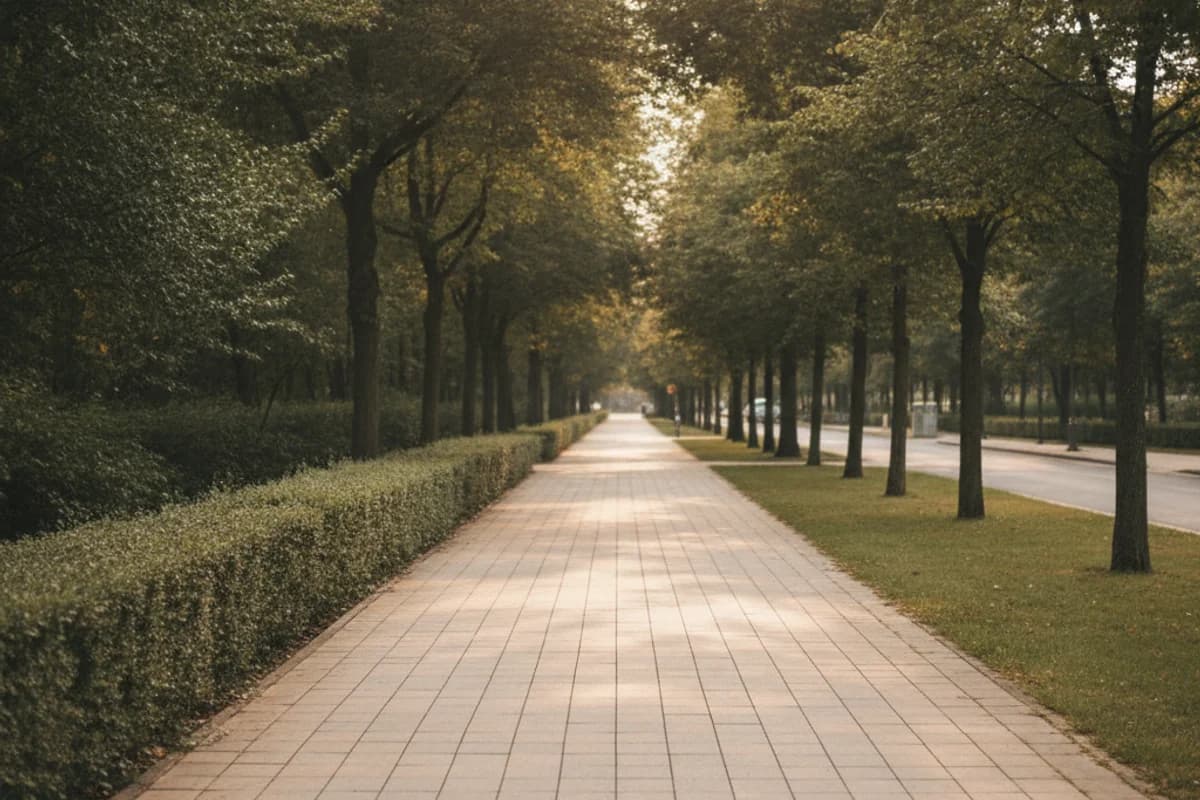
The habit, without the pace and step rules
The reason this habit works is that it has almost no activation cost. Adding rules is the fastest way to break it.
- Easy is the intended intensity. The trials above used light-intensity walking — conversational, not brisk marching. This is one of the rare cases where the low-effort version is the version that was studied.
- Start within roughly half an hour of finishing. The effect is on the glucose rise from that meal, which peaks in the first hour or so. Walking three hours later is still good for you; it is no longer this.
- Ten minutes is a floor, not a target. Longer is fine. A rule that says fifteen when you have eight is a rule you will drop.
- You do not need to count steps or calories. No official guideline requires a minimum bout length any more — the 2018 US activity guidelines removed the old ten-minute rule, and episodes of any length now count towards the weekly total.
- The evening meal is the one to protect. It produced the largest effect in the Reynolds study, and for most people it is followed by the longest unbroken stretch of sitting of the day. If you only manage one walk, make it that one.
One thing to be careful with: a walk is not a payment for a meal. Framing it as compensation — I ate that, so I owe ten minutes — turns a pleasant habit into an accounting exercise, and that framing is associated with worse, not better, long-term eating behaviour. Walk because the walk is good.
When ten minutes is not available
Most days the ten minutes are not a clean block. These are the versions that survive real life.
| Situation | What works | Why it still counts |
|---|---|---|
| Office lunch, back-to-back meetings | Two laps of the building, or stairs down and up | Short walking breaks beat both sitting and standing in the trial data |
| Small children at home | The walk is the pram; go round the block after dinner | Light intensity is the studied intensity — pushing a pram qualifies |
| Rain, ice, darkness | Indoor: stairs, corridor, supermarket, or 10 minutes tidying on your feet | Nothing in the evidence requires outdoors or a specific surface |
| Eating out, no route | Walk part of the way home, or get off one stop early | Timing matters more than the setting |
| Genuinely no ten minutes | Three minutes, repeated | Bout-length minimums were removed from the guidelines in 2018 |
The pattern across all five: keep the timing, negotiate everything else. A three-minute stair climb twenty minutes after lunch is closer to the studied intervention than a brisk 40-minute walk at 9 p.m.
Where GetMyCoach fits, and what it does not track
Be clear about the boundary first, because it matters for whether the rest is useful: GetMyCoach does not count your steps and does not detect walks. There is no pedometer, no phone-motion tracking, no automatic activity import. A walk after dinner is your habit, and it stays yours.
What the app does is the other half — the half that actually decides body weight. You pick a goal, and your daily calorie and protein targets are built from your body data plus the training your plan actually contains that day. In Body & everyday life you tell it what your normal day outside training looks like — mostly sitting, mixed with some walking, or a physical job — and that sets the everyday-movement part of your maintenance estimate. There is an optional daily-steps field you can type in yourself. That is a number you supply, not one the app collects.
That distinction is the practical one. If a daily walking habit genuinely moves you from "mostly sitting" to "mixed / some walking", the honest thing is to change that answer once it is true and let your target reflect it — rather than have an app infer a change in your life from a sensor.
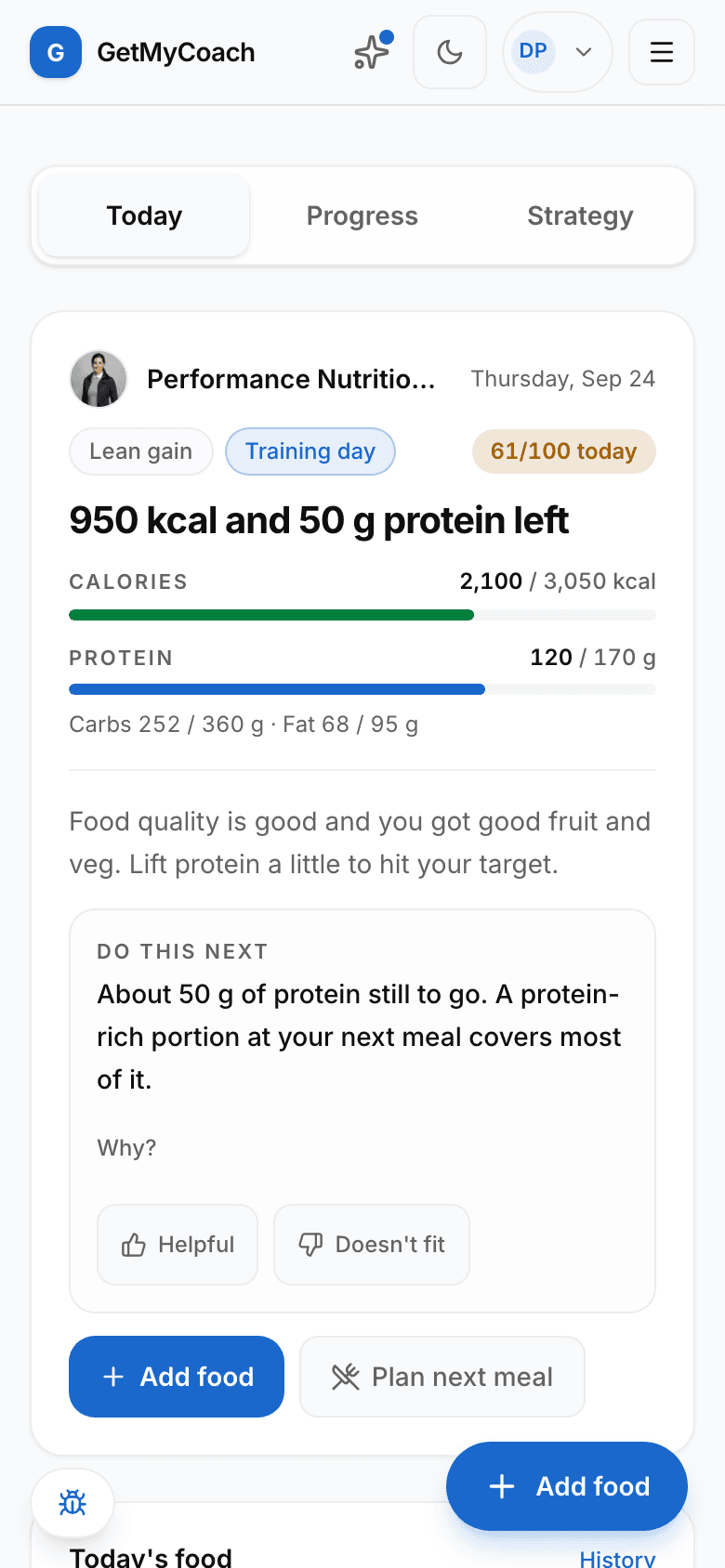
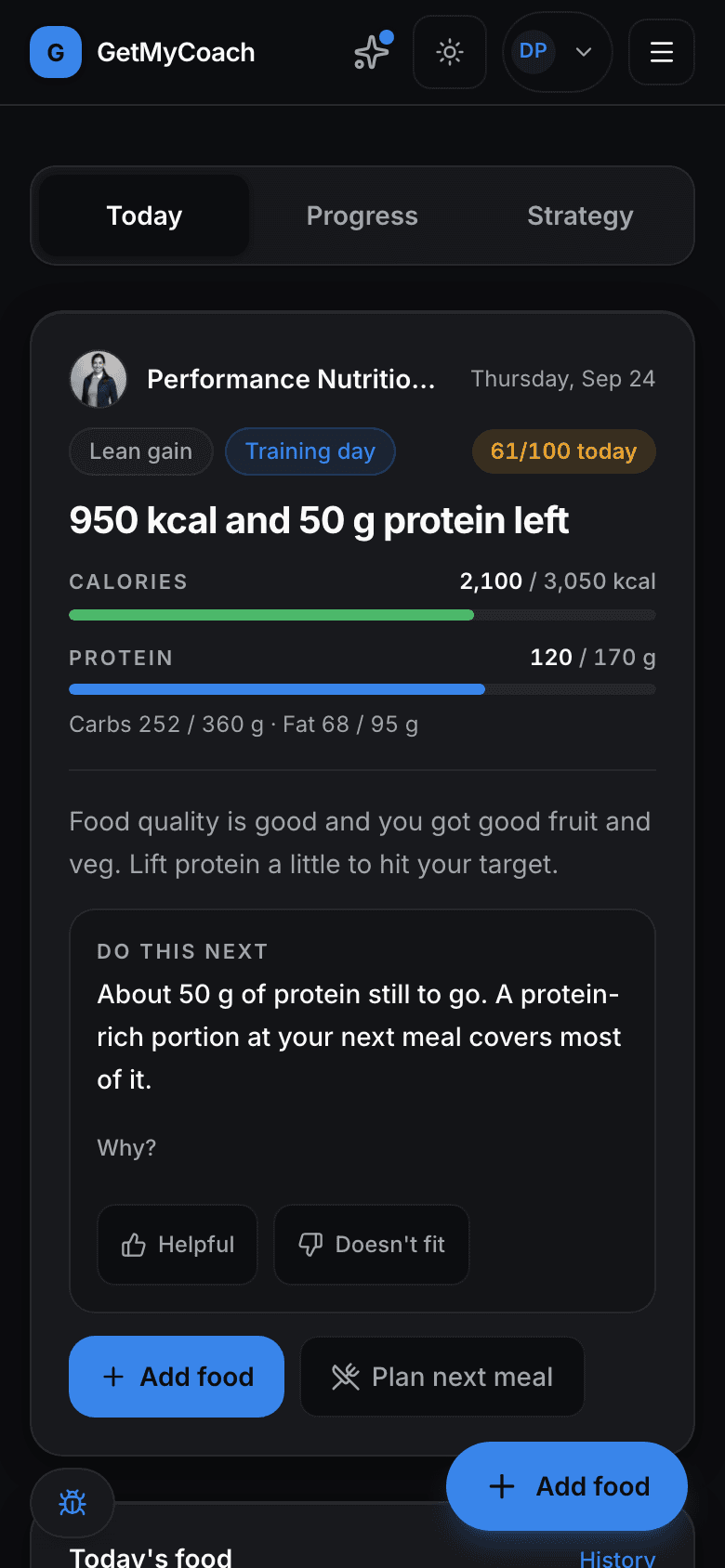
You log what you eat by describing it, by scanning a barcode, or by name. At the end of the day your coach gives one score out of 100 across calories, protein, food quality, fuel timing and fibre, with a "Why?" behind it showing exactly which days and values it used. It gives you one prioritised thing to change, not a list. And where the data is too thin to say something solid, it says that instead of producing a confident-looking number.
Nutrition works on its own here: you do not need a training plan to use it, and choosing the nutrition goal does not generate one.
The other half of the habit
A walk after dinner is the easy part to keep. The part that decides the outcome is what was on the plate before it — targets, logging and a daily read that is honest about what it does not know.
What actually decides the number on the scale
If you came for weight loss, the ranking is not close, and pretending otherwise wastes your year.
- 1The post-meal walk~30–50 kcal
Excellent for post-meal glucose · a rounding error on the energy balance
- 2Total weekly activity150–300 min moderate (WHO)
Three tens a day is 210 minutes a week · real, and still not where weight is decided
- 3Protein and resistance trainingTwo strength days a week
Protects muscle while you lose fat · keeps the loss from costing you strength
- 4What and how much you eatWhere the deficit lives
The one lever with the range to move body weight · everything below it supports this
For the top rung, our guide on losing weight without counting every calorie covers the approaches people actually sustain, and daily calorie needs gives you the starting number; for the rung below it, how much protein per day.
That ordering is not an argument against walking. It is an argument for not letting the walk stand in for the two rungs above it.
When not to walk it off
A short easy walk is safe for almost everyone, but there are real exceptions and they deserve to be stated rather than implied.
- If you take insulin or other glucose-lowering medication, adding activity after meals changes your glucose response and may change your dose or hypo risk. This is a conversation with your doctor or diabetes team before you start, not after.
- Dizziness, chest pain, breathlessness, or feeling faint during or after eating is a reason to stop and get it checked, not to push through a habit.
- Reflux, hiatus hernia or severe bloating can be worse with movement right after eating for some people. Walking upright is usually better tolerated than bending or lying down, but if it hurts, wait longer or walk before the meal instead.
- If you are pregnant, recovering from surgery, or managing a cardiac or musculoskeletal condition, follow the advice you were given over anything on this page.
None of this makes walking dangerous. It makes "always walk after every meal" the wrong shape of advice for some people, which is why you will not find that sentence here.
Frequently asked questions
How long should I walk after eating?
Ten minutes is the number the best-supported study used, and it is enough to change the post-meal glucose response. Longer is fine and burns slightly more energy, but the evidence does not show that you need it for the metabolic effect. If ten is not available, three minutes repeated is still better than sitting.
How fast should I walk?
Easy. The trials used light-intensity walking — the pace where you could hold a conversation without effort. That is not a compromise version: it is the intensity that produced the results. Walking briskly is good training, but it is a different goal and it makes the habit harder to keep.
How soon after a meal should I start?
Within about half an hour of finishing. The effect is on the glucose rise from that meal, which peaks roughly in the first hour. A walk two or three hours later is still worth doing for other reasons, but it is no longer the intervention that was studied.
Does walking after dinner burn fat while I sleep?
No. There is no mechanism by which ten minutes of easy walking meaningfully changes overnight fat oxidation or body weight. What the evening walk does do is lower the glucose response to the meal that typically carries the most carbohydrate — which was the largest single effect found in the after-meals study.
How many calories does a ten-minute walk burn?
Roughly 30 to 50 kcal for most adults, depending on body weight and pace — an estimate, not a measurement. Three a day is perhaps 100–150 kcal, which is real but easily cancelled by ordinary day-to-day variation in eating. Treat it as a health habit rather than a deficit strategy.
Is walking after meals better than one longer walk?
For post-meal blood sugar, yes — that is exactly what the crossover study tested, with the same total minutes on both schedules. For overall fitness and weekly activity totals, the two are equivalent. So it depends on which outcome you are after.
Does it help with digestion or bloating?
Gentle movement after eating is generally well tolerated and many people find it comfortable. The strong evidence here is about glucose and insulin, not digestion — so treat digestive comfort as a personal observation rather than a proven effect, and stop if it makes symptoms worse.
Can I walk after meals instead of exercising?
They are not substitutes. Post-meal walks build up genuine weekly activity minutes, but they contain no resistance training and little cardiovascular challenge — and the WHO guidelines ask for muscle-strengthening work on two days a week as well. Think of the walks as the floor of your week, not the whole of it.
The bottom line
- The post-meal timing is the real finding. Same minutes, better glucose — about 12% lower across meals and about 22% after dinner in adults with type 2 diabetes.
- Walking beats standing, and both beat sitting, for post-meal glucose and insulin. Getting up is good; moving is better.
- It is not a weight-loss method. Guideline-level activity is generally insufficient for meaningful weight loss without changing what you eat — and ten minutes is well under guideline level.
- Keep it rule-free. Easy pace, within half an hour of eating, protect the evening one, and never frame it as paying for a meal.
Handle weight where weight is decided
Keep the walk — it costs nothing and the post-meal evidence is good. For the part that actually moves the scale, GetMyCoach gives you a daily calorie and protein target built from your body and your goal, food logging by description, barcode or name, and a daily coach read that tells you the one thing to change. No training plan required, and no step tracking involved.
Sources
- Reynolds AN, Mann JI, Williams S, Venn BJ (2016). Advice to walk after meals is more effective for lowering postprandial glycaemia in type 2 diabetes mellitus than advice that does not specify timing: a randomised crossover study. Diabetologia 59(12):2572–2578 — 41 adults; 10 min after each main meal vs 30 min daily; iAUC ratio 0.88 overall and 0.78 after the evening meal
- Buffey AJ, Herring MP, Langley CK, Donnelly AE, Carson BP (2022). The acute effects of interrupting prolonged sitting time in adults with standing and light-intensity walking on biomarkers of cardiometabolic health: a systematic review and meta-analysis. Sports Med 52(8):1765–1787 — light walking breaks vs sitting: glucose and insulin both significantly lower; walking also beat standing
- Swift DL, McGee JE, Earnest CP, Carlisle E, Nygard M, Johannsen NM (2018). The effects of exercise and physical activity on weight loss and maintenance. Prog Cardiovasc Dis 61(2):206–213 — guideline-level aerobic activity is generally inadequate for clinically significant weight loss without caloric restriction
- Bull FC et al. (2020). World Health Organization 2020 guidelines on physical activity and sedentary behaviour. Br J Sports Med 54(24):1451–1462 — 150–300 min moderate or 75–150 min vigorous weekly, plus muscle strengthening on two days
- Piercy KL et al. (2018). The Physical Activity Guidelines for Americans. JAMA 320(19):2020–2028 — the previous 10-minute minimum bout length was removed; episodes of any length count toward the weekly total