Is Bread Healthy? Your Guide to Bread, Flour and Nutrition
Is bread healthy? Learn how white, half-white, ruch and wholegrain flour differ, which flour suits bread, pizza, cakes and more, and which bread fits your everyday life, sport and digestion.
The short version: Bread isn't automatically healthy or unhealthy. What matters is the flour type, the processing, the portion, the topping and your overall diet. For everyday life, ruch and wholegrain breads are usually a good choice.
White, ruch, wholegrain or sourdough: the choice is huge, and few questions attract as many half-truths as "is bread healthy?". This guide shows you — with no fear of carbs — how the flour types differ, which flour suits which job, and which bread fits your day. (A quick note on Swiss terms: Ruchmehl is a mid-dark Swiss flour between half-white and wholegrain, and Halbweissmehl is half-white flour.)
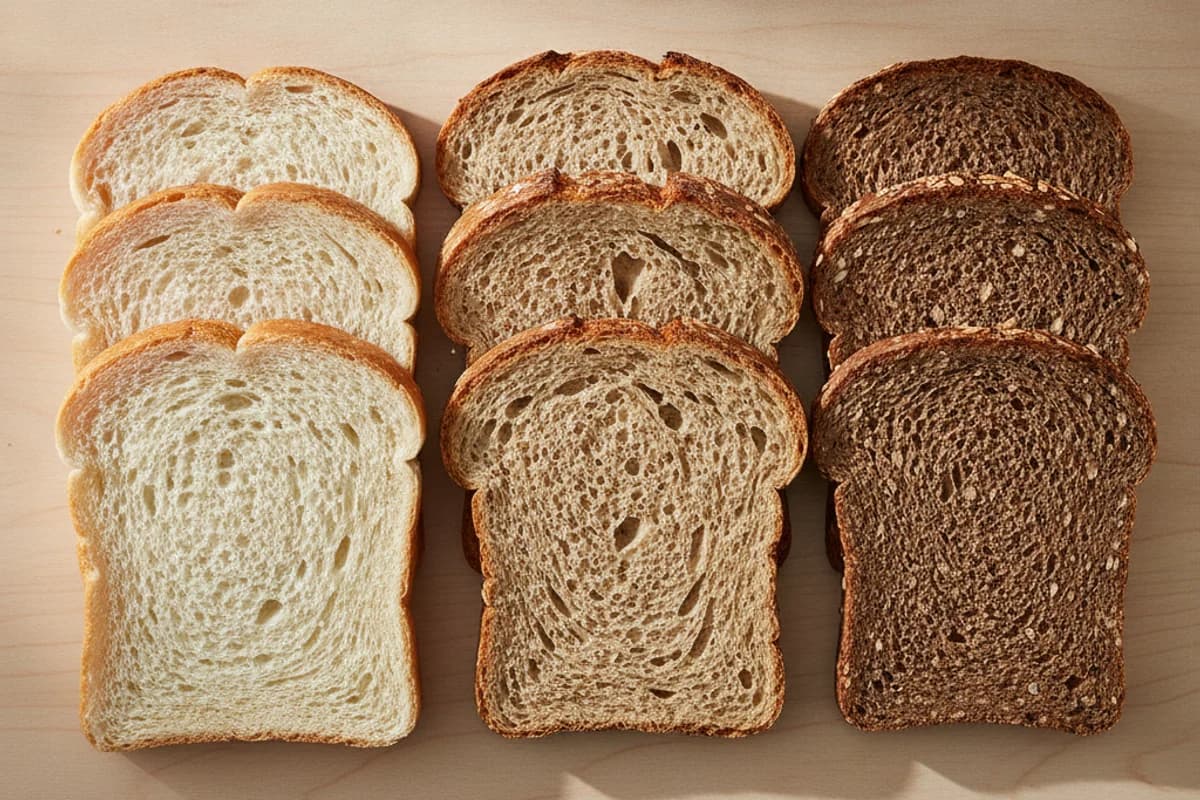
Light bread
- soft and airy
- easy to digest
- less fibre
Ruch & half-white bread
- a good middle ground
- more flavour
- fits everyday life
Wholegrain bread
- high in fibre
- usually keeps you full longer
- more of the whole grain
Is bread healthy?
Bread can be a good source of carbohydrates, plant protein and — depending on the flour — fibre, vitamins and minerals.
Whether a bread fits your diet doesn't depend on its colour alone. A dark bread isn't automatically wholegrain. Colour can also come from malt, syrup or other ingredients. What matters more is the flour type, the wholegrain share, the ingredient list, the amount of seeds and grains, the salt content, the portion, the topping and your overall diet.
Swiss nutrition guidelines suggest three portions of grain products or potatoes a day, at least half of them wholegrain.
White bread or wholegrain bread?
White bread is made mostly from light flour. Much of the outer layers and the germ have been removed.
- soft and airy, often easy to digest
- neutral taste, good for baguette, toast and light rolls
- can be practical before intense exercise
- less fibre, and often keeps you full for less time
Wholegrain bread is made from wholegrain flour or wholemeal groats.
- high in fibre, often keeps you full longer
- provides more minerals and vitamins
- a good choice for everyday life
- harder to digest at first for sensitive people, and needs more liquid to bake
Four common myths
Myth 1
Bread automatically makes you gain weight
Bread on its own doesn't cause weight gain. What matters is total energy intake over time. Butter, cheese, cold cuts, spreads and large portions all raise the energy density of a bread meal considerably.
Myth 2
Carbs in the evening are bad
Timing alone doesn't decide whether a meal is healthy. More important are:
- the total amount
- the quality of the foods
- your personal energy needs
- movement and training
- sleep and daily life
Myth 3
Dark bread is always wholegrain
Colour alone isn't a reliable sign — it can also come from malt or syrup. When buying, look specifically for terms like:
- wholegrain bread
- whole wheat
- whole rye
- wholemeal groats
Myth 4
Spelt is always healthier than wheat
Spelt and wheat are related grains. What matters more than the name is usually whether a light or a wholegrain flour was used. A light spelt bread isn't automatically higher in fibre than a whole-wheat bread. Spelt contains gluten and is not suitable for people with coeliac disease.
The simple flour guide
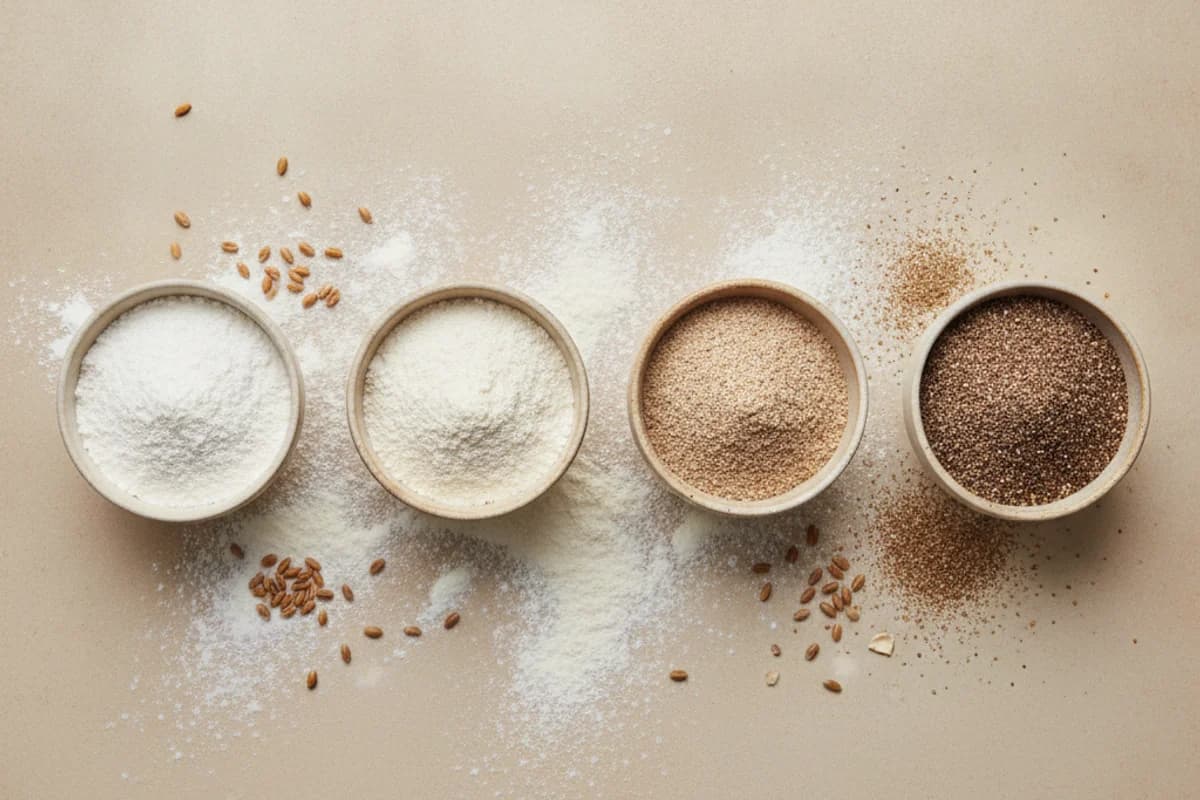
In Switzerland, flours are often labelled with terms like white flour (Weissmehl), half-white (Halbweissmehl), ruch (Ruchmehl) and wholegrain (Vollkornmehl). The type number roughly describes the flour's mineral content: a higher number means more of the grain's mineral-rich parts are included.
The names and type numbers differ between Switzerland, Germany, Austria, France and Italy. So we use the Swiss terms here and mention foreign type numbers only as a supplement. If you're holding a German or Austrian packet and want to know what 405, 550, 630 and 1050 actually measure — or which flour fits a fat-loss, muscle-gain or training goal — we cover that in a separate guide: which flour for fat loss, muscle gain and training.
What do you want to bake?
Pick what you want to bake — we'll show you the simplest choice and a more nutrient-dense alternative.
Best simple choice
Ruch flour
More nutrient-dense alternative
Half-white or wholegrain flour
The flours in detail
White flour
approx. Swiss Typ 400 · DE Type 405
Very light and finely milled, mild taste, great for baking. Contains few of the grain's outer layers and less fibre than darker flours.
Good for
- Cakes and tortes
- Cookies and sponge
- Light rolls and baguette
- White bread
- Fine doughs and sauces
Nutrition
White flour isn't forbidden or unhealthy as such. It simply provides less fibre and fewer minerals than wholegrain flour.
Coach tip: For more nutrients, first swap 20 to 30 percent of the white flour for ruch or wholegrain flour, using a little more liquid.
Half-white flour
approx. Swiss Typ 720–780 · DE Type 812
Lighter than ruch flour, stronger than white flour, almost free of husk, with a mild grain aroma and good baking behaviour.
Good for
- Everyday and mixed bread
- Light farmhouse loaves
- Rolls and flatbread
- Yeast dough and pizza
- Rustic cakes
Nutrition
A good compromise between a light result and a slightly higher share of grain components.
Coach tip: Ideal for anyone moving from white bread towards stronger loaves.
Ruch flour
approx. Swiss Typ 1100 (a Swiss speciality)
Strong flavour, darker than half-white, contains part of the grain's outer layers and absorbs more water. Makes aromatic loaves.
Good for
- Ruch and farmhouse bread
- Cantonal breads
- Rolls and mixed bread
- Rustic pizza
- Savoury yeast doughs
Nutrition
More fibre and minerals than white flour, but usually less dense and intense than pure wholegrain flour.
Coach tip: For an everyday loaf, often the best balance of flavour, satiety, nutrients, bakeability and a soft crumb.
Wholegrain flour
often approx. Swiss Typ 1900 or labelled wholegrain
Contains almost the whole grain, high in fibre, strong taste. Absorbs much more liquid and makes denser doughs.
Good for
- Wholegrain and mixed bread
- Crispbread
- Wholegrain rolls
- High-fibre pancakes
- Savoury cakes
Nutrition
For everyday life usually the most nutrient-dense choice. But not every recipe has to be 100 percent wholegrain — blends are often better.
Coach tip: When replacing light flour, plan for 10 to 20 percent more liquid, give the dough more resting time, and start with 30 to 50 percent wholegrain.
Spelt flour
available as white, half-white, ruch or wholegrain
Slightly nutty taste and good baking behaviour. Doughs react more sensitively to over-kneading. Contains gluten.
Good for
- Bread and plaited loaf
- Rolls
- Cakes and pizza
- Pancakes
- Mixed breads
Nutrition
Whole spelt contains more of the whole grain than light spelt flour. The word spelt alone says little about the fibre content.
Coach tip: Don't knead spelt doughs too long or aggressively. A resting phase helps you get a stable, moist dough.
Rye flour
available from light to whole rye
Strong flavour, darker colour, often a moist crumb. Excellent for sourdough, often stays fresh longer, and behaves differently from wheat.
Good for
- Rye and sourdough bread
- Mixed bread
- Valais rye bread
- Pumpernickel
- Strong farmhouse loaves
Nutrition
Whole rye provides plenty of fibre. Breads from rye and whole grains can keep you full for a long time.
Coach tip: Pure rye bread is traditionally made with sourdough. For beginners, a rye-and-wheat or rye-and-ruch blend is easier.
Oat flour
you can mill it yourself from oats
Mild and slightly nutty, contains soluble fibre. On its own it doesn't build a stable wheat-dough structure.
Good for
- Pancakes and waffles
- Muffins
- Porridge
- Banana bread
- Small amounts in bread doughs
Nutrition
Provides soluble fibre and works well in mixed doughs. For airy bread, combine it with a bakeable flour.
Coach tip: For classic, airy bread, mix oat flour with a bakeable wheat, spelt or ruch flour.
Pizza flour Tipo 00
Italian fine milling
Very finely milled, developed for elastic doughs and long fermentation. Makes a soft, stretchy pizza.
Good for
- Pizza and focaccia
- Some pasta doughs
- Very light yeast doughs
Nutrition
Mainly a technical and taste choice — not automatically healthier than other light flours. For everyday use you can swap part of it for half-white or ruch flour.
Buying flour at Migros
You'll find these flours in the Migros range. The selection is a practical starting point — not the only right product.
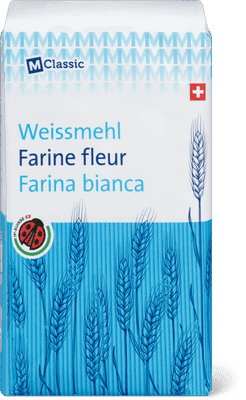
M-Classic IP-SUISSE Weissmehl (white flour)
White flour
For fine, airy doughs, cakes and white bread.
CHF 1.90 · 1 kg
View at Migros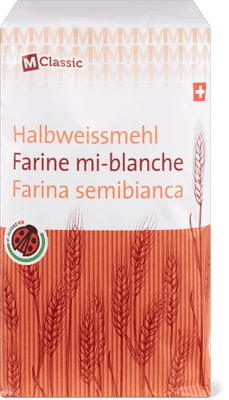
M-Classic IP-SUISSE Halbweissmehl (half-white)
Half-white flour
The light all-rounder for everyday and mixed bread.
CHF 2.10 · 1 kg
View at Migros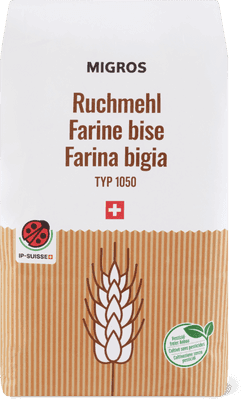
M-Classic IP-SUISSE Ruchmehl (ruch flour)
Ruch flour
The Swiss favourite for aromatic everyday bread.
CHF 1.50 · 1 kg
View at Migros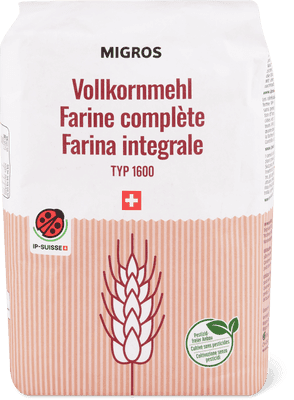
M-Classic IP-SUISSE Vollkornmehl (wholegrain)
Wholegrain flour
For high-fibre wholegrain and mixed bread.
CHF 2.50 · 1 kg
View at Migros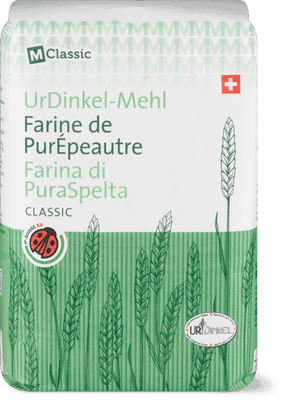
M-Classic IP-SUISSE Urdinkel-Mehl (spelt)
Spelt flour
A nutty alternative for bread, plaited loaf and cakes.
CHF 3.80 · 1 kg
View at Migros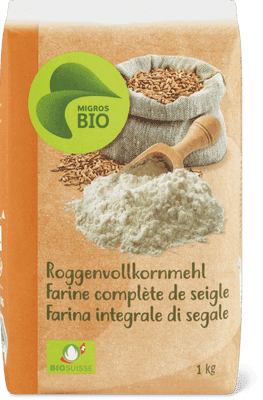
Migros Bio Roggenvollkornmehl (whole rye)
Rye flour
Strong and ideal for sourdough and mixed bread.
CHF 3.60 · 1 kg
View at Migros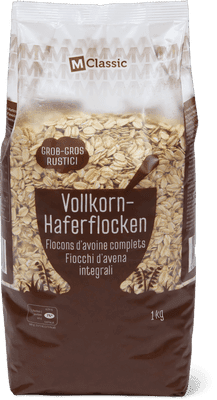
M-Classic Vollkorn-Haferflocken (oats)
Oats
For porridge, pancakes and home-milled oat flour.
CHF 1.40 · 1 kg
View at Migros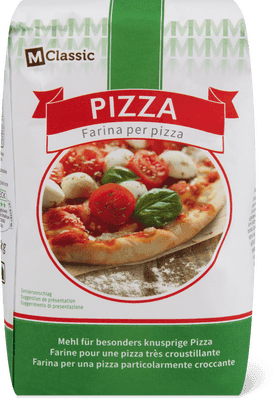
M-Classic Pizzamehl (pizza flour)
Pizza flour
For an elastic, stretchy pizza dough.
CHF 2.60 · 1 kg
View at Migros| Use | Best simple choice | Alternative |
|---|---|---|
| Cakes and tortes | White flour | White spelt flour |
| Cookies | White or pastry flour | Half-white flour |
| Plaited loaf (Zopf) | Zopf or white flour | White spelt flour |
| Light bread | Half-white flour | White flour |
| Everyday bread | Ruch flour | Half-white flour |
| Wholegrain bread | Wholegrain flour | 50% wholegrain and 50% ruch flour |
| Farmhouse bread | Ruch flour | Ruch-and-rye blend |
| Rye bread | Rye flour with sourdough | Rye-ruch blend |
| Pizza | Tipo 00 or white flour | Half-white or ruch flour |
| Pancakes | Half-white or oat flour | Wholegrain flour |
| High-protein baking | Ruch or wholegrain flour with quark and eggs | Oat-flour blend |
Cakes and tortes
- Best simple choice
- White flour
- Alternative
- White spelt flour
Cookies
- Best simple choice
- White or pastry flour
- Alternative
- Half-white flour
Plaited loaf (Zopf)
- Best simple choice
- Zopf or white flour
- Alternative
- White spelt flour
Light bread
- Best simple choice
- Half-white flour
- Alternative
- White flour
Everyday bread
- Best simple choice
- Ruch flour
- Alternative
- Half-white flour
Wholegrain bread
- Best simple choice
- Wholegrain flour
- Alternative
- 50% wholegrain and 50% ruch flour
Farmhouse bread
- Best simple choice
- Ruch flour
- Alternative
- Ruch-and-rye blend
Rye bread
- Best simple choice
- Rye flour with sourdough
- Alternative
- Rye-ruch blend
Pizza
- Best simple choice
- Tipo 00 or white flour
- Alternative
- Half-white or ruch flour
Pancakes
- Best simple choice
- Half-white or oat flour
- Alternative
- Wholegrain flour
High-protein baking
- Best simple choice
- Ruch or wholegrain flour with quark and eggs
- Alternative
- Oat-flour blend
The right bread for your goal
There's no single bread that's ideal for everyone and every situation. The right choice depends on taste, hunger, digestion, activity, training, topping and the rest of your diet.
Goal 1: Stay full longer
Good choices are wholegrain bread, whole-rye bread, bread with whole grains, or ruch bread with seeds. These breads usually contain more fibre and need more chewing.
Good toppings: cottage cheese, quark, egg, chicken, tuna, hummus, or cheese with vegetables.
Goal 2: Fuel up before training
Good choices are half-white bread, light ruch bread, toast, rolls, or a low-fat banana bread. Before intense exercise, easier-to-digest carbs can make sense. Very large amounts of fibre or fat sit heavily in some people's stomachs right before training.
Good toppings: banana, jam, honey, a little cream cheese, sliced chicken, or cottage cheese.
Goal 3: Recover after training
The type of bread matters less than the combination of carbs and protein. Good combinations are ruch bread with cottage cheese, wholegrain bread with egg, a chicken sandwich, bread with tuna, toast with quark and banana, or bread with cheese and tomatoes.
Goal 4: A sensitive gut
Possible choices are light sourdough bread, half-white bread, finely milled wholegrain bread, smaller portions, or well-matured bread. People react differently to very coarse grains, large amounts of seeds, bran, very fresh bread, high amounts of wholegrain and certain fermentable carbohydrates.
Goal 5: Take in fewer calories
Don't just look at the type of bread. What matters more is often the number and thickness of the slices, the amount of butter, the amount of cheese, high-fat cold cuts, mayonnaise, sweet spreads and extra snacks.
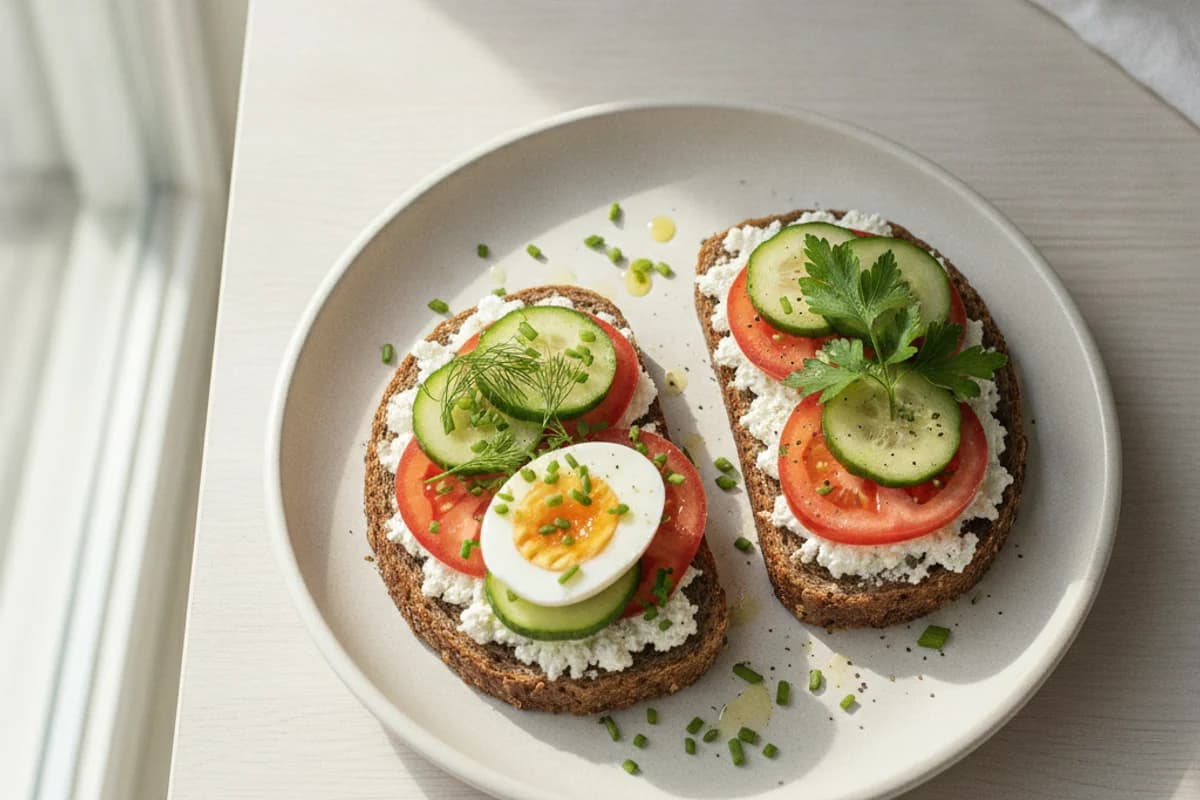
A practical meal: 1 to 2 slices of wholegrain or ruch bread, a protein source, plenty of vegetables or salad, and a moderate spread. For example ruch bread with cottage cheese, tomatoes, cucumber and herbs.
Three simple bread recipes
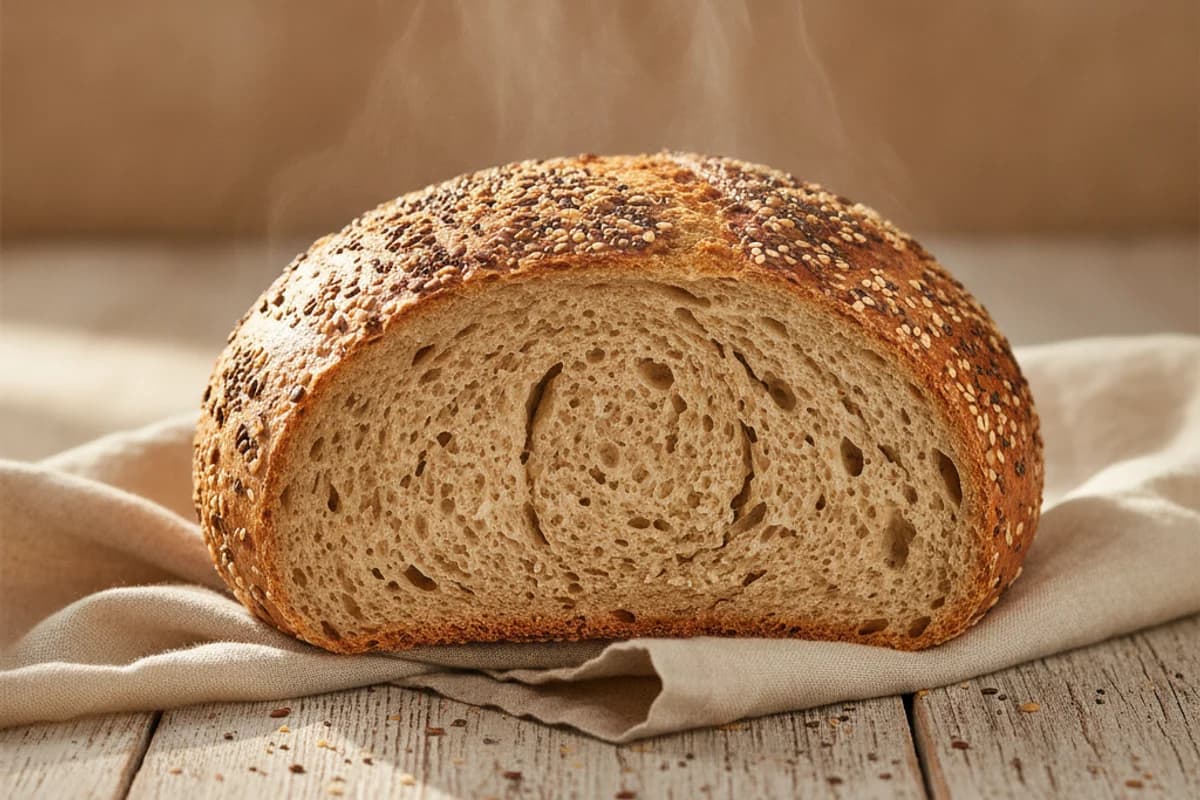
Recipe 1: Simple ruch bread
Prep: 15 minutes · Rest: about 2 hours · Bake: about 40 minutes
Ingredients:
- 500 g ruch flour
- 350–380 ml lukewarm water
- 10 g salt
- 7 g dry yeast or about 20 g fresh yeast
- optional: 1 tsp honey
Method:
- Mix flour, yeast, water and salt into a soft dough.
- Cover and let it rise until the volume has clearly increased.
- Shape and start baking at about 220 °C, then reduce to 200 °C and finish baking.
Recipe 2: Simple mixed wholegrain bread
Prep: 15 minutes · Rest: about 2 hours · Bake: 40–45 minutes
Ingredients:
- 250 g wholegrain flour
- 250 g ruch flour
- 400–430 ml water
- 10 g salt
- 7 g dry yeast
- optional: 30 g sunflower seeds
Method:
- Mix all the ingredients and let the dough rest for about ten minutes.
- Knead briefly again and let it rise, covered.
- Bake in a tin at about 200–220 °C.
Recipe 3: High-protein quark bread
Prep: 10 minutes · Bake: about 45 minutes
Ingredients:
- 250 g quark
- 2 eggs
- 200 g oats
- 100 g ruch or wholegrain flour
- 1 sachet of baking powder
- 1 tsp salt
- optional: kernels or seeds
- a little water if needed
Method:
- Stir the quark and eggs together.
- Mix in the dry ingredients and add a little water if needed.
- Fill a small tin and bake through at about 180 °C.
How to spot a good bread in the shop
Things you can look for:
- Does it explicitly say "wholegrain" on the packaging?
- Which flour comes first in the ingredient list?
- How high is the wholegrain share?
- Does the bread contain whole grains, or just a dark colour?
- Does it provide a relevant amount of fibre?
- How high is the salt content?
- Does the bread taste good to you?
Names like dark, rustic, multigrain, "vital", "fitness", "protein" or sprinkled with a few seeds aren't automatically better. Without a look at the ingredient list, they say little about overall quality.
Conclusion: for everyday life, ruch or wholegrain bread is usually a good choice
Bread can easily be part of a balanced diet. For everyday life, ruch and wholegrain breads offer a good balance of taste, satiety and nutrients. White bread can still have its place — for enjoyment, as an easy-to-digest meal, or around intense exercise.
For flour, a simple guide: white flour for especially light, fine doughs, half-white for light breads and versatile baking, ruch for aromatic everyday bread, wholegrain for more fibre, rye for strong sourdough loaves, spelt as a flavour alternative, and Tipo 00 for elastic pizza and focaccia doughs.
No single type of bread decides whether a diet is healthy. What matters is the whole picture: food choices, portions, vegetables, fruit, protein sources, movement and enjoyment.
Frequently asked questions
Is bread healthy?
Bread can easily be part of a balanced diet. What matters isn't the colour but the flour type, the wholegrain share, the ingredient list, the portion and the topping. For everyday life, ruch and wholegrain breads offer a good balance of taste, satiety and nutrients.
Which flour is best for bread?
For an everyday loaf, ruch flour is often the best all-round choice; half-white flour is a lighter alternative and wholegrain flour adds the most fibre. Blends such as 50% wholegrain and 50% ruch flour work very well too.
Is ruch flour healthier than white flour?
Ruch flour contains part of the grain's outer layers, so it usually provides more fibre and minerals than white flour. Neither is good or bad as such — white flour simply suits fine, light bakes better.
Is spelt healthier than wheat?
Not automatically. What matters more than the grain's name is whether a light or a wholegrain flour was used. A light spelt bread isn't higher in fibre than a whole-wheat one. Spelt contains gluten.
Which bread keeps you full longest?
Usually wholegrain, whole-rye and seeded breads, because they're higher in fibre and take longer to chew. A protein topping such as cottage cheese, egg or tuna adds to satiety.
Which bread is good before training?
Before intense exercise, lighter and easier-to-digest breads (half-white, light ruch, toast) with a small topping can sit better than a large, very high-fibre or high-fat meal.
Is dark bread automatically wholegrain?
No. The colour can also come from malt or syrup. Look for explicit terms like wholegrain, whole wheat or whole rye, and check the ingredient list.
Nutrition and training in one place
GetMyCoach plans your training and keeps an eye on your calorie and protein targets — matched to your goal and your daily life.
This article is general nutrition information, not medical advice. If you have coeliac disease, a wheat allergy or another medical condition, get individual advice before changing your diet.
Sources
- Swiss Food Composition Database (BLV): the fibre, protein and mineral figures per 100 g for the flours and breads in this article
- Aune et al. (2016), BMJ: whole grain consumption and risk of cardiovascular disease, cancer and mortality — systematic review and dose-response meta-analysis
- Reynolds et al. (2019), The Lancet: carbohydrate quality and human health — fibre and whole grain as the quality signal, not the colour of the loaf
- DGE / DACH reference values for dietary fibre: at least 30 g a day for adults
- EFSA (2010): Scientific Opinion on Dietary Reference Values for carbohydrates and dietary fibre