Loading…
A weight gain nutrition plan: a controlled surplus, not just more food
To gain weight you have to take in more energy than you use, for long enough that the trend moves. A small, checkable surplus beats eating indiscriminately — it is easier to keep up, and far less of it arrives as fat. Protein and hard training are what turn the extra energy into muscle; weight gain on its own guarantees nothing. The GetMyCoach nutrition coach sets your calorie and protein target, plans the rest of your day around what is left, and tracks the trend — with or without a training plan.
Creates your free GetMyCoach account and opens the nutrition coach. No training plan, and no sport to choose.
app.getmycoach.ch
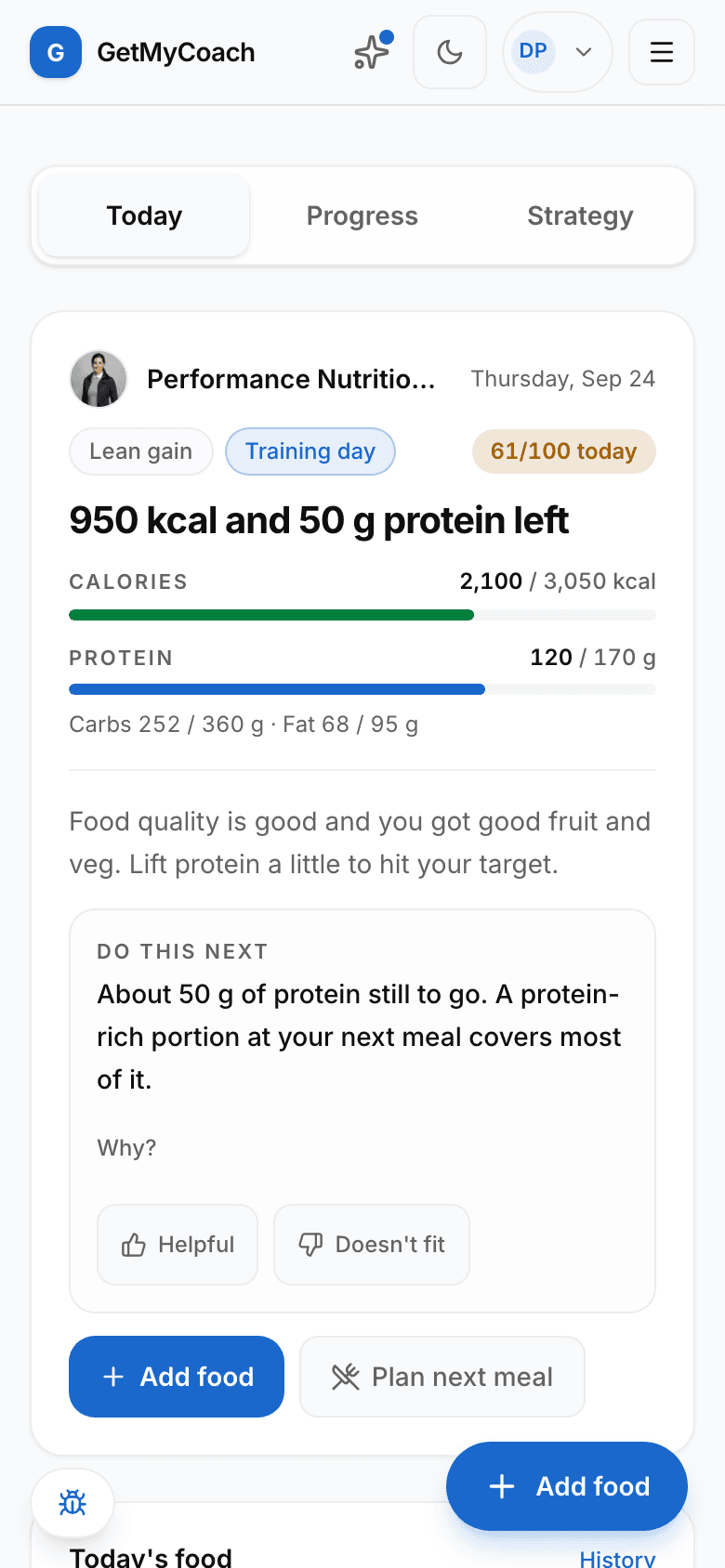
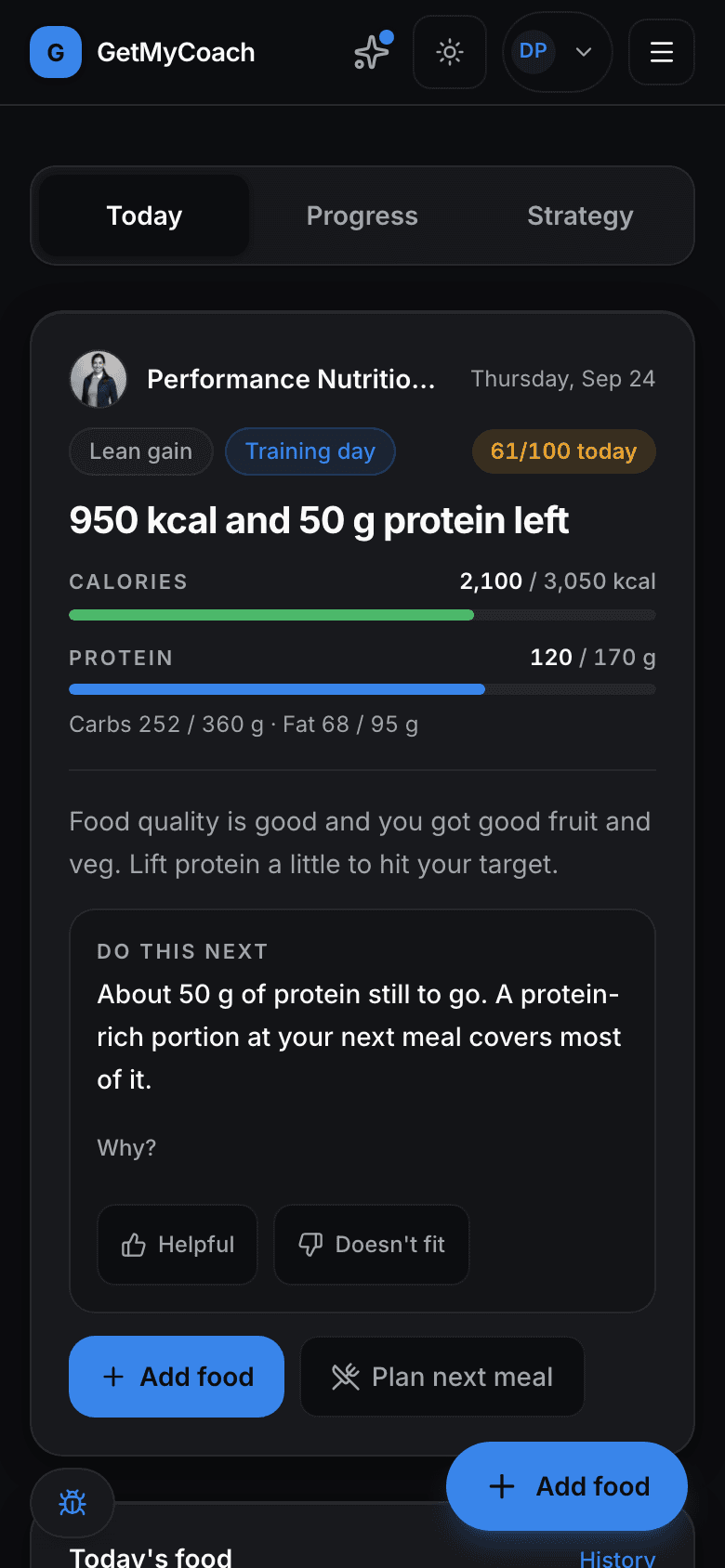
Hit the surplus without forcing it
app.getmycoach.ch
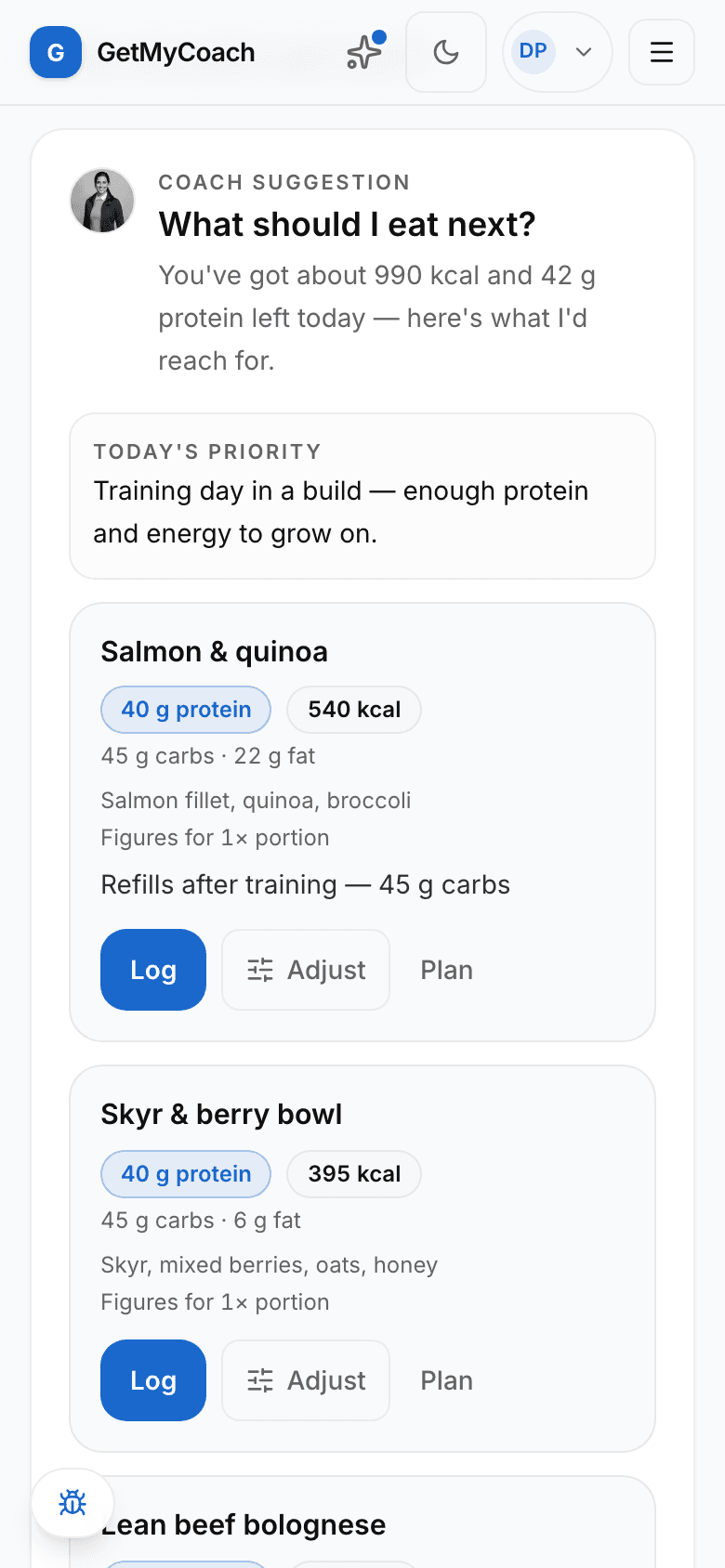
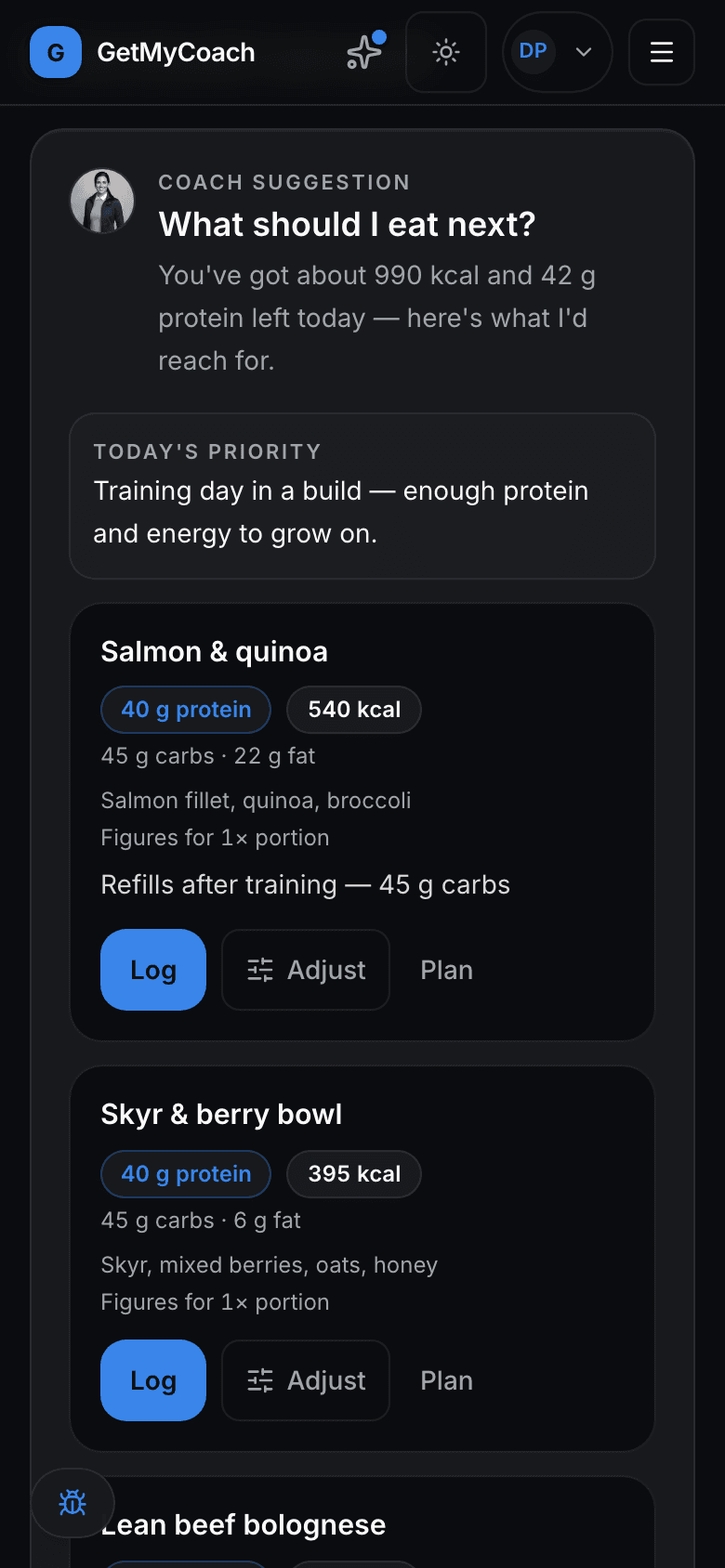
app.getmycoach.ch
Who this page is for
Healthy adults who have decided to gain weight — because they are underweight for their frame, because they want to support a muscle-building block, or because they have simply never been able to put weight on.
It is not for everyone who wants to weigh more, and one boundary matters. If you are losing weight without meaning to, if you are markedly underweight, if you are recovering from or living with an eating disorder, or if weight loss comes with symptoms such as fatigue, fever, digestive trouble or pain — that is a question for a doctor first, not a calorie target. Unintended weight loss has causes worth finding, and an app cannot find them.
A calorie surplus, explained without a magic number
Your maintenance is the energy your body uses in a normal day: your basal metabolism, your life outside training, and whatever training you actually do. Gaining means eating above that consistently — and the size of “above” is the whole decision.
GetMyCoach works with two honest sizes. A lean gain sits roughly 100 to 250 kcal above maintenance: slow, and most of what arrives is usable. A deliberate mass gain sits around 300 to 500 kcal above: faster, and some fat comes with it — which the app tells you when you choose it, rather than after. Neither is a number you copy from a page; both are calculated from your body data and your goal.
And you judge it on the trend, not on a morning. Bodyweight moves with water, food and glycogen; the app draws a smoothed line through your weigh-ins and reports a rate in kilos per week — but only once there are enough of them to mean anything. If the trend is not doing what your goal wants, your coach suggests adjusting the calories, and you decide whether to take it. Adjust in small steps, and give each change a full week before judging it.
Gaining weight and building muscle are not the same job
Energy decides whether you gain. Training decides what the gain is made of. Eat in a surplus with no resistance training and you will gain weight, but you have not given your body a reason to build much muscle with it — so more of it arrives as fat.
That is why this page will not promise you muscle for eating. Use the nutrition coach on its own if that is where you are: your targets, your daily guidance and your coach's read all work with no training plan, and nothing on the nutrition side will create one for you. If you want the gain to be mostly muscle, the other half of the job is a progressive strength plan — and there is one waiting whenever you want it.
Protein, carbohydrates and fat
Protein is the material. For a gain the app targets 1.6 to 2.2 grams per kilo of bodyweight, spread across the day rather than concentrated in one meal, and it does not drop on rest days — that is when the adaptation happens.
Carbohydrates are the easiest way to add energy you can actually train on, and they are what fills a hard session. Fat is the most energy-dense of the three, which makes it the quietest way to close a gap: olive oil, nuts, nut butter and full-fat dairy add a few hundred calories without adding volume you have to chew through.
There are no magic foods and no supplement you have to buy. A weight-gain shake is a convenient way to drink calories when your appetite is small; it is not a requirement, and it is not better than food.
How the GetMyCoach nutrition coach supports it
You get a daily calorie and protein target from your body data and your goal, and you can see what is left of both through the day — which for a gain is the number that matters, because the day usually ends short rather than over.
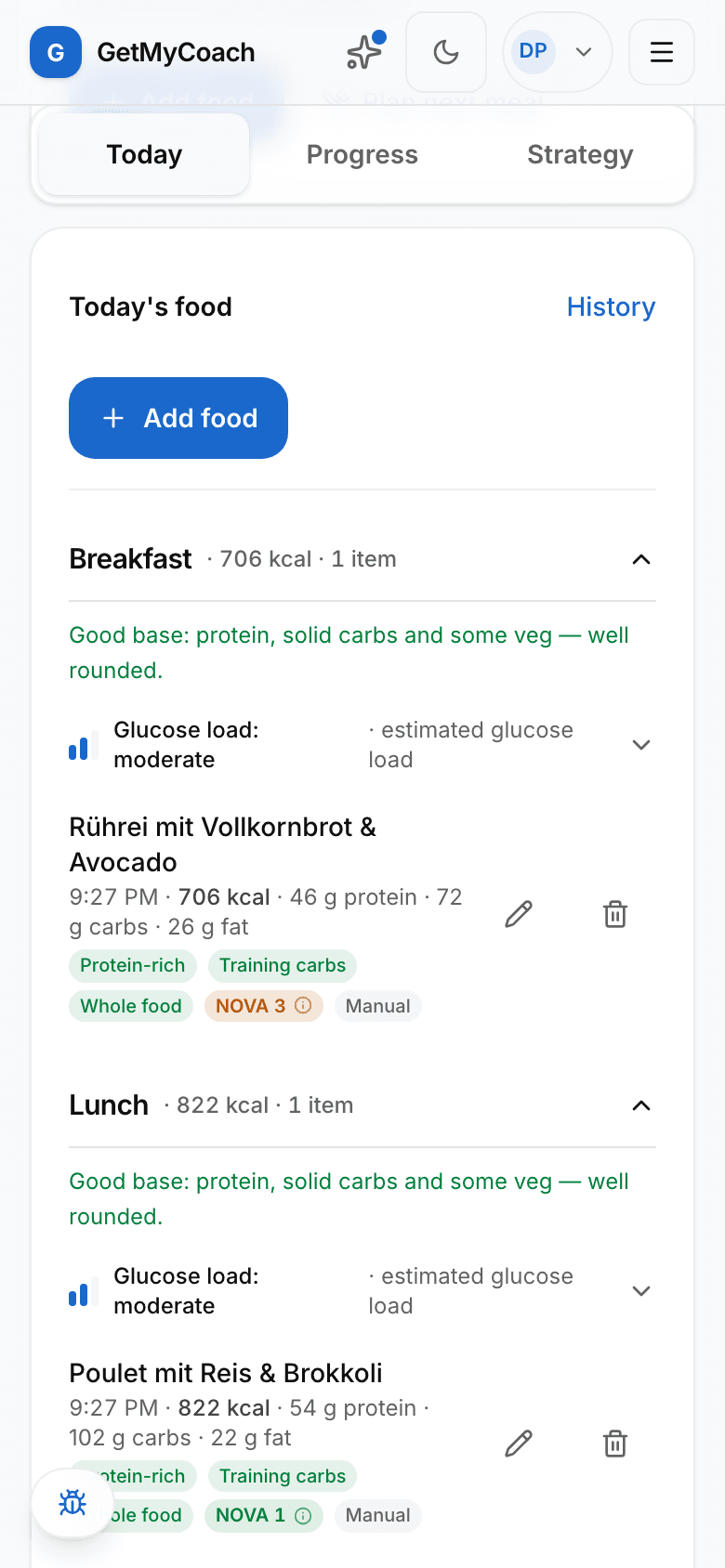
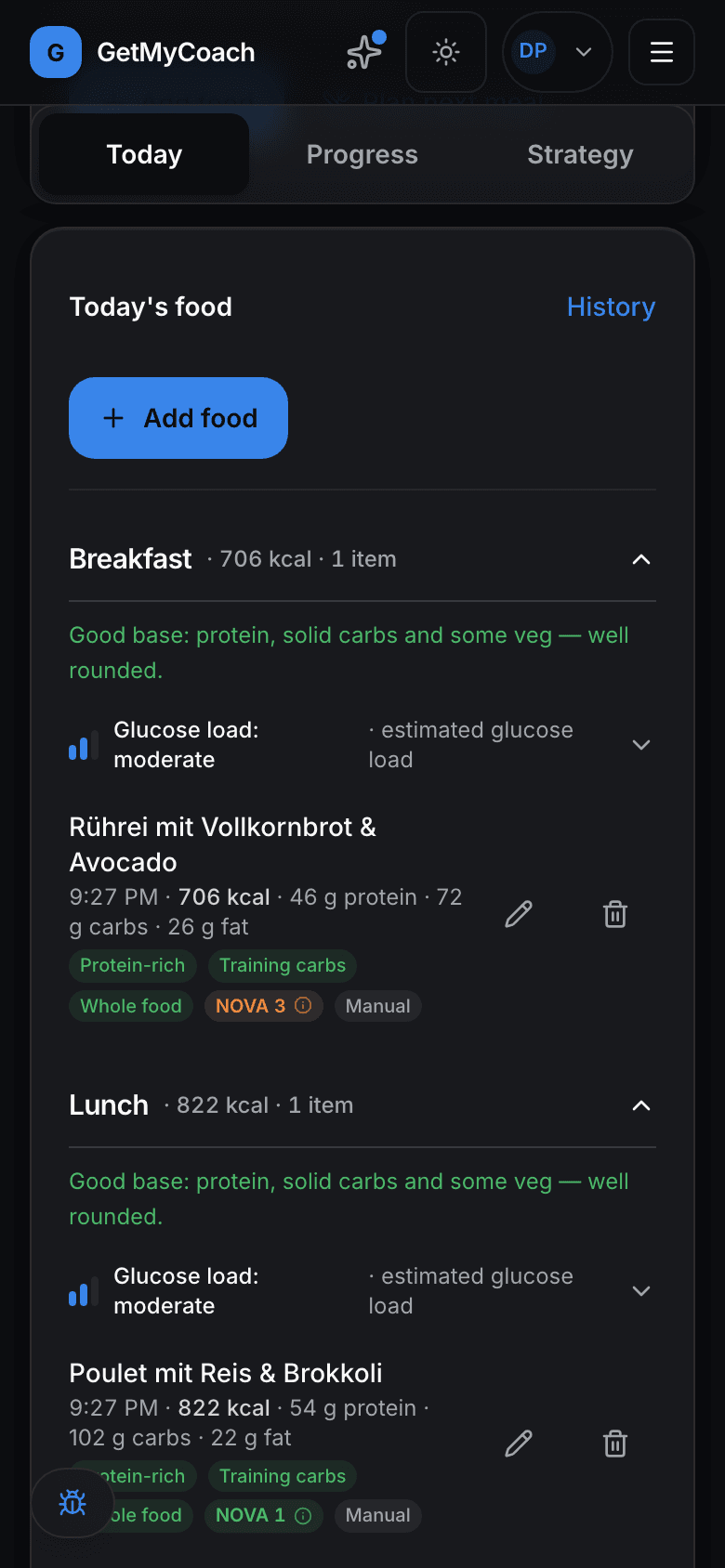
Log by describing a meal, scanning a barcode or photographing the plate. From what is left, your coach turns the rest of the day into two or three concrete meals, or plans lunch, a snack and dinner together so they add up. Portions are adjustable, so the same meal can carry a different amount of the gap.
You also get a daily verdict out of 100 and one prioritised thing to change — and a weekly check-in that reads your logged days and weigh-ins together. When a training plan exists, the targets follow it: hard days carry more energy than rest days, automatically.
An example day for gaining
The shape of a gaining day is not exotic — it is a normal day with energy-dense choices and one more eating occasion. Appetite, not willpower, is usually the limiting factor, so calories that arrive in small volumes do the heavy lifting.
An illustration, not your plan: your own calorie and protein targets come from your body data and the goal you choose.
Breakfast
Oats cooked in milk, with nut butter and banana
Cooking oats in milk instead of water, then adding a spoon of nut butter, is a few hundred calories that take up almost no extra room.
Lunch
Rice or pasta with chicken, tofu or lentils, plus olive oil
Build the plate around the starch rather than the salad. Oil over the finished dish is the simplest lever you have.
Afternoon
Greek yoghurt with honey and nuts, or a sandwich
The extra eating occasion is what makes the surplus reachable. If solid food is hard, a milk-based shake does the same job.
Dinner
Salmon or beef with potatoes and vegetables
Finish the protein for the day and fill the remaining gap with the starch, not with more vegetables.
Evening
Quark or milk, if the day is still short
A last protein-and-energy top-up when the numbers say you are behind — used when needed, not on principle.
The vegetarian route is equivalent: lentils, tofu, tempeh, dairy and eggs cover the protein without difficulty. If your appetite is small, shift energy toward liquids and fats — milk, shakes, oils, nut butters — and add an eating occasion rather than making each meal bigger.
When the weight doesn't move
Almost always it is one of four things. Under-logging is the usual suspect on a cut; on a gain the typical failure is the opposite — days that were never logged at all, which makes your average intake look higher than it really was. Portions quietly shrink when appetite drops. Consistency slips at the weekend, in the opposite direction to a cut. Or the trend window is simply too short to show anything yet: about a fortnight of weigh-ins is the minimum before a rate means much.
The app helps with all four rather than diagnosing you: the log shows which days are actually complete, the weekly check-in says what it still needs before it can judge, and the trend read stays silent rather than inventing a rate. If your weight is genuinely stuck across a well-logged month, the honest next step is either a small, deliberate increase — or a conversation with a doctor if something else feels off.
Frequently asked questions
- How many calories do I need to gain weight?
- More than your maintenance — and maintenance is personal, so no page can tell you the number. It depends on your body size, your daily activity and the training you actually do. The app estimates yours from your body data and adds what your plan demands when you have one, then puts the surplus on top.
- How big should the surplus be?
- For a lean gain, roughly 100 to 250 kcal above maintenance — slow enough that most of what you gain is usable. For a deliberate mass gain, roughly 300 to 500 kcal, which is faster and brings some fat with it. Bigger than that mostly buys you fat and a harder cut later.
- How do I gain weight healthily?
- Add energy to food you already eat rather than replacing it with junk: cook with oil, use whole milk, add nuts, nut butter and dried fruit, build meals around a starch, and add one extra eating occasion. Keep protein high, keep training, and check the trend every week or two rather than every morning.
- Can I build muscle without strength training?
- Barely, and not for long. Eating in a surplus without a training stimulus mostly adds fat — the extra energy has no reason to go anywhere else. If you are untrained you may see a little early change, but building muscle is a training job that nutrition supports, not the other way round.
- How much protein do I need to gain?
- The app targets 1.6 to 2.2 grams per kilo of bodyweight for a gain, spread across the day. More than that is not harmful, but it does not buy extra muscle — a bulk does not need more protein than a lean gain, because the surplus is doing the work.
- What should I eat if I have very little appetite?
- Move energy into things that take up less room: milk instead of water, oils and nut butters, dried fruit, and drinkable calories such as a milk-based shake. Add an eating occasion rather than making each meal larger, and put the biggest meal at the time of day you are hungriest.
- Do I have to count calories?
- You have to know roughly what you are eating, or you cannot tell a real surplus from an intended one — and on a gain the usual failure is eating less than you think. Logging by description, barcode or photo takes seconds, and what you get back is one daily verdict rather than a spreadsheet.
- How fast should my weight go up?
- Slowly. A lean gain is a matter of a few hundred grams a week, and faster is not better — past a point the extra is fat, which you will have to lose again. The app reports your rate in kilos per week once it has enough weigh-ins to be sure, and suggests an adjustment when the trend runs faster or slower than your goal wants.
- Does GetMyCoach work without a training plan?
- Yes. Nutrition coaching stands on its own — targets, daily guidance, logging and your coach's read all come from your body data and the goal you chose. Nothing on the nutrition side creates a training plan for you, and adding one later does not overwrite the goal you set.
- When is medical advice important?
- If your weight is falling without you intending it, if you are markedly underweight, if you have or are recovering from an eating disorder, or if weight change comes with symptoms such as fatigue, fever, pain or digestive trouble — see a doctor before adjusting your intake. GetMyCoach does not diagnose anything and is not a substitute for medical or dietetic care.
Start your weight gain nutrition plan
Set your goal, get a daily calorie and protein target, and a coach verdict on every day — free during early access. No training plan required.
Creates your free GetMyCoach account and opens the nutrition coach. No training plan, and no sport to choose.