Loading…
A weight loss nutrition plan: calories, protein and real progress
Losing weight needs an energy deficit you can hold for months, not a week. That means enough protein to keep the muscle you have, food you actually like, and a way to tell progress from the scale's daily noise. GetMyCoach sets your daily calorie and protein target from your body and your goal, scores what you log, and reads your weight as a trend. A training plan makes those targets training-aware — but it is optional, and nothing here waits for one.
Creates your free GetMyCoach account and opens the nutrition coach. No training plan, and no sport to choose.
app.getmycoach.ch
Log it in seconds — and know what to eat next
app.getmycoach.ch
app.getmycoach.ch
How a weight loss nutrition plan actually works
You lose fat when you take in less energy than you use, over weeks — that part is not controversial. What decides whether it happens is whether the plan survives contact with your life: whether you can eat that way on a Tuesday evening, whether you are full enough to stop, and whether you keep going after a bad weekend.
So there is no universal calorie number here, and you should be suspicious of any page that gives you one. Your target is built from your body data — height, weight, age, sex — the kind of day you have outside training, and the goal you chose. When you have a training plan, the energy it demands is added on top, so a hard session day and a rest day do not carry the same target.
The deficit itself stays moderate on purpose: enough to move the scale, small enough that you keep your protein up, keep training hard and keep your food recognisable. Aggressive cuts are not a faster route, they are a shorter one.
What the nutrition coach actually does
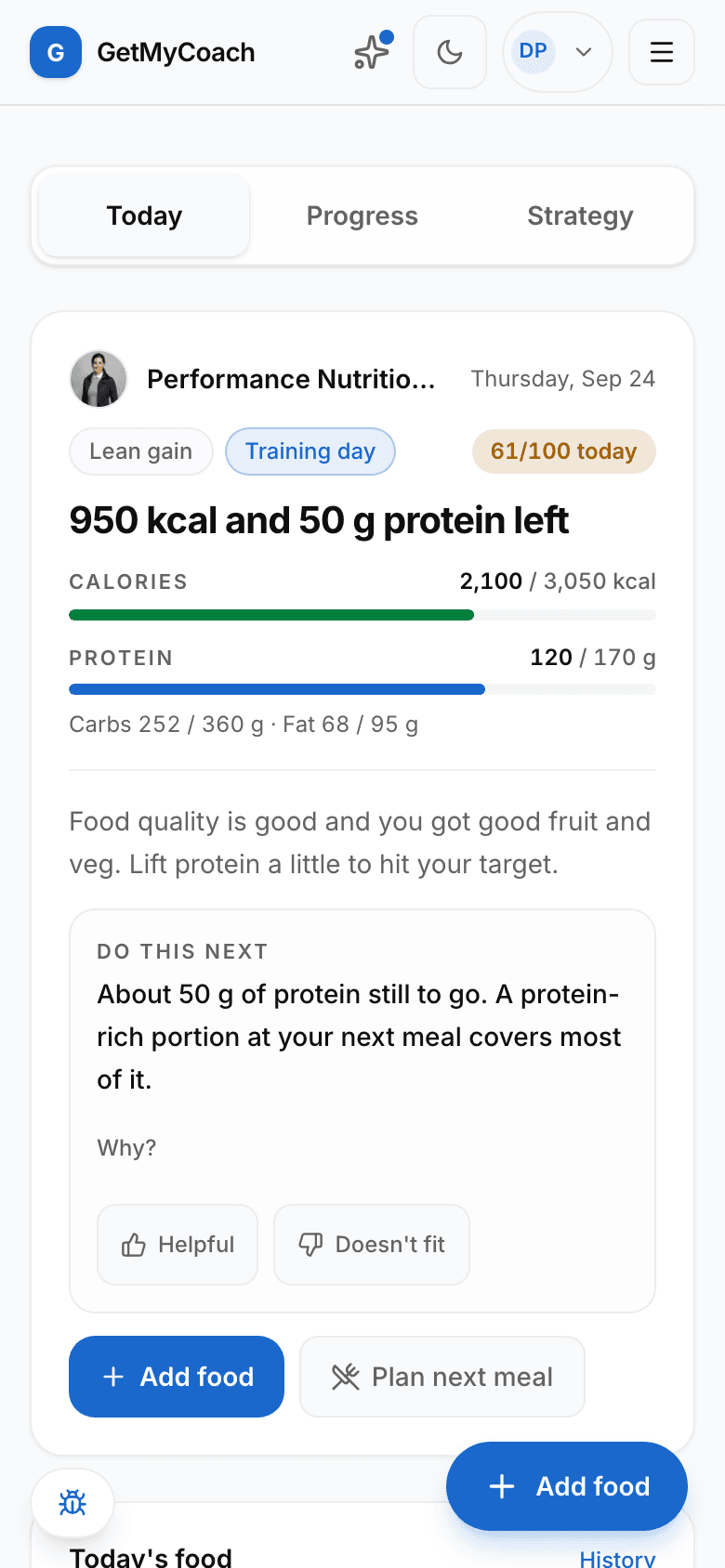
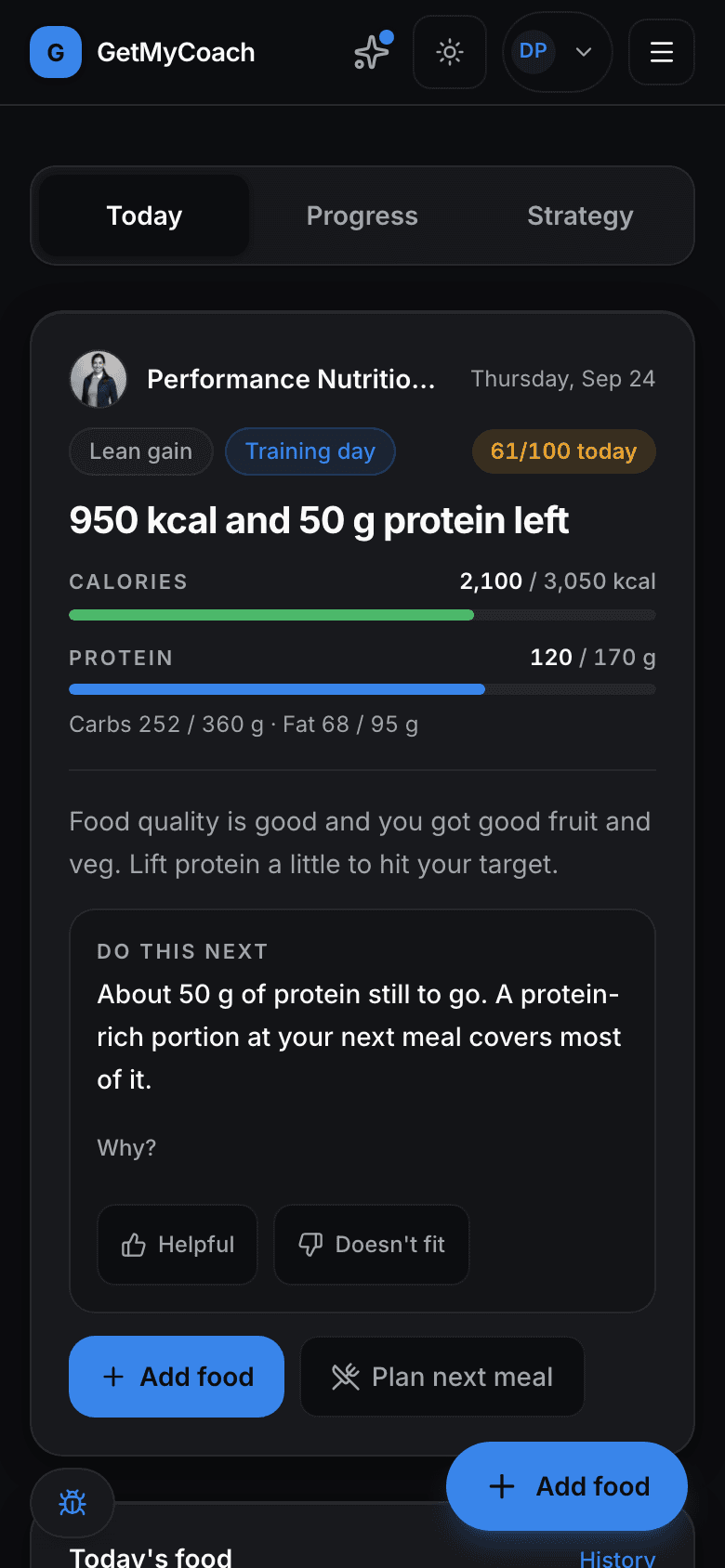
It gives you a daily calorie and protein target and shows what is left of both as the day goes on — the number you actually make decisions with at 6pm.
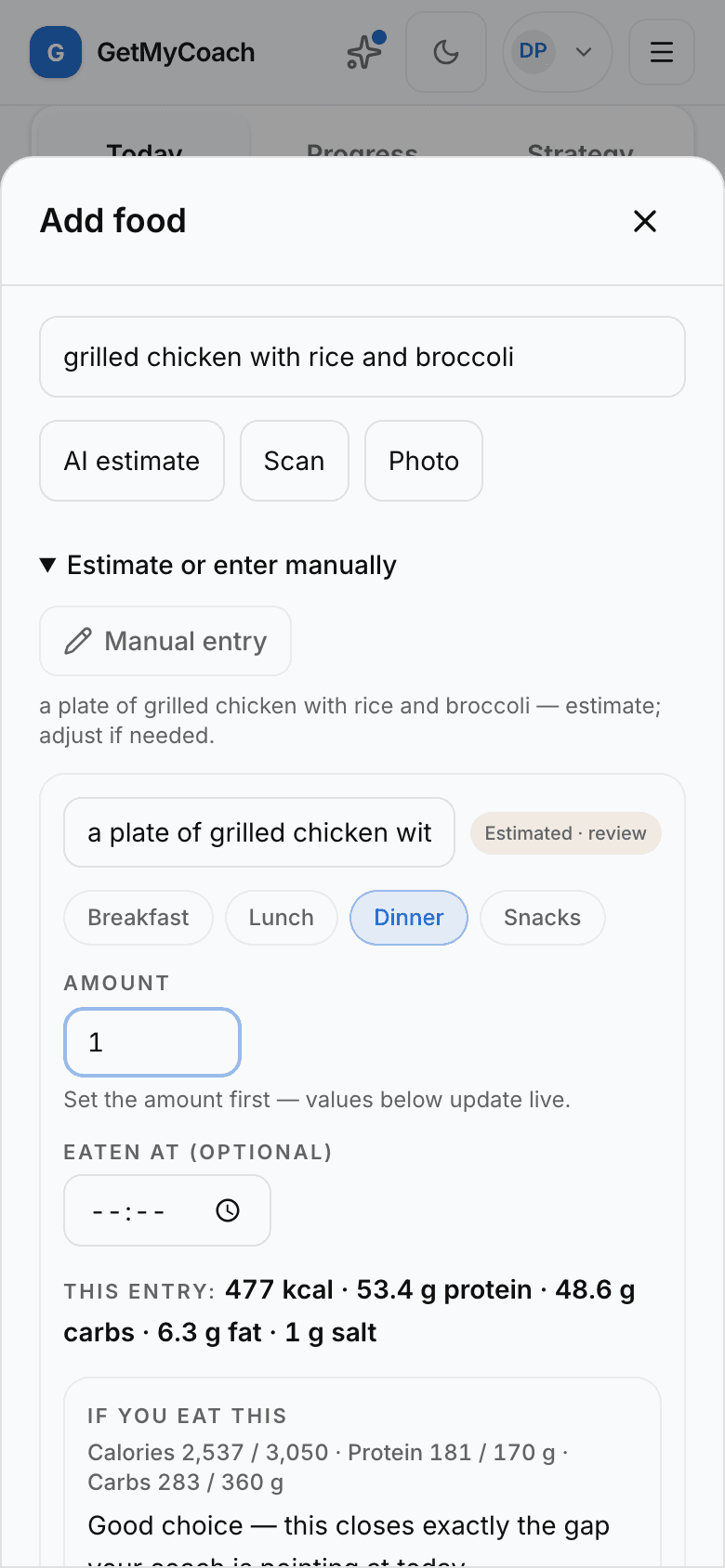
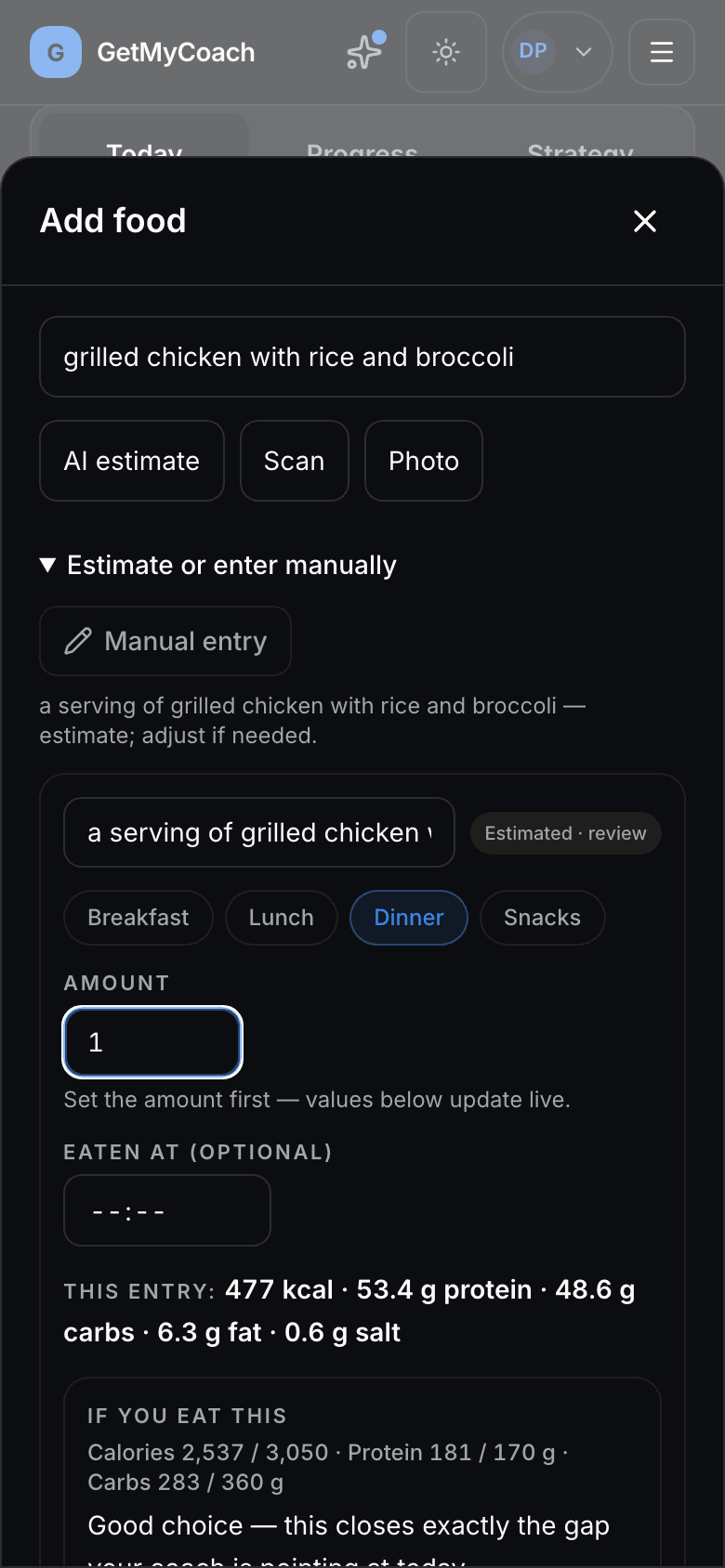
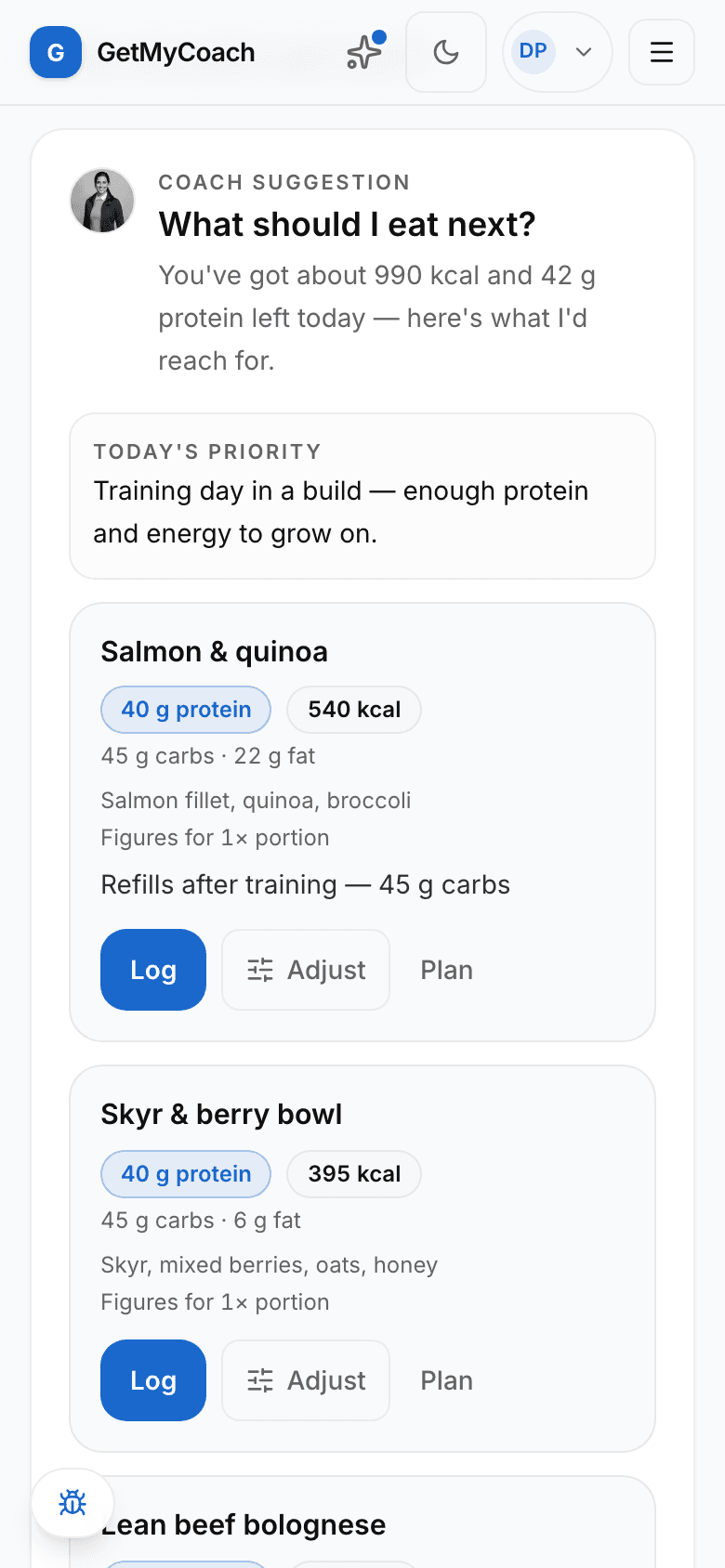
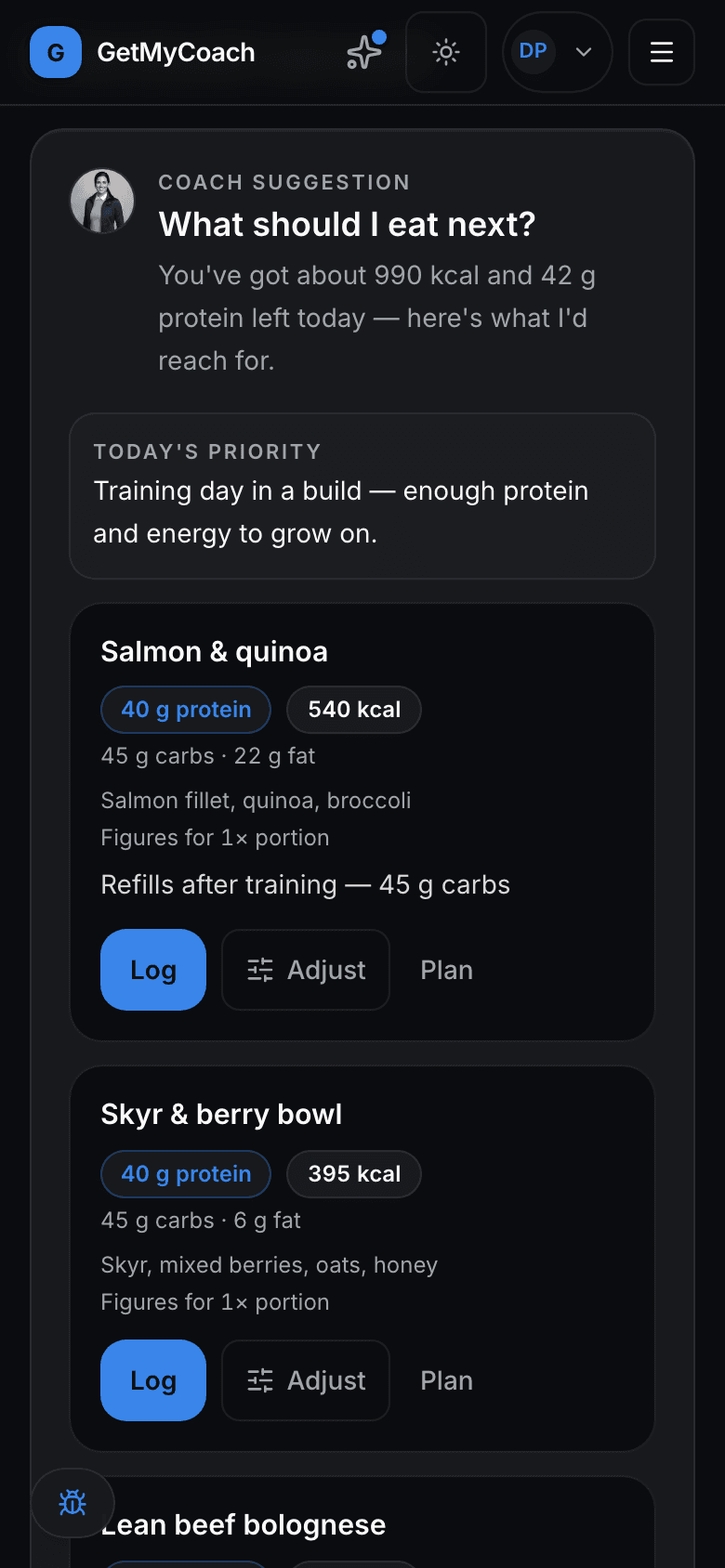
You log food by describing it in plain language, scanning a barcode, or photographing the plate; the app estimates the macros and you confirm. From what is left, your coach turns the rest of the day into two or three concrete meals with their macros and a one-line reason each fits — or plans your whole remaining day if you ask it to.
At the end of the day you get one Coach Verdict out of 100 — calories, protein, food quality, fuel timing and fibre weighed together — plus a single prioritised thing to change tomorrow, not a list of everything that could be better. Every read carries a “Why?” that shows what it was based on: how many days, which values, which period. When there is not enough data to say something solid, it says that instead of producing a number that merely looks precise.
Losing weight without a training plan
Nutrition-only is a complete state here, not a waiting room. Pick your goal, add your body basics, and you have targets, daily guidance, logging and your coach's read — with no plan, and none created behind your back. Nothing on the nutrition side can start a training plan for you; that is enforced in the code, not a promise.
If you do start training later, the targets simply get smarter: training days carry more energy, rest days less. And if you already have a plan, choosing a nutrition goal does not overwrite it — a cut alongside a strength block is a coherent decision, and it is yours to make.
An example day
This is what a normal, protein-forward day of eating looks like in a deficit — everyday food, nothing you have to order online. It is here to show the shape of a day, not to be copied gram for gram.
An illustration, not your plan: your own calorie and protein targets come from your body data and the goal you choose.
Breakfast
Skyr or quark with berries and oats
Most of the meal's protein comes from the dairy, the fibre from the oats and fruit. It is the cheapest way to start the day already ahead on protein.
Lunch
Chicken, potatoes and a large salad
Protein first, a starch you enjoy, and enough vegetables that the plate is genuinely full. Volume is what makes a deficit tolerable at 2pm.
Afternoon
Cottage cheese with fruit, or a handful of nuts
The stretch between lunch and dinner is where most deficits break. A planned protein snack costs far fewer calories than an unplanned one.
Dinner
Salmon or tofu with rice and vegetables
Finish the day's protein and keep enough carbohydrate to train well and sleep well. A deficit is not a reason to go to bed empty.
Swap like for like — quark for skyr, turkey or lentils for chicken, whatever vegetables you actually eat. Portions are the real lever: the same day works at very different targets, and your coach turns what you have left today into concrete suggestions rather than handing you a fixed menu.
Protein, and keeping the muscle you have
In a deficit your body will take energy from somewhere, and protein intake plus training is what steers it toward fat rather than muscle. That is why the protein target runs higher on a cut than on any other goal: 1.8 to 2.4 grams per kilo of bodyweight, the band the app builds your target from.
Higher protein also tends to make a deficit easier to sit in, because protein-rich meals are the ones that keep you full. None of this is a guarantee about your body composition — it is the intake most likely to protect it while you lose weight.
Read the trend, not this morning's number
Bodyweight moves for reasons that have nothing to do with fat: salt, carbohydrates, water, the time of day, where you are in your cycle. A single weigh-in cannot separate those from real change, which is why the app draws a smoothed trend line through your weigh-ins and compares that instead.
It also tells you how fast you are actually moving — in kilos per week, and whether that is faster, slower or the same as the period before. When the weight has genuinely stopped, that is named as a plateau together with how long it has lasted, which is exactly what a line that fell and then flattened hides. And when the evidence is too thin — fewer than about two weeks of weigh-ins, or fewer than three of them — no rate is reported at all.
When your trend drifts away from what your goal wants, your coach suggests adjusting your calories rather than leaving you to guess, and you decide whether to apply it. After four weeks it will also tell you something most trackers will not: whether the target isn't working, or simply was never eaten to.
How long it has been running — and a pause that keeps your goal
A deficit with no end condition is the thing most plans never mention. No target weight is asked of you here, so the app counts how long your current phase has actually run instead — and if you never confirmed a phase, it estimates that from your own weigh-ins and labels it as an estimate. A phase only becomes real when you confirm it; it is never guessed on your behalf.
When it has run a long time and something says it is no longer working — the weight has stopped, it is falling markedly slower, or you yourself recorded cutting sessions short for low energy — your coach brings up a maintenance pause. You set it and you end it, your goal stays exactly where it was, and afterwards you carry on without re-stating anything. It is raised, not decided for you: nothing here promises what a pause will do for you, and nothing tells you that a long diet is harmful.
What GetMyCoach is not
It is not a medical diet and it does not diagnose anything. It will not tell you that you are deficient in something, and it is not a substitute for a doctor or a registered dietitian — particularly if you are pregnant, managing a condition such as diabetes or an eating disorder, taking medication that interacts with your intake, or under 18.
It is not a crash diet, and it will not promise you a rate of loss. Anyone who tells you how many kilos you will lose by a fixed date is guessing about your body. What you get instead is a target built from your own data, an honest read on what your logging actually shows, and a coach that says “not enough data” when that is the truthful answer.
Frequently asked questions
- How big should a calorie deficit be?
- Moderate. The app builds a weight-loss target around 300 to 500 kcal below your estimated maintenance, because that is enough to move the trend while leaving room to eat enough protein and still train hard. There is no universal number: your maintenance depends on your body, your day and the training you actually do, which is why the target is calculated for you rather than printed on a page.
- Can I lose weight without exercise?
- Yes — weight loss is driven by the energy deficit, and you can run one with nutrition alone. That is why the nutrition coach works with no training plan at all. Training is worth adding for what it does alongside the loss — protecting muscle, health and how you feel — but it is not the entry ticket.
- How much protein do I need to lose weight?
- On a cut the app targets 1.8 to 2.4 grams per kilo of bodyweight — higher than for any other goal, because protein plus training is what steers the loss toward fat rather than muscle. Your exact target is set from your bodyweight and shown as a daily number, and protein-rich meals also happen to be the ones that keep you full.
- Do I have to weigh every gram?
- No. You log food by describing it, scanning a barcode or photographing it, and confirm what the app estimates. What you get back is one daily verdict rather than a column of numbers. Being roughly right every day beats being exactly right for a week and then stopping.
- Why does my weight jump around from day to day?
- Because the scale weighs water, food in transit and glycogen as well as fat. A salty dinner or a big carbohydrate meal can move it a kilo or more overnight, with no change in body fat at all. That is why the app reads a smoothed trend across your weigh-ins instead of reacting to this morning's number.
- What happens when I hit a plateau?
- The app names it. When your trend has been flat rather than falling, you see that as a plateau with how long it has lasted — instead of a chart that still looks like it is going down. Your coach then suggests a calorie adjustment, and it separates two very different cases: a target you followed that isn't producing the trend, and a target you have not actually been eating to. The second one is not a broken plan.
- Do I need a training plan to use it?
- No. Nutrition coaching runs on its own: your targets, your daily guidance and your coach's read all come from your body data and the goal you chose. Nothing on the nutrition side will create a training plan for you.
- Is the nutrition coach free?
- Yes — it is included free during GetMyCoach's early access, with no invite needed.
- Does it work in German, and on Android as well as the web?
- Yes to both. The whole experience — food recognition, meal suggestions and your coach's feedback — works in English and German, and nutrition is available in the browser and in the Android app, reading the same data.
- When should I get professional help instead?
- If you are losing weight without meaning to, if eating or your bodyweight has become a source of real distress or compulsion, if you are pregnant or breastfeeding, if you manage a condition such as diabetes, or if you take medication affected by what you eat — talk to a doctor or a registered dietitian. An app is a good tool for a healthy adult managing their own intake; it is not a clinician, and it will not tell you when to stop.
Start your weight loss nutrition plan
Set your goal, get a daily calorie and protein target, and a coach verdict on every day — free during early access. No training plan required.
Creates your free GetMyCoach account and opens the nutrition coach. No training plan, and no sport to choose.