High-Protein Lunch from the Supermarket: What to Eat
What to buy for a high-protein lunch at Migros, Coop, Aldi, Lidl or Denner — grab-and-go picks, 2-minute desk combos, the cheapest options and what to skip. Hit 30–40 g of protein, no cooking.

Lunch is where most people's protein quietly falls apart. Breakfast might be eggs or skyr, dinner is a proper cooked meal — but lunch happens when you're out, in a hurry, and the fastest options are a sandwich, a slice of pizza, a big "healthy" salad or some sushi. All of them lean heavy on carbs and light on protein, and by mid-afternoon you're hungry again.
This is a practical guide to fixing that with what's already on the shelf at Migros, Coop, Aldi, Lidl and Denner — no meal prep, no cooking. Some of it is grab-and-go, some is a two-minute assembly at your desk. The goal: a lunch with 30–40 g of protein that satisfies for longer and makes the afternoon easier, for a sensible price.
The short version: A high-protein lunch is a protein anchor (chicken, quark, skyr, tuna, eggs, tofu) plus something filling, not a big carb bowl with a little protein sprinkled on. Aim for 30–40 g of protein. The supermarket already has everything you need — you just have to pick the anchor first, not last.
How much protein does a lunch need?
If you're building or keeping muscle, about 0.4 g of protein per kilo of bodyweight per meal is a useful guide. (It comes from research on maximising muscle protein synthesis at a daily intake around 1.6 g/kg — a target for optimisation, not a hard minimum for every meal.) In practice that's roughly 25–40 g for most people — around 30 g at ~70 kg, 35–40 g at 85–100 kg.
That's enough to support muscle and — just as useful on a workday — to satisfy for longer, so you're less likely to be raiding the vending machine at 3 p.m. For the full picture of daily needs, see our guide to how much protein per day.
The usual problem isn't the daily total — it's that lunch contributes almost nothing, so you end up cramming all your protein into the evening.
The formula for a high-protein lunch
Every good lunch below is the same simple shape. Build it in this order:
- Pick the protein anchor first. 25–40 g from one main source: chicken, quark, skyr, tuna, eggs, cottage cheese, tofu, edamame, air-dried beef.
- Add something filling. Carbs for energy (rice, bread, potatoes, a wrap) or volume (salad, veg) — or both.
- Add flavour and fat. Olive oil, a dressing, avocado, nuts, cheese — enough to make it a meal you'll actually eat.
Get step 1 right and the rest takes care of itself. Get it wrong — a giant salad with three cubes of feta — and no amount of dressing turns it into a real lunch.
Grab-and-go: ready-made high-protein lunches
These need zero assembly — straight from the chilled aisle or the hot counter. Values are typical figures for the food type; supermarket ready-meals and own-brands vary a lot, so check the pack for the exact protein number.
| Option (where) | Protein (approx.) | Notes |
|---|---|---|
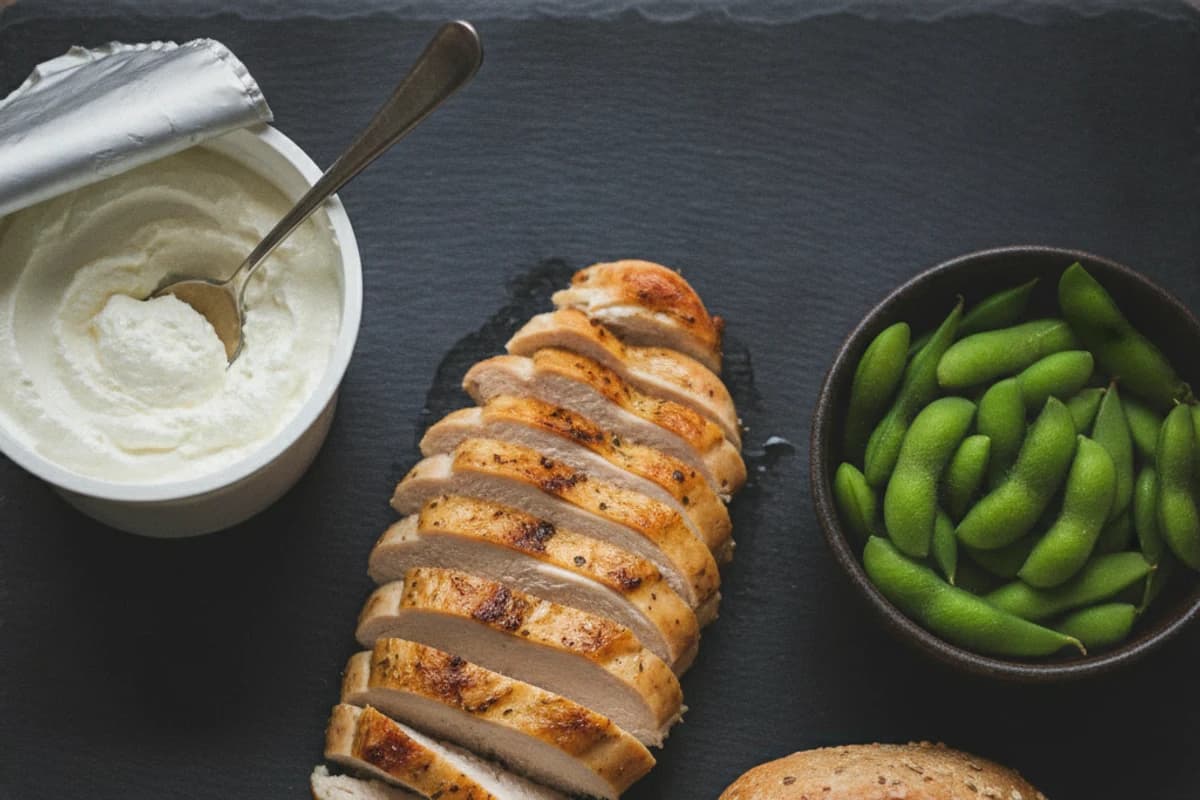
| Grilled/rotisserie chicken breast (Migros/Coop hot counter) | ~30–35 g | The single best grab-and-go anchor. Pair with a roll or salad. |
| Chicken or egg salad bowl (Migros, Coop ready meals) | ~20–30 g | Check the pack — some are mostly leaves. Look for a named protein. |
| Skyr, 200 g (Emmi, own-brand) | ~20 g | Plain skyr with fruit often has less added sugar than the flavoured tubs. |
| Magerquark, 250 g (low-fat quark) | ~24–30 g | Cheap protein staple; the exact number depends on the product. Stir in fruit or honey. |
| Cottage cheese / Hüttenkäse, 200 g | ~22–24 g | Great with wholegrain bread and tomato. |
| Tuna tin in water, drained | ~25 g | Long shelf life, lives in a desk drawer. |
| High-protein drink, 330–500 ml | ~26–40 g | A backup when there's no real food — see our protein drinks guide. |
| Air-dried beef (Bündnerfleisch, Trockenfleisch), 60–80 g | ~25–30 g | Very high protein, low fat — but salty, so treat it as part of the meal. |
| Boiled eggs, 2–3 (pre-cooked packs) | ~13–20 g | Cheap and filling — carry them chilled and eat within a couple of hours. |
Rule of thumb at the counter: the hot rotisserie chicken and a tub of magerquark are two of the most reliable, cheapest wins in almost any Swiss supermarket.
Build-your-own at your desk (2 minutes, no cooking)
A few combinations that land around 30–40 g of protein from standard supermarket items:
- Chicken wrap: 1 wrap + grilled chicken strips + salad mix + a spoon of yoghurt-based dressing → ~35 g.
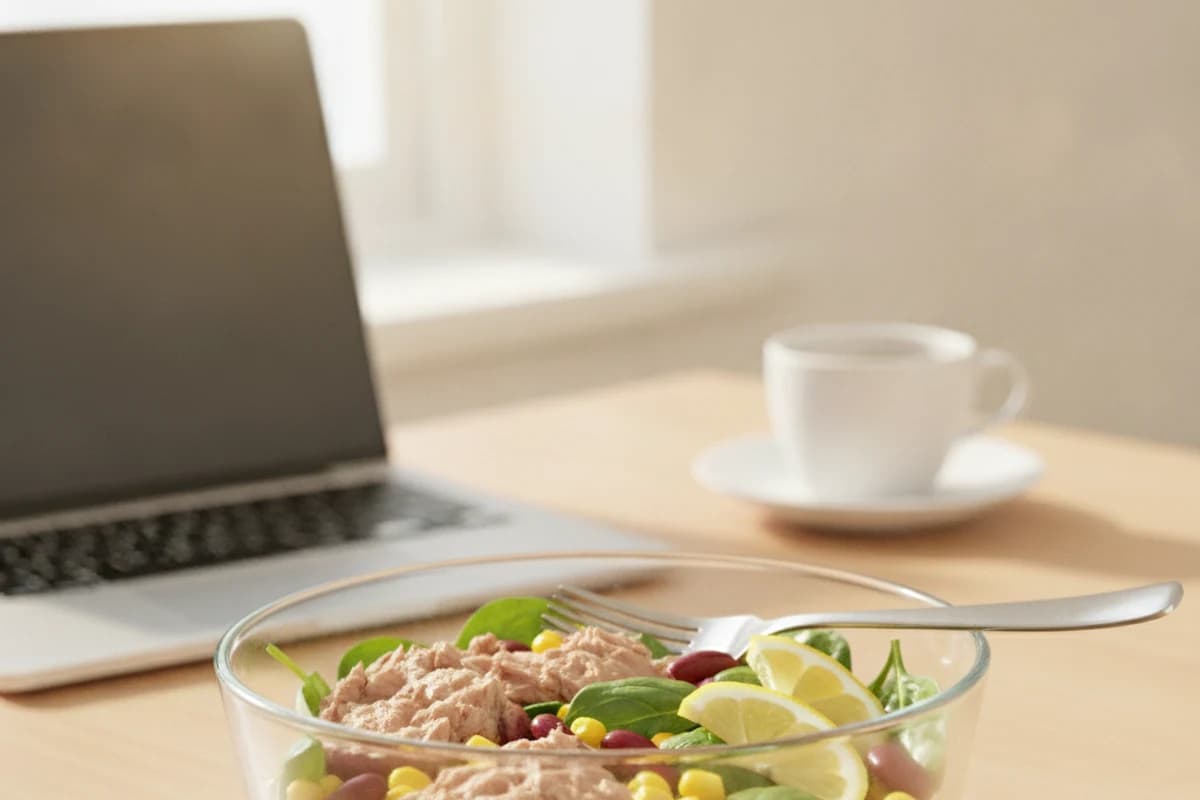
- Tuna & bean bowl: 1 tuna tin + half a tin of kidney beans + sweetcorn + olive oil and lemon → ~33 g.
- Quark power bowl: 250 g magerquark + berries + a handful of nuts + oats → ~30 g (works sweet).
- Cottage cheese toast: 200 g cottage cheese on 2 slices of wholegrain (or protein) bread + tomato and pepper → ~28 g.
- Egg & cheese plate: 3 boiled eggs + 30 g cheese + wholegrain crackers + veg sticks → ~30 g.
- Skyr + turkey roll-ups: 200 g skyr for after, plus 100 g turkey/chicken slices rolled with cheese → ~35 g combined.
Keep tuna tins, a jar of beans, oats and a few protein drinks in your desk or bag, and you always have a fallback that beats the bakery downstairs.
The cheapest high-protein lunches
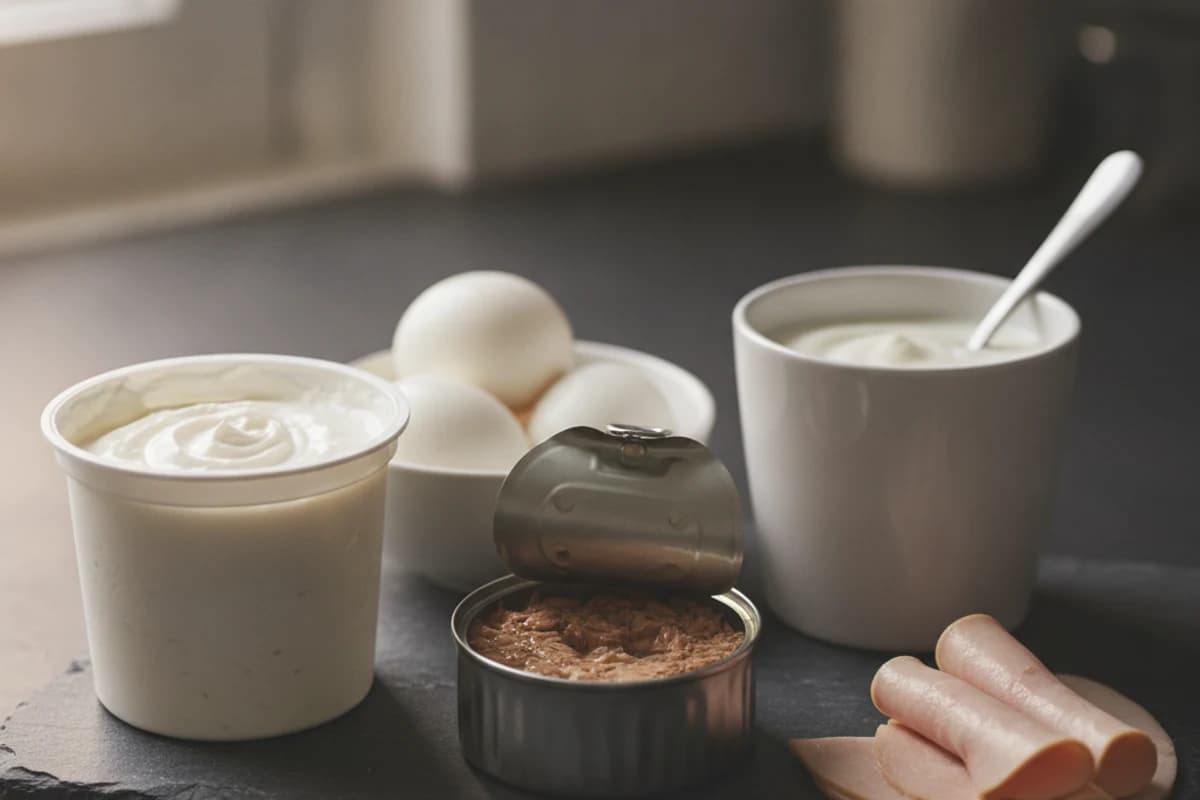
You don't need "high protein" branding to eat well. The best value per gram of protein in a Swiss supermarket is usually the plainest stuff:
| Food | Protein per portion | Why it wins |
|---|---|---|
| Magerquark, 250 g | ~24–30 g | Often the cheapest protein per franc in the shop (product-dependent). |
| Eggs (per 2) | ~13 g | Cents per portion, endlessly flexible. |
| Tuna / mackerel tin | ~20–25 g | Shelf-stable, no prep. |
| Kidney beans / chickpeas, tin | ~8 g per 100 g | Cheap volume + fibre; stretches a smaller protein. |
| Chicken/turkey slices (Aufschnitt) | ~18–20 g per 100 g | Own-brand packs are inexpensive. |
| Own-brand skyr / protein yoghurt | ~15–20 g | Discounter versions cost a fraction of the named brands. |
Branded "protein" products (bars, puddings, breads) are convenient, but often aren't the cheapest way to hit your number — see why in our protein bars & drinks guide.
Vegetarian and vegan high-protein lunches
Perfectly doable from the same shelves:
- Vegetarian: quark, skyr, cottage cheese, eggs and cheese make 30–40 g easy. A 250 g magerquark bowl gets you a good way there on its own.
- Vegan: firm tofu (~12–15 g per 100 g), edamame (~11 g per 100 g shelled, in the freezer aisle), tempeh, canned beans and lentils, and a soy protein drink. A tofu-and-edamame rice bowl or a big lentil salad can clear 30 g. Soy protein is high quality; mix sources over the day and you're covered.
One good lunch does not make the day
Thirty grams at noon counts for little if breakfast and dinner fall short. Log a normal day in under a minute and see where your protein actually ends up.
What looks healthy but isn't a high-protein lunch
The classic traps — foods that feel like the responsible choice but often leave you short on protein:
- The big leafy salad with almost no protein. Leaves, croutons, a little dressing — lots of volume, maybe 5–8 g of protein. Add a named anchor (chicken, eggs, tuna, tofu) or it's a side, not a lunch.
- Sushi. Many boxes are mostly rice and, for their size, fairly low in protein — often only 10–15 g. Check the nutrition and add edamame or salmon sashimi to fix the ratio.
- The "protein" pastry or bar as a meal. Fine as a snack swap, thin as a lunch — often more sugar and fat than protein. See empty-calorie foods and ultra-processed foods.
- Soup + bread. Warm and filling for an hour, but usually low protein. Add a quark or a tin of tuna on the side.
The 10-second rule at the shelf
Before you buy, ask:
- What is the protein anchor here? If you can't name one, it's a carb meal.
- Is it roughly 30 g of protein or more? Check the pack, not the marketing.
- Will it keep me going to dinner? Protein + fibre + some volume usually does; a pastry doesn't.
Three yeses and you've got a real lunch.
Frequently asked questions
How much protein should a lunch have? For building or keeping muscle, about 0.4 g per kilo of bodyweight per meal is a useful guide — in practice roughly 25–40 g for most people (around 30 g at 70 kg, 35–40 g at 85–100 kg). It supports muscle and helps you stay satisfied through the afternoon.
What's the cheapest high-protein lunch from the supermarket? Low-fat quark (magerquark) is usually the best value — roughly 24–30 g of protein in a 250 g tub, depending on the product, for very little money. Eggs, tuna tins and own-brand skyr are close behind.
Is supermarket sushi a good high-protein lunch? On its own, often not — many boxes are mostly rice and fairly low in protein for their size. Add edamame or some salmon sashimi and it becomes a much stronger choice.
Can I get enough protein at lunch as a vegetarian or vegan? Yes. Quark, skyr, cottage cheese and eggs make it easy for vegetarians; tofu, edamame, beans, lentils and a soy protein drink cover it for vegans.
The bottom line
A high-protein lunch isn't about willpower or meal prep. Grab the rotisserie chicken or the tub of quark, add something filling, and the weakest meal of most people's day becomes one that supports your training and carries you further into the afternoon. Everything you need is already on the shelf — you just have to reach for it in the right order.
But lunch is one piece. What actually moves your goal is training and nutrition working together. With GetMyCoach you get a plan matched to your goal, your everyday life and your progress — and a nutrition side that tells you what to eat next, not just what you ate.
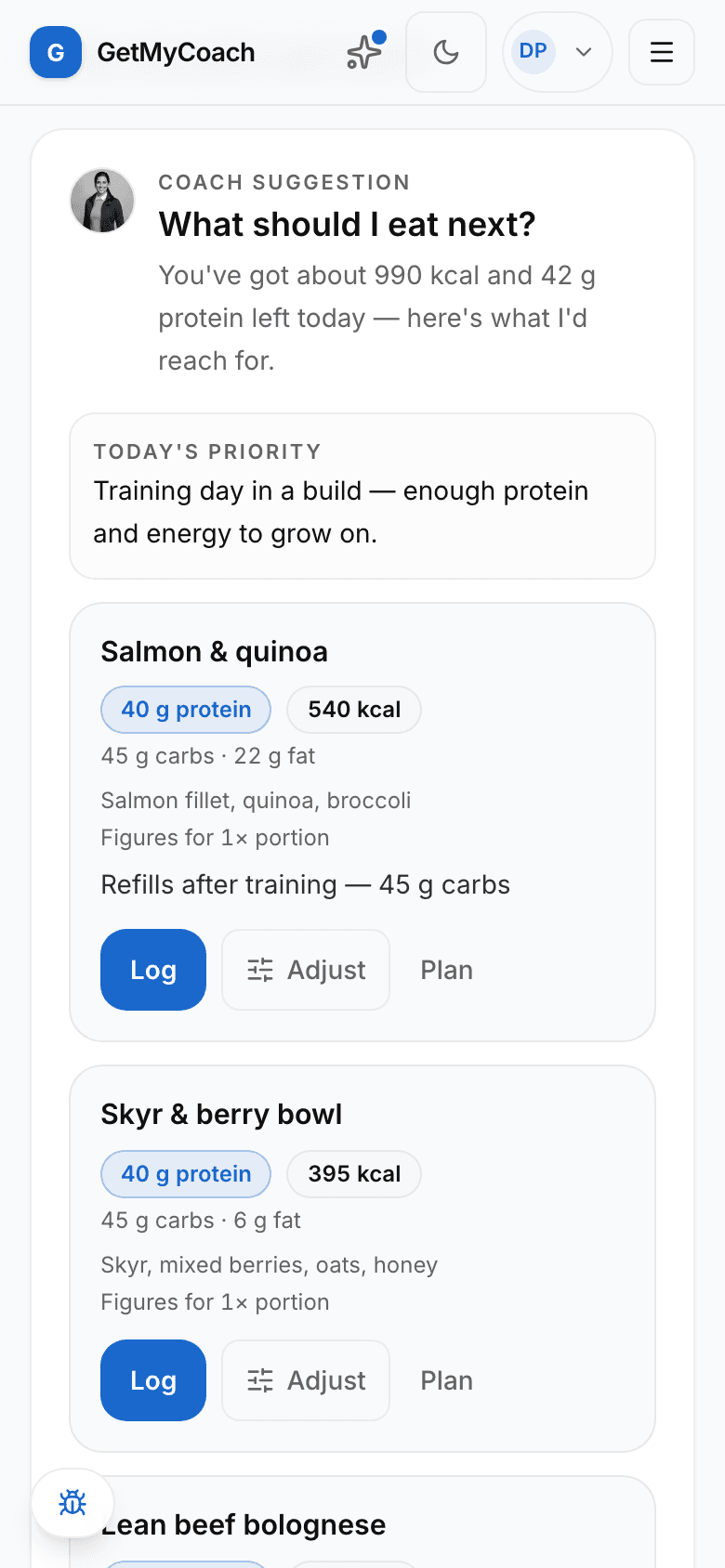
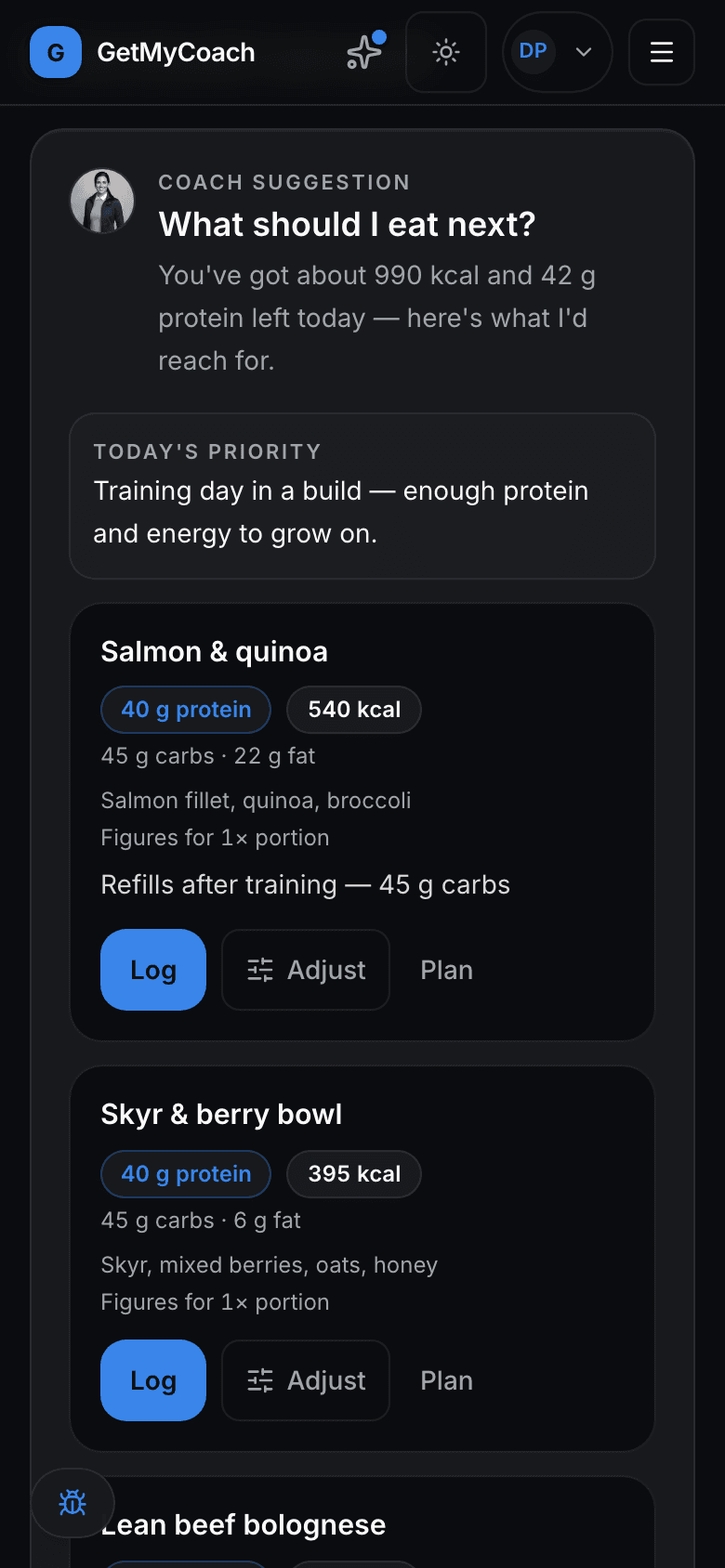
One good lunch, then the rest of the day
Your target, your training week and the next meal in one place — so the afternoon and the evening are not left to chance either.
Note: Protein figures are typical values for each food type; for own-brand and ready-made supermarket products they vary by store, recipe and promotion — always check the current packaging for the exact number. This article is an editorial guide, not medical or nutritional-medicine advice.
Sources
- Swiss Food Composition Database (BLV): the protein figures per 100 g behind every food named here
- Jäger et al. (2017): ISSN position stand — protein and exercise (the 20–40 g per meal that the “protein anchor” aims at)
- Morton et al. (2018), British Journal of Sports Medicine: the daily protein intake that actually improves training gains
- Leidy et al. (2015), American Journal of Clinical Nutrition: the role of protein in weight loss and maintenance — why a protein-led lunch holds better